
Renault Megane Common Faults in the UK
Mk3 2008–2016 and Mk4 2016–2022 — family hatchback. Updated 6 October 2026.
This guide covers the Mk3 2008–2016 and Mk4 2016–2022 only. Older Megane generations have different engines and faults — for one of those, see how to check any car for known faults.
On DVSA’s MOT data the Renault Megane has one of the weakest records of any model we cover: it passes first time 10.7 points less often than cars of the same age, and every registration year with enough tests is below the average for its year. Its one large DVSA recall (R/2013/034, a rear spoiler, builds to October 2009) mostly pre-dates the Mk3, so the evidence is owners’ reports: What Car? names clogging diesel particulate filters on the 1.5 dCi and weak CVT and torque-converter automatics.
Largest DVSA recall for the Megane: R/2013/034, 22,739 vehicles — Rear spoiler may become detached. See the 8 DVSA recalls listed for this model.
64.1% of Renault Meganes registered 2013–2019 pass the MOT on the day (cars fixed during the test included), 13.1 points below all cars registered in those years (77.2%). These are the cars this guide covers that were 3 to 12 years old when DVSA tested them in 2025, counted from 3,347 DVSA tests; a pass with rectification at the station counts as a pass here, and as a failure in DVSA's own initial-test measure.
Counting every registration year DVSA holds for the Renault Megane (2006–2019), which includes generations this guide does not cover, 60.9% pass on the day (cars fixed during the test included), from 9,524 tests.
Source: DVSA MOT Anonymised Data 2025 (Open Government Licence v3.0), a sample of the 2025 file (about one test in ten, from nine months). Class 4 tests in Great Britain, test type NT (a normal annual test), retests excluded. A pass, or a pass with rectification at the station, counts as a pass here (passed on the day); DVSA's own initial-test measure counts a rectified pass as a failure and so reports a lower figure. Testing in Northern Ireland is run separately by the DVA under its own rules. Compared against cars of the same registration years, because pass rates otherwise mostly measure how old a model's surviving fleet is.
See it by registration year and by mileage ↓The asking-price figures above are the middle 80% and the median of what sellers were asking on Autoza on 22 November 2026 — not what buyers pay — for Renault Megane cars registered 2008–2022, electric versions excluded. They are worked out from the cars on sale when this page is generated, and none is shown when fewer than 10 cars qualify. The road tax line comes from GOV.UK's vehicle tax rate tables (2026/27 rates). The fuel economy tile names the source it rests on or says there is no sourced figure, and the insurance tile gives no figure. We do not publish a UK price index, and no figure here should be quoted as one.
Best and worst years to buy
We name a year as a best or worst buy only where the DVSA MOT table further down does not rate it the other way.
No year is named as a best buy: DVSA’s MOT table rates every Megane registration year with enough tests below all cars registered that year. 2016 has the narrowest gap (5.7 points), and 2016 registrations include the last Mk3 and the first Mk4, which has three small early-build recalls (R/2017/117, R/2017/122 and R/2017/172).
DVSA’s MOT table rates 2013, 2014 and 2015 registrations below all cars registered those years by 14.6, 17.4 and 15.2 points, the widest gaps in the Megane’s table. These are Mk3 cars; What Car? says the Mk3 was a vast improvement on its predecessors but still names clogging diesel particulate filters and weak CVT and torque-converter automatics. An MOT checks safety items on the day, not engine or gearbox condition, so read the gap as a pointer to upkeep and condition.
Which Renault Megane years to avoid?
The Renault Megane did worse at MOT in 2025 than the average car registered in the same year in 6 of the 6 registration years with enough tests to measure, so no single year is the one to avoid. The widest gap was 2014: 43.1% failed, against 25.7% of all cars registered that year.
Separately, 3 of the 7 DVSA recalls listed for this model cover cars built in 2010: that is the build-date stretch with the most recalls, so check any car from it by registration.
This is MOT test data: the MOT is a roadworthiness test, not a full reliability record, and it does not check the engine, clutch or gearbox. “Failed” means failed on the day, with cars fixed during the test counted as passes. A year is marked only where its gap is 3 points or more and beyond the 95% sampling margin for that many tests. See the full MOT results by year and mileage.
| Registered | Megane failed | All cars that year | Tests |
|---|---|---|---|
| 2019did worse than average | 22.5% | 13.1% | 258 |
| 2017did worse than average | 28.5% | 17.8% | 474 |
| 2016did worse than average | 26.3% | 20.6% | 514 |
| 2015did worse than average | 38.5% | 23.3% | 675 |
| 2014did worse than average | 43.1% | 25.7% | 721 |
| 2013did worse than average | 42.7% | 28.1% | 705 |
Source: DVSA MOT Anonymised Data 2025 (Open Government Licence v3.0). Contains public sector information licensed under the Open Government Licence v3.0.
Known faults — Renault Megane Mk3 2008–2016 and Mk4 2016–2022
How to read this list. Items marked Safety recall are DVSA safety recalls, shown with DVSA’s own reference. Whether a particular car is affected depends on when it was built: check it by registration through GOV.UK’s vehicle recall check. Everything else in this list is owner-reported: what the UK publication named on each card reports from its owner surveys and tests. Those are worth checking on a viewing, but we hold no count of how many cars have each one, other than any survey share a card itself quotes. Treat an owner-reported item as a question to ask, not a fault this car has.
Interior — rear parcel shelf fixings (Mk3, 2010–2013 builds)
- Symptoms
- DVSA wording: the rear body shelf fixing may not be secured to the vehicle sufficiently, which may lead to the shelf detaching and put other road users at risk. Additional fixings are fitted.
- Years affected
- Megane built 31 May 2010 to 14 October 2013
- Indicative repair (UK)
- Free under recall
- What to check before buying
- Check this one by registration through GOV.UK’s vehicle recall check (gov.uk/check-vehicle-recall) before you buy — an outstanding recall is free to put right and a completed one should be on the service record.
Early Mk4 (2016 builds) — child locks, curtain airbag and automatic-gearbox software
- Symptoms
- DVSA wording: for R/2017/117 the rear door child locks may deactivate when a door is slammed, with no warning; for R/2017/172 the side curtain airbag may not deploy because the pyrotechnic mix ratio in the igniter could be incorrect; for R/2017/122 the automatic gearbox software may not engage the clutch fully, causing a loss of drive or engine judder, and the gearbox is updated.
- Years affected
- Megane built 20 May 2016 to 18 July 2016 (R/2017/117), 1 June 2016 to 31 January 2017 (R/2017/122) and 20 September 2016 to 30 November 2016 (R/2017/172)
- Indicative repair (UK)
- Free under recall
- What to check before buying
- Check this one by registration through GOV.UK’s vehicle recall check (gov.uk/check-vehicle-recall) before you buy — an outstanding recall is free to put right and a completed one should be on the service record. What Car? names the gearbox one in its Mk4 recall list.
DVSA’s counts, recall by recall: R/2017/117 2,415; R/2017/172 610 (every model in the recall); R/2017/122 132.
Brakes — vacuum pump may fail (some cars)
- Symptoms
- DVSA wording: the drive to the brake vacuum pump may fail, which may cause a loss of brake servo assistance and a hard brake pedal, and may reduce engine power. The manufacture date of the pump is checked and the pump replaced where necessary.
- Years affected
- DVSA gives no build dates for the Megane in this recall, and one total shared with the Kadjar, Master, Scenic and Trafic; check by registration
- Indicative repair (UK)
- Free under recall
- What to check before buying
- Check this one by registration through GOV.UK’s vehicle recall check (gov.uk/check-vehicle-recall) before you buy — an outstanding recall is free to put right and a completed one should be on the service record. What Car? says braking performance on later Mk3 cars could be affected if the vacuum-pump work was not carried out.
Early Mk3 (2009–2010 builds) — airbags and power steering
- Symptoms
- DVSA wording: for R/2011/051 the driver’s airbag may not deploy in an accident and the passenger airbag could deploy at any time even when deactivated, and the airbag computer is reprogrammed; for R/2011/064 there is a risk of contact between the power-steering electrical supply and the steering column universal joint, which could lead to power-assistance failure.
- Years affected
- Megane built 1 June 2010 to 23 August 2010 (R/2011/051) and 1 October 2009 to 12 March 2010 (R/2011/064)
- Indicative repair (UK)
- Free under recall
- What to check before buying
- Check this one by registration through GOV.UK’s vehicle recall check (gov.uk/check-vehicle-recall) before you buy — an outstanding recall is free to put right and a completed one should be on the service record. What Car? mentions airbag and power-steering recalls on cars built up to 2011.
DVSA’s counts, recall by recall: R/2011/051 337; R/2011/064 3.
Diesel particulate filter — clogging (1.5 dCi)
- Symptoms
- What Car? says the diesel particulate filter fitted to some versions of the 1.5 dCi has been known to clog if the car is not taken on regular long runs, and that the Mk4 has had DPF clogging too. A long run often clears it, but remedial work outside warranty can be expensive.
- Years affected
- Diesel Mk3 and Mk4
- What to check before buying
- Ask what journeys the car has done: a diesel used mainly for short trips is the risky one. Check for a DPF warning light and ask for any DPF invoices.
Automatic gearboxes — CVT, torque converter and EDC dual-clutch
- Symptoms
- What Car? says the Mk3 automatic came as a CVT, a torque converter or an EDC dual-clutch depending on the age and engine, and that the CVT and torque-converter gearboxes seem to have more than their fair share of problems.
- Years affected
- Mk3 2008–2016 automatics
- What to check before buying
- Drive it from cold and warm, accelerating gently and hard, and ask for any gearbox service or repair history. Judder, hesitation or a gearbox warning light is a reason to walk away.
Interior and electrics — scratchy plastics and equipment faults (Mk3)
- Symptoms
- What Car? says some of the Mk3’s interior plastics scratch easily and advises testing that all the electrical equipment works as it should.
- Years affected
- Mk3 2008–2016
- What to check before buying
- Test every switch, window, the air-con and the infotainment, and look for scuffed trim as a sign of how the car has been treated.
Cars like this for sale now
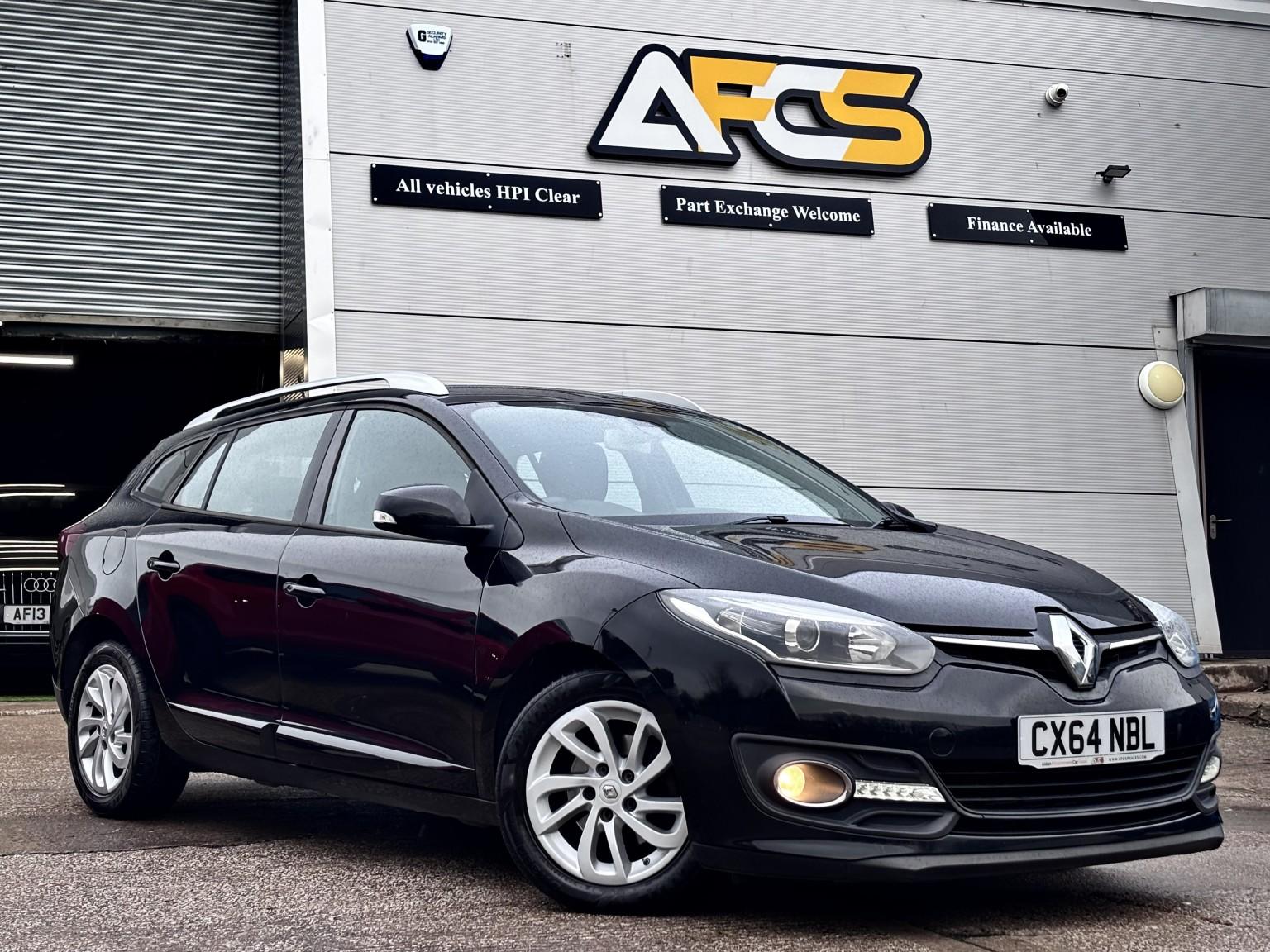
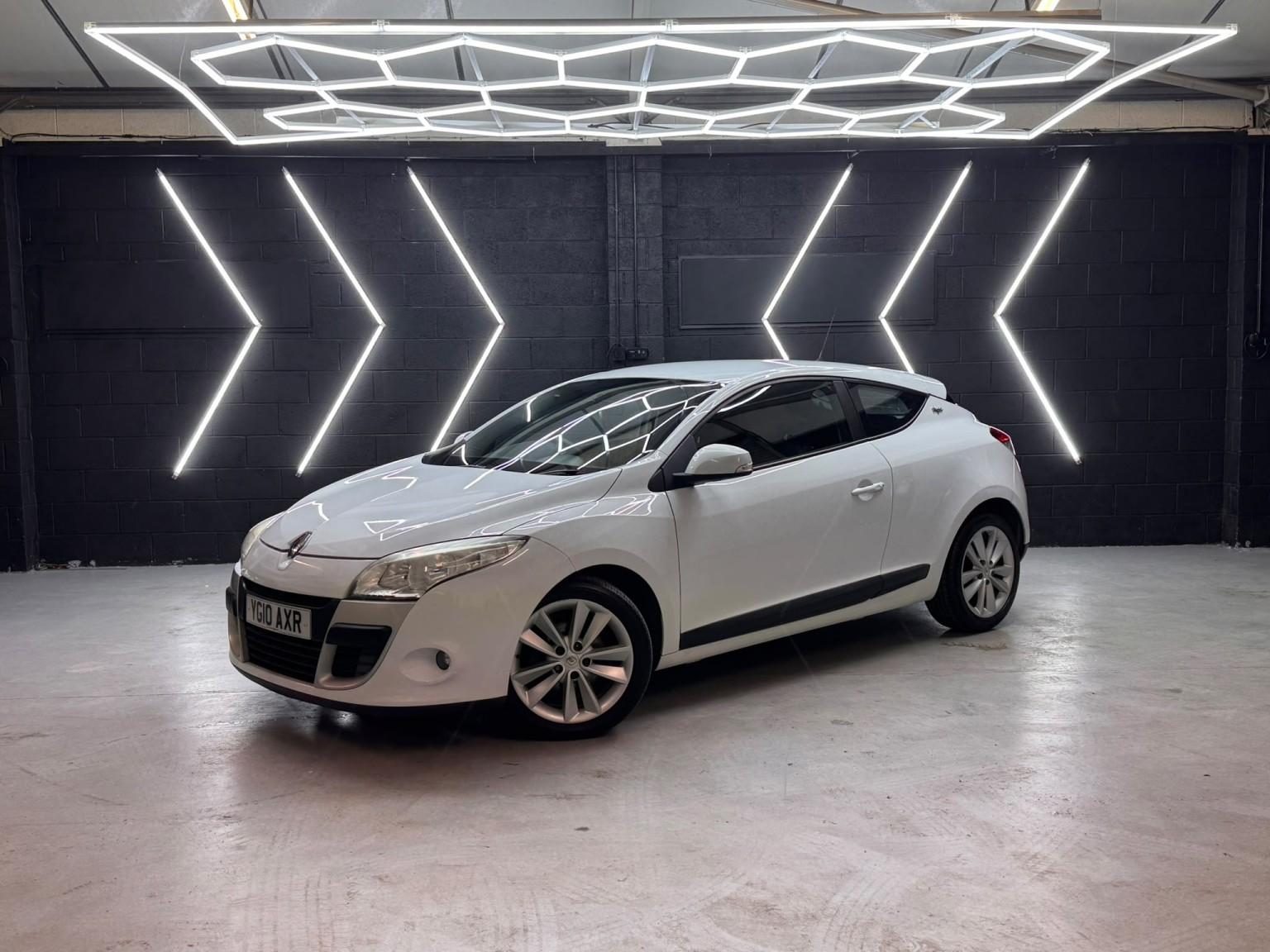
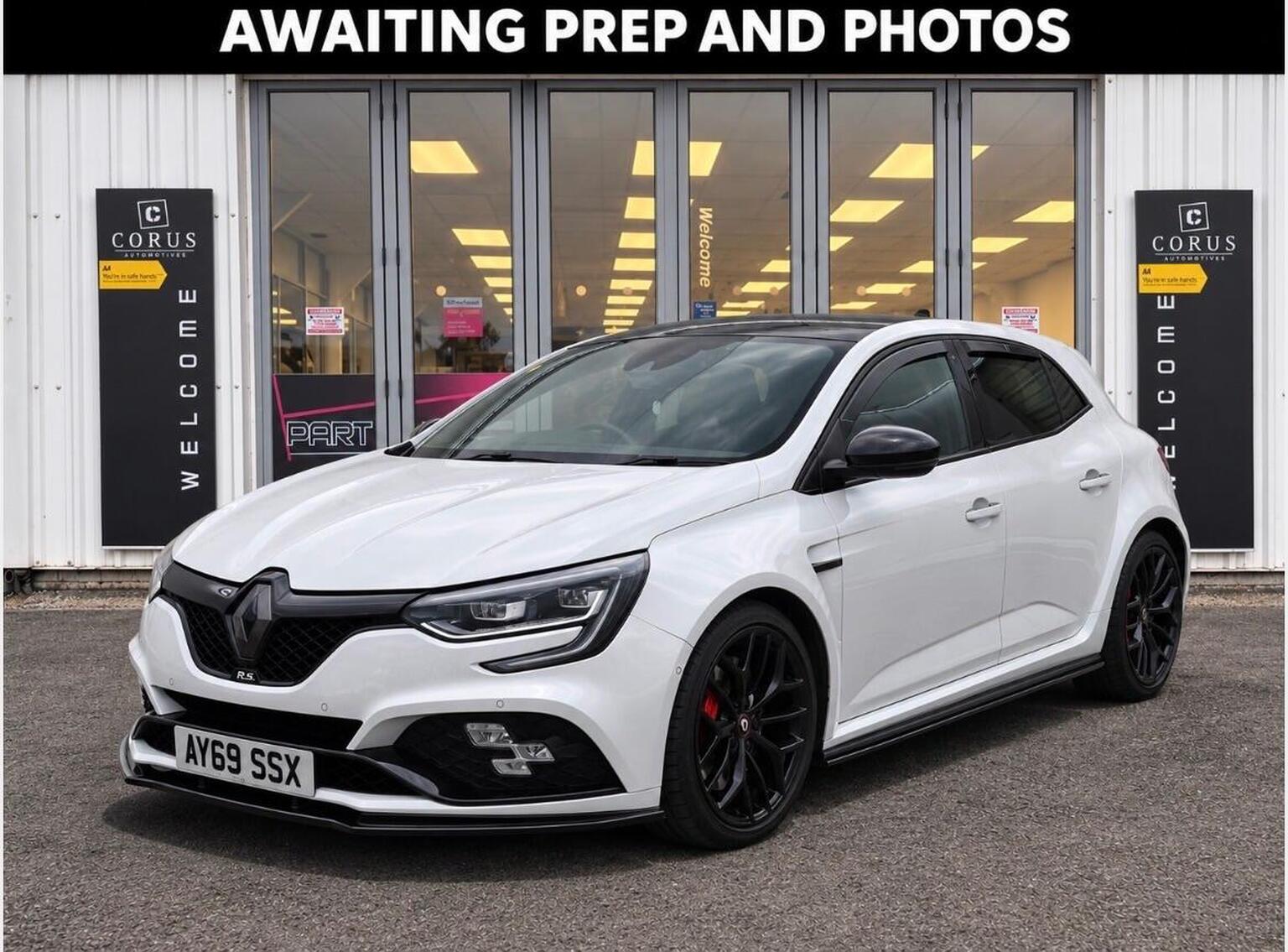
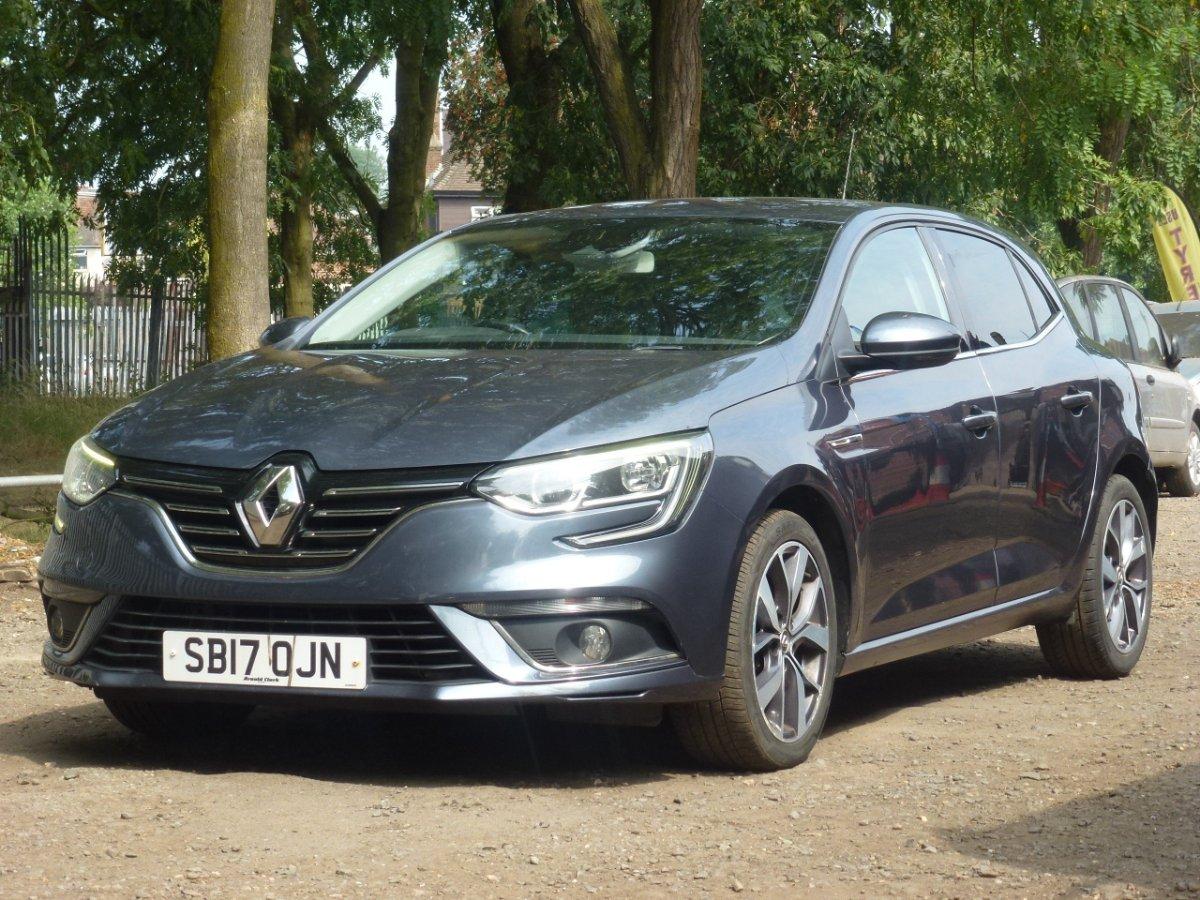
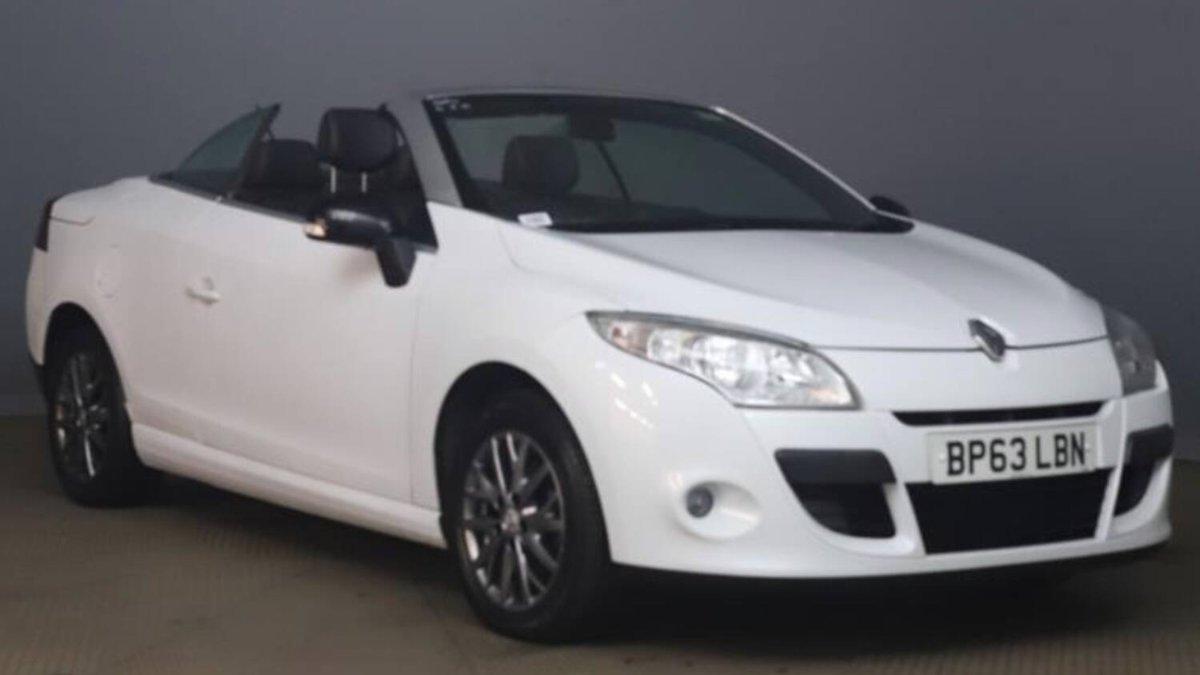
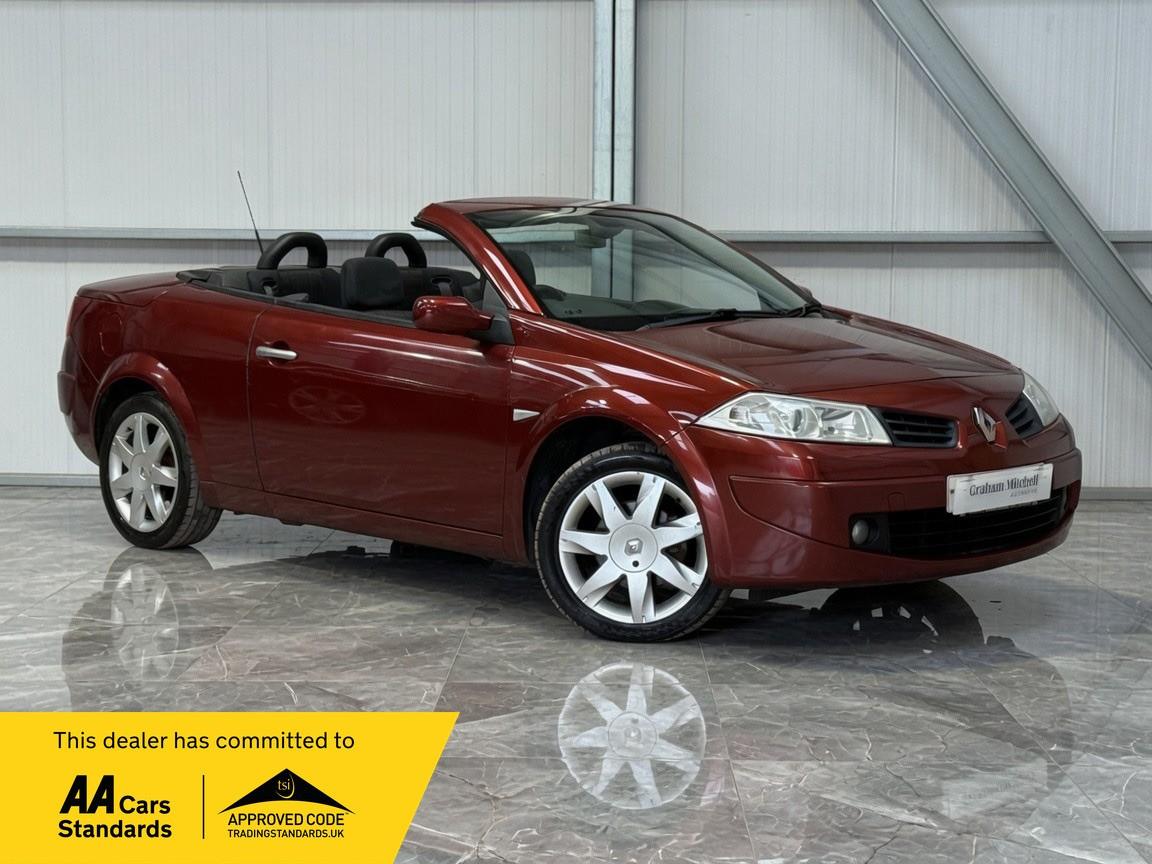
Used Renault Megane adverts on Autoza, each from a dealer you can contact from the advert.
More DVSA safety recalls for the Renault Megane, largest first
These are the recalls DVSA lists for this model and its build years that the cards above do not already describe: every one of 10,000 or more vehicles, largest first, with DVSA’s own reference and figures. A recall covers only cars built in its dates and within its VIN range — check a particular car by registration through GOV.UK’s vehicle recall check. “Critical” here means DVSA’s own notice tells owners not to drive the car until it is fixed. It is never a size: “Large” means DVSA lists 10,000 or more vehicles in the recall.
- Safety recall · R/2013/034Large recall — 22,739 vehicles
Rear spoiler may become detached
The rear spoiler may detach at high speed due to high variance in temperature change aggressive car wash systems or use of racks as they may weaken the spoiler mouldings.
22,739 vehicles of this model (DVSA’s figures added up) · built between 1 September 2003 and 31 October 2009 · recall launched 8 March 2013
Source: DVSA vehicle recalls file (every recall since 1992), published under the Open Government Licence. Where DVSA gives one figure for a recall that covers several models, it is shown as the whole recall’s total.
Renault Megane MOT results by year and mileage
Measured from DVSA’s own MOT test records for tests carried out in 2025, not from owner reports.
By registration year
Against all cars registered in the same year, the MOT pass rate for the Megane was lower in every one of the 6 registration years from 2013 to 2019 with enough tests to measure. The widest gap below is 2014 registrations: 56.9% against 74.3% for all cars registered that year.
Pass rate here: passed on the day, cars fixed during the test included. Rows: every Renault Megane DVSA tested in 2025, by registration year (2013–2019), all engines and fuels together.
| Registered | Megane | All cars that year | Difference |
|---|---|---|---|
| 2019258 tests | 77.5% | 86.9% | −9.4 lower |
| 2017474 tests | 71.5% | 82.2% | −10.7 lower |
| 2016514 tests | 73.7% | 79.4% | −5.7 lower |
| 2015675 tests | 61.5% | 76.7% | −15.2 lower |
| 2014721 tests | 56.9% | 74.3% | −17.4 lower |
| 2013705 tests | 57.3% | 71.9% | −14.6 lower |
By mileage at the test
Against cars of the same age on the same mileage, the pass rate for the Megane was lower in the one mileage band with enough tests. How other models compare at the same mileage.
Show the table by mileage (1 band)
| Mileage | Megane | Same age and mileage | Difference |
|---|---|---|---|
| 80k–100k2,131 tests | 58.3% | 68.5% | −10.2 lower |
Only a major or dangerous defect fails an MOT. A minor defect is recorded on the certificate and the car still passes, and an advisory is not a failure at all.
We don’t give a recall count for the Renault Megane: whether a recall applies depends on the individual car. Check the one you are looking at by entering its registration on GOV.UK’s vehicle recall checker, and see how to check a car for known faults for the other free checks.
Source: DVSA MOT Anonymised Data 2025 (Open Government Licence v3.0), a sample of the 2025 file (about one test in ten, from nine months) (3,459,000 tests). Class 4 tests in Great Britain, test type NT (a normal annual test), retests excluded. A pass, or a pass with rectification at the station, counts as a pass here (passed on the day); DVSA's own initial-test measure counts a rectified pass as a failure and so reports a lower figure. Odometer readings below 100 or above 400,000 miles are discarded as misreadings, and cars under three years old are excluded because no MOT is yet due. Sampled from nine months of 2025 (January, February, April, May, July, August, September, October and November). Testing in Northern Ireland is run separately by the DVA under its own rules. Registration years shown are cars 3 to 12 years old when tested; the smallest rests on 258 tests. A gap is called level when it is under one percentage point or inside the 95% sampling margin for that number of tests. Contains public sector information licensed under the Open Government Licence v3.0.
What fails at the MOT: DVSA 2025 results
Across 93,887 Renault Megane MOT tests in 2025 (all versions together), these defects turned up most often. This guide covers the Mk3 2008–2016 and Mk4 2016–2022; the figures are for every Renault Megane tested, of any generation.
Where it stands out
The parts groups where Renault Megane tests carried a defect more often than cars of the same age and mileage:
- Steering. 7.4% of tests, against 2.7% for cars of the same age and mileage (2.7 times the rate).
- Brakes. 12.6% of tests, against 8.1% for cars of the same age and mileage (1.6 times the rate).
- Suspension. 19.9% of tests, against 13.0% for cars of the same age and mileage (1.5 times the rate).
- Lamps, reflectors and electrical. 22.2% of tests, against 14.8% for cars of the same age and mileage (1.5 times the rate).
What is found most often
The five defects found most often on Renault Megane tests, each compared with cars of the same age where it stands out:
- Coil spring: fractured or broken. On 8.8% of Renault Megane tests, 2.9 times the rate for cars of the same age.
- Stop lamp: not working. On 6.8% of Renault Megane tests, 2.6 times the rate for cars of the same age.
- Track rod end: ball joint has excessive play. On 6.1% of Renault Megane tests, 4.1 times the rate for cars of the same age.
- Position lamp: not working. On 5.2% of Renault Megane tests, 1.4 times the rate for cars of the same age.
- Ball joint excessively worn. On 4.5% of Renault Megane tests, 2.3 times the rate for cars of the same age.
Less common, but well above the rate for cars of the same age:
- Linkage ball joints: ball joint excessively worn. On 3.1% of Renault Megane tests, 3.3 times the rate for cars of the same age.
The MOT checks safety and emissions items, not the engine, clutch or gearbox, so this is one measure of how each car holds up rather than a full reliability verdict. These figures describe the model, all its versions together, not this particular car.
From DVSA’s 2025 MOT results. See the full analysis
Who this car suits — and who should look elsewhere
Buyers prepared to pay for a full service history and a pre-purchase inspection, who will avoid a diesel that has only done short journeys.
Anyone who wants the model with the best MOT record for its age, or who buys an automatic Mk3 without driving it from cold.
Alternatives to consider
If the Renault Megane doesn't suit, these comparable models are worth a look in the UK market:
Renault Megane: questions buyers ask
What are the most common faults on a used Renault Megane in the UK?
On DVSA’s MOT data the Renault Megane has one of the weakest records of any model we cover: it passes first time 10.7 points less often than cars of the same age, and every registration year with enough tests is below the average for its year. Its one large DVSA recall (R/2013/034, a rear spoiler, builds to October 2009) mostly pre-dates the Mk3, so the evidence is owners’ reports: What Car? names clogging diesel particulate filters on the 1.5 dCi and weak CVT and torque-converter automatics.
What is the best year to buy a used Renault Megane in the UK?
Best-buy years: no single year stands out. No year is named as a best buy: DVSA’s MOT table rates every Megane registration year with enough tests below all cars registered that year. 2016 has the narrowest gap (5.7 points), and 2016 registrations include the last Mk3 and the first Mk4, which has three small early-build recalls (R/2017/117, R/2017/122 and R/2017/172).
What years of Renault Megane should I avoid in the UK?
Worst years: 2013, 2014, 2015. DVSA’s MOT table rates 2013, 2014 and 2015 registrations below all cars registered those years by 14.6, 17.4 and 15.2 points, the widest gaps in the Megane’s table. These are Mk3 cars; What Car? says the Mk3 was a vast improvement on its predecessors but still names clogging diesel particulate filters and weak CVT and torque-converter automatics. An MOT checks safety items on the day, not engine or gearbox condition, so read the gap as a pointer to upkeep and condition.
How much does a used Renault Megane cost in the UK in 2026?
What sellers were asking on Autoza on 22 November 2026, for Renault Megane cars registered 2008–2022, electric versions excluded: £2,500–£12,495, median £4,995 — the range is the middle 80% of asking prices. Those are asking prices, not what buyers paid, and not a UK price index. Prices vary by mileage, region and trim, so compare several adverts of the same year and mileage band before negotiating.
What is the road tax (VED) on a Renault Megane in the UK?
Annual road tax (VED): £200/year standard rate from the second year, hybrids included — the alternative-fuel discount ended on 1 April 2025. A car registered from April 2017 with a list price over £40,000 when new adds the £440/year Expensive Car Supplement in years 2–6 (£640 in all). Cars registered 2001–2017 pay a CO2 band, roughly £20–£790/year (2026/27 rates).
What real-world fuel economy does a Renault Megane achieve on UK roads?
No sourced real-world figure for the Megane, so none is printed: the official lab figure depends on the engine and on the test cycle the car was approved under, so use the figure for the exact version you are looking at.
How does a Renault Megane compare to its rivals?
Strong alternatives in the UK: Ford Focus, Vauxhall Astra, Volkswagen Golf, Skoda Octavia. Choose based on dealer network in your area, parts availability, and your priorities (running cost vs. cabin quality vs. badge).
Who is the Renault Megane most suitable for?
Buyers prepared to pay for a full service history and a pre-purchase inspection, who will avoid a diesel that has only done short journeys.
Who should NOT buy a Renault Megane?
Anyone who wants the model with the best MOT record for its age, or who buys an automatic Mk3 without driving it from cold.
Are there safety recalls on the Renault Megane?
DVSA lists 8 safety recalls for the Renault Megane that this guide shows or names, the largest first: R/2013/034 (22,739 vehicles, built between 1 September 2003 and 31 October 2009): Rear spoiler may become detached; R/2014/038 (3,842 vehicles, built between 31 May 2010 and 14 October 2013): Rear shelf may detach; R/2017/117 (2,415 vehicles, built between 20 May 2016 and 18 July 2016): Child lock may deactivate. Whether a particular car is affected depends on its build date and VIN, so check its registration on GOV.UK (gov.uk/check-vehicle-recall) before you buy.
Is the Diesel particulate filter — clogging (1.5 dCi) on the Renault Megane a serious problem?
Owner-reported, frequency unknown: Diesel particulate filter — clogging (1.5 dCi) is reported by What Car? for the Renault Megane, but how often it happens is not known, so treat it as a question to ask rather than a fault every car has. Symptoms: What Car? says the diesel particulate filter fitted to some versions of the 1.5 dCi has been known to clog if the car is not taken on regular long runs, and that the Mk4 has had DPF clogging too. A long run often clears it, but remedial work outside warranty can be expensive. Years affected: Diesel Mk3 and Mk4. What to check before buying: Ask what journeys the car has done: a diesel used mainly for short trips is the risky one. Check for a DPF warning light and ask for any DPF invoices.
Is the Automatic gearboxes — CVT, torque converter and EDC dual-clutch on the Renault Megane a serious problem?
Owner-reported, frequency unknown: Automatic gearboxes — CVT, torque converter and EDC dual-clutch is reported by What Car? for the Renault Megane, but how often it happens is not known, so treat it as a question to ask rather than a fault every car has. Symptoms: What Car? says the Mk3 automatic came as a CVT, a torque converter or an EDC dual-clutch depending on the age and engine, and that the CVT and torque-converter gearboxes seem to have more than their fair share of problems. Years affected: Mk3 2008–2016 automatics. What to check before buying: Drive it from cold and warm, accelerating gently and hard, and ask for any gearbox service or repair history. Judder, hesitation or a gearbox warning light is a reason to walk away.
Check these next
The guide above is about the Renault Megane as a model. These are about the car in front of you.
- Browse Renault Megane listings on AutozaEvery one listed now.
- Check any car by its registrationFree: its MOT history, tax status and any open recall, from a number plate.
- Work out the road tax for the MeganeVehicle tax (VED) by registration date, CO2 and list price.
- Work out the monthly payment on a £4,995 MeganeThe median asking price on Autoza on 22 November 2026, not what buyers pay: change it to the car you are looking at.
- What is your Megane worth?A price range from dealers' asking prices for comparable cars.
Looking to buy a Renault Megane in the UK?
Search Autoza listings filtered by year, mileage, and region. Every dealer page shows the business name, address and contact details, so you can check the business before you enquire.