
Ford Focus Mk3 Common Faults in the UK
Mk3, 2011–2018 — family hatchback and estate. Updated 6 November 2026.
This guide covers the Mk3, 2011–2018: cars first registered in those years. DVSA files every generation of the Focus under one model name, so its MOT figures here are counted by the year a car was first registered, 2011 to 2017; a registration year that mixes two generations is left out. Looking at a newer Focus? The Mk4, 2018–2025 cars have their own guide, with their own engines, DVSA recalls and MOT results. Ford Focus common faults (Mk4, 2018–2025). For any other version, see how to check any car for known faults.
The Mk3 Ford Focus (2011–2018) is a good used hatchback if the known checks are done: the 1.0 EcoBoost’s wet timing belt and early coolant hose, the PowerShift automatic, and DVSA’s clutch pressure plate recall (R/2018/082, R/2018/351) on 1.0, 1.5 and 1.6 EcoBoost manuals built 2012–2018. Parkers calls the PowerShift troublesome and best avoided.
Largest DVSA recall for the Focus Mk3: R/2018/082, 122,199 vehicles in the whole recall — Clutch pressure plate may fracture.
75.0% of Ford Focus Mk3s pass the MOT first time — level with cars of the same age nationally. Counted from 49,423 DVSA tests on cars registered 2011–2017; a pass with rectification at the station counts as a pass here, and as a failure in DVSA's own initial-test measure.
Source: DVSA MOT Anonymised Data 2025 (Open Government Licence v3.0), a sample of the 2025 file (about one test in ten, from nine months). Class 4 tests in Great Britain, test type NT (a normal annual test), retests excluded. A pass, or a pass with rectification at the station, counts as a pass here (passed on the day); DVSA's own initial-test measure counts a rectified pass as a failure and so reports a lower figure. Testing in Northern Ireland is run separately by the DVA under its own rules. Compared against cars of the same registration years, because pass rates otherwise mostly measure how old a model's surviving fleet is.
See it by registration year and by mileage ↓What a Ford Focus Mk3 costs on Autoza now
Median asking price of the Ford Focus Mk3 on autoza.co.uk on 29 November 2026, by the year the car was first registered:
- Registered 2011–2012: £3,495
- Registered 2013–2015: £4,499
- Registered 2016–2018: £5,995
Asking prices on autoza.co.uk on 29 November 2026, not what buyers pay, worked out from the cars on sale when this page is generated. A year band is shown only when at least 10 cars qualify. Only cars first registered from 2011 to 2018, the years this guide covers, are counted.
The asking-price figures above are the middle 80% and the median of what sellers were asking on Autoza on 29 November 2026 — not what buyers pay — for Ford Focus Mk3 cars registered 2011–2018. They are worked out from the cars on sale when this page is generated, and none is shown when fewer than 10 cars qualify. The road tax line comes from GOV.UK's vehicle tax rate tables (2026/27 rates). The fuel economy tile names the source it rests on or says there is no sourced figure, and the insurance tile gives no figure. We do not publish a UK price index, and no figure here should be quoted as one.
Best and worst years to buy
We name a year as a best or worst buy only where the DVSA MOT table further down does not rate it the other way.
DVSA’s MOT table on this page rates 2015, 2016 and 2017 registrations above all cars registered those years. They are facelifted cars (Parkers: a significant facelift came in 2014) built after the October 2011 to October 2013 window of the 1.0 EcoBoost coolant hose action (Autocar, 1 October 2018), but not recall-free: both clutch pressure plate recalls cover these builds.
The earliest 1.0 EcoBoost cars, built October 2011 to October 2013, are the ones in Ford’s coolant hose action (44,682 cars, Autocar, 1 October 2018), and Parkers says to check the hose was modified. This is a fault history, not an MOT result: an MOT checks safety and emissions items, not the engine, and the table on this page rates some of these years level with other cars of the same age. MOT results measure roadworthiness at the test, not engine or electronics reliability.
Which Ford Focus Mk3 years to avoid?
No Ford Focus Mk3 registration year stood out as worse than average at MOT in 2025. Across the 7 registration years from 2011 to 2017 with enough tests to measure, none failed clearly more often than all cars registered in the same year (clearly: 3 or more percentage points and beyond the sampling margin).
2017 registrations did better than average, failing clearly less often than all cars registered the same year.
Separately, 3 of the 5 DVSA recalls listed for this model cover cars built in 2014: that is the build-date stretch with the most recalls, so check any car from it by registration.
This is MOT test data: the MOT is a roadworthiness test, not a full reliability record, and it does not check the engine, clutch or gearbox. “Failed” means failed on the day, with cars fixed during the test counted as passes. A year is marked only where its gap is 3 points or more and beyond the 95% sampling margin for that many tests. See the full MOT results by year and mileage.
| Registered | Focus Mk3 failed | All cars that year | Tests |
|---|---|---|---|
| 2017did better than average | 14.4% | 17.8% | 6,622 |
| 2016 | 18.3% | 20.6% | 6,681 |
| 2015 | 21.4% | 23.3% | 7,904 |
| 2014 | 28.5% | 25.7% | 7,672 |
| 2013 | 29.8% | 28.1% | 7,547 |
| 2012 | 30.0% | 29.8% | 6,817 |
| 2011 | 33.0% | 31.6% | 6,180 |
Source: DVSA MOT Anonymised Data 2025 (Open Government Licence v3.0). Contains public sector information licensed under the Open Government Licence v3.0.
Known faults — Ford Focus Mk3 Mk3, 2011–2018
How to read this list. Items marked Safety recall are DVSA safety recalls, shown with DVSA’s own reference. Whether a particular car is affected depends on when it was built: check it by registration through GOV.UK’s vehicle recall check. Items marked Manufacturer service action are published fixes or manufacturer programmes that are not formal safety recalls — a dealer can tell you whether one applies to a car, but they carry no DVSA reference and are not a recall. Everything else in this list is owner-reported: what the UK publication named on each card reports from its owner surveys and tests. Those are worth checking on a viewing, but we hold no count of how many cars have each one, other than any survey share a card itself quotes. Treat an owner-reported item as a question to ask, not a fault this car has.
Clutch pressure plate may fracture (1.0, 1.5 and 1.6 EcoBoost manuals)
- Symptoms
- DVSA wording: affected vehicles with a 1.0, 1.5 or 1.6 EcoBoost engine and six-speed manual gearbox could suffer clutch pressure plate fracture, giving a clutch smell and reduced speed and performance; in extreme cases clutch or transmission fragments could strike under-bonnet components, creating a risk of smoke and fire (R/2018/082; R/2018/351 repeats it for later builds). The remedy is software that lights the wrench warning and de-rates the engine if prolonged clutch slip is detected. Carbuyer (26 January 2022) lists the broken clutch pressure plate among the faults sorted under recall.
- Years affected
- Focus built 1 August 2012 to 30 June 2016 (R/2018/082) and 30 June 2016 to 18 May 2018 (R/2018/351)
- Indicative repair (UK)
- Free under recall
- What to check before buying
- Check this one by registration through GOV.UK’s vehicle recall check (gov.uk/check-vehicle-recall) before you buy — an outstanding recall is free to put right and a completed one should be on the service record. On a manual EcoBoost ask for the Ford dealer record showing the clutch software update, and note any clutch smell or loss of power on the test drive.
DVSA’s counts, recall by recall: R/2018/082 122,199 (every model in the recall); R/2018/351 66,497 (every model in the recall).
2.0 diesel — oil sump may crack after overheating
- Symptoms
- DVSA wording: the engine control module calibration may not adequately detect an overheat condition in certain 2.0-litre Duratorq diesel engines; in extreme cases an overheated engine can breach the oil sump and lose the engine oil (R/2018/053). The remedy is revised software with an instrument cluster warning and an engine de-rate strategy. DVSA gives one total of 48,595 vehicles for the whole recall, across several Ford models.
- Years affected
- Focus built 18 July 2014 to 8 September 2015
- Indicative repair (UK)
- Free under recall
- What to check before buying
- Check this one by registration through GOV.UK’s vehicle recall check (gov.uk/check-vehicle-recall) before you buy — an outstanding recall is free to put right and a completed one should be on the service record. On a 2.0 TDCi ask for the dealer record showing the software update.
Cylinder head may crack (1.6 EcoBoost)
- Symptoms
- DVSA wording: localised overheating of the engine cylinder head may cause it to crack, which may cause a pressurised oil leak and in extreme circumstances a fire in the engine compartment (R/2018/008). Autocar (1 October 2018) ties this recall to the 1.6-litre EcoBoost, fitted to the Focus since 2010, and says dealers replace affected engine and cooling parts and fit a coolant level sensor with an audible and visual warning.
- Years affected
- Focus built 2 June 2010 to 20 December 2014 (DVSA’s window includes some cars built before the Mk3)
- Indicative repair (UK)
- Free under recall
- What to check before buying
- Check this one by registration through GOV.UK’s vehicle recall check (gov.uk/check-vehicle-recall) before you buy — an outstanding recall is free to put right and a completed one should be on the service record. On a 1.6 EcoBoost ask for the dealer record showing the coolant level sensor was fitted, and check the coolant level and for oil leaks.
Side and knee airbag initiator
- Symptoms
- DVSA wording: the airbag initiator may be defective and may prevent the side airbag or knee airbag deploying in an accident (R/2017/241, 1,943 vehicles). The side and knee airbags are checked and replaced where necessary.
- Years affected
- Focus built 18 July to 28 November 2016
- Indicative repair (UK)
- Free under recall
- What to check before buying
- Check this one by registration through GOV.UK’s vehicle recall check (gov.uk/check-vehicle-recall) before you buy — an outstanding recall is free to put right and a completed one should be on the service record. Ask a Ford dealer to confirm none applies to the VIN of a late-2016 car.
1.0-litre EcoBoost — wet timing belt
- Symptoms
- Parkers (updated 20 March 2026) says to be wary of a 1.0-litre EcoBoost Focus because its timing belt is lubricated by the engine oil, can degrade and eventually perish, and may cause irreparable engine damage. It says that most specialists say it is safer to change it every eight years, and that every Mk3 Focus is now at the point where a replacement is recommended. We have not found a current Ford UK replacement interval, so ask a Ford dealer for the figure for the exact car.
- Years affected
- 1.0-litre EcoBoost Focus (100 and 125hp, Parkers’ engines page)
- Indicative repair (UK)
- At least £1,000 for the belt, Parkers (updated 20 March 2026)
- What to check before buying
- Ask for the invoice showing the belt has been replaced, and who did it. If it has not, Parkers says to be ready to pay at least £1,000, so price the car with that in mind.
1.0-litre EcoBoost — coolant hose (degas hose)
- Symptoms
- Autocar (1 October 2018) says the coolant hose on 1.0-litre EcoBoost engines in cars built between October 2011 and October 2013 can fail at high temperatures; Ford put it right through a Field Service Action from March 2015 covering 44,682 cars, says 96% were reworked, and told Autocar the DVSA does not classify it as a safety issue. Ford said it would contribute 100% of the repair cost at a Ford dealer for assessed 1.0-litre overheating cases. Parkers says early 1.0 EcoBoost cars (2011–2013) had a plastic coolant pipe, the degas hose, that became subject to a dealer recall, and that if it splits it can leak and potentially destroy the engine.
- Years affected
- 1.0-litre EcoBoost built October 2011 to October 2013
- Indicative repair (UK)
- Ford said it would contribute 100% of the repair cost at a Ford dealer for assessed cases (Autocar, 1 October 2018)
- What to check before buying
- Parkers says to check the hose has been modified. Ask for the Ford dealer record of the degas hose work on any 2011–2013 car, and check the coolant level.
PowerShift dual-clutch automatic
- Symptoms
- Parkers says early cars had a dry clutch transmission, later replaced by a more robust wet clutch type; that its three-year fluid and filter change matters for longevity; and that the PowerShift is troublesome and best avoided, with problems from annoying juddering to total clutch failure. Its engines page calls it a slow-witted gearbox it would avoid. Carbuyer lists automatic gearbox issues among the common problems.
- Years affected
- PowerShift automatic Focus (offered with the 1.5 and 2.0 TDCi diesels, Parkers)
- What to check before buying
- Prefer a manual. On an automatic, test it in reverse, on a hill and at low speed for judder, and ask for the record of the three-year fluid and filter changes.
Steering clonk (front coil spring), doors, screen and charging
- Symptoms
- Parkers lists a clonk or twang when turning the wheel lock to lock (a broken front coil spring, which it says must be changed as a pair); loose bottom door seals and door latches that lock intermittently; a creaking windscreen that may mean failing bonding, mostly on cars that have had a screen replaced; and a charging issue that shows as the interior light pulsing, an early sign of the alternator giving up. Carbuyer adds thermostat housing coolant leaks, which it calls an easy fix, and stop-start that can fail when the battery is low.
- Years affected
- Mk3 Focus, all years
- What to check before buying
- Turn the wheel lock to lock and listen, feel the footwell carpets for damp, try every door lock, check the coolant level and that the engine restarts smoothly in stop-start.
Cars like this for sale now
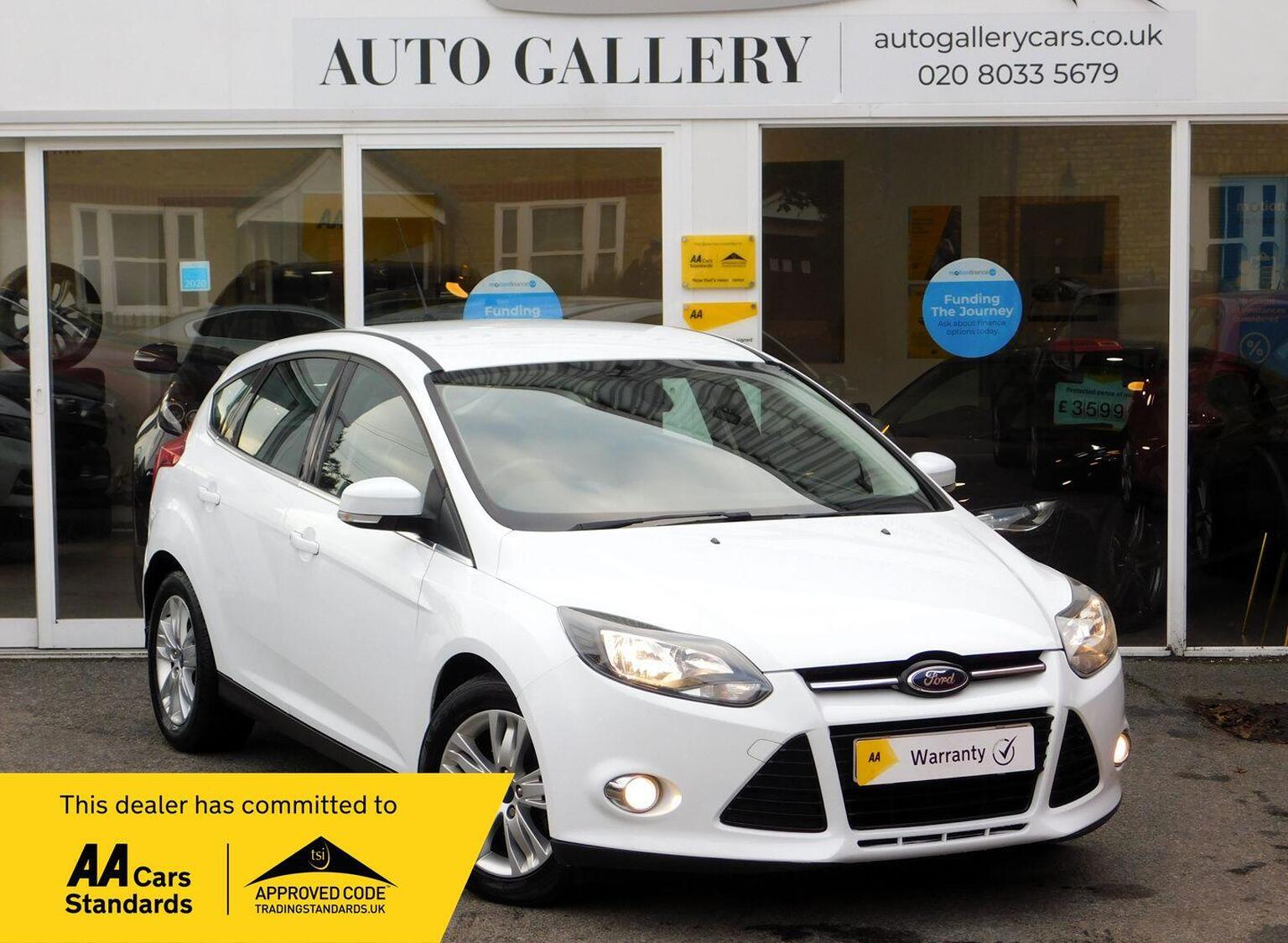
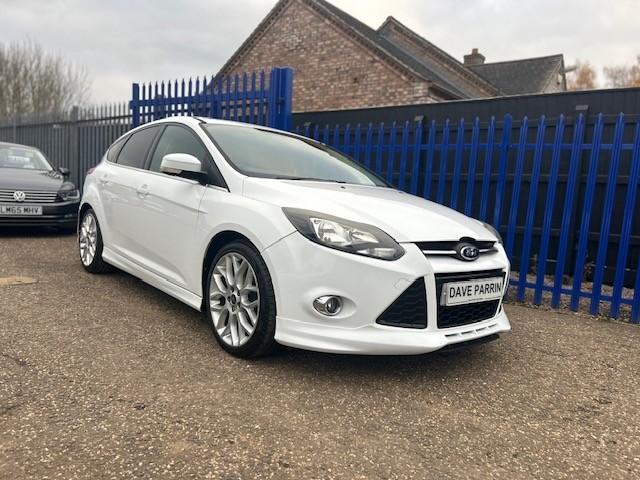
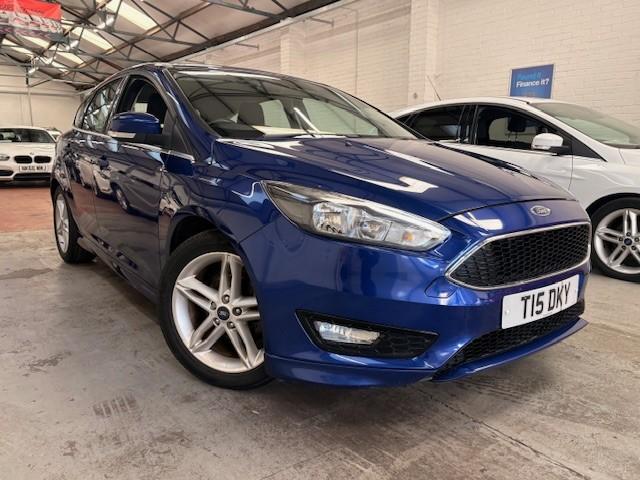
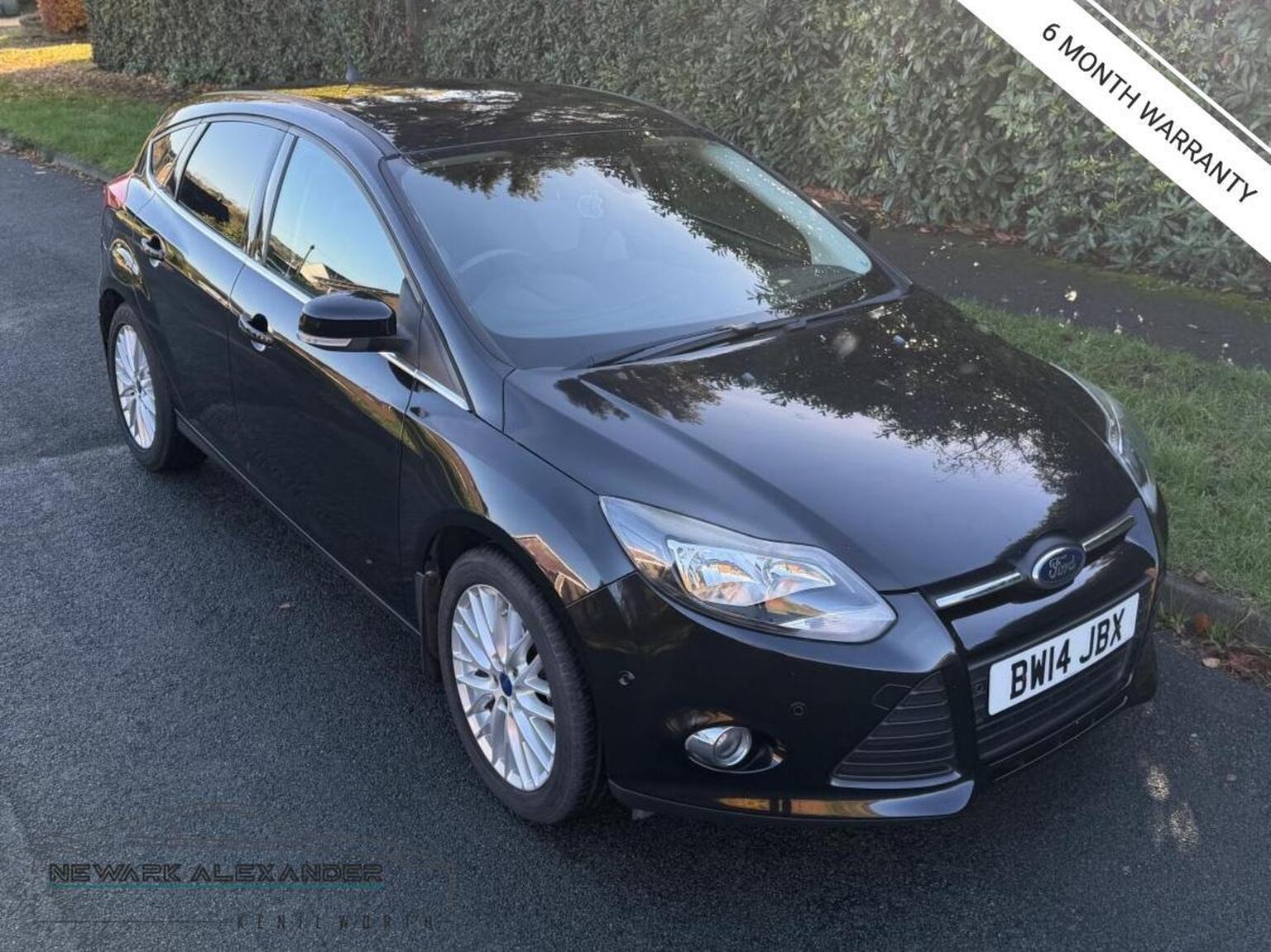
Used Ford Focus Mk3 adverts on Autoza, each from a dealer you can contact from the advert.

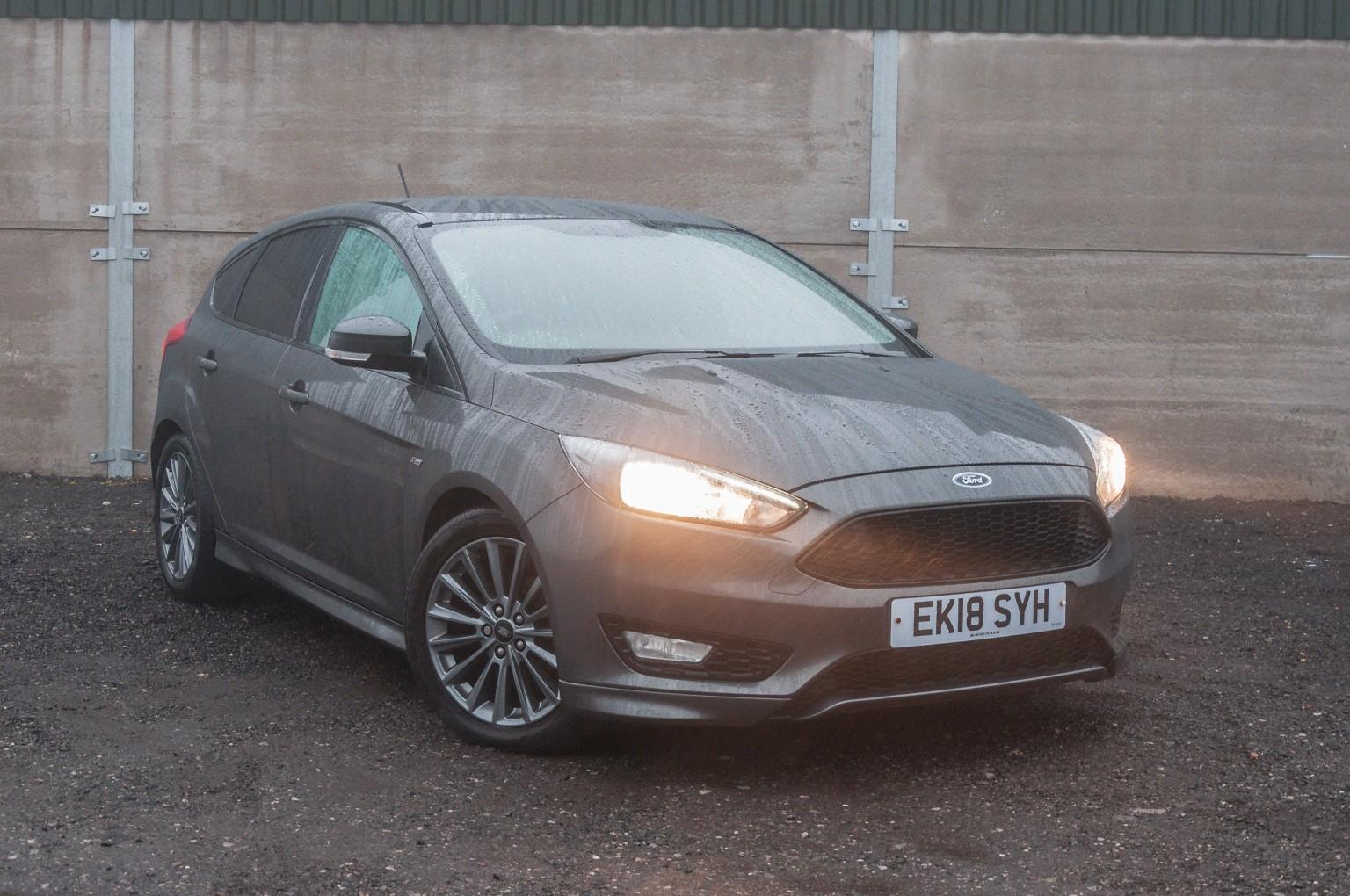
Ford Focus Mk3 MOT results by year and mileage
Measured from DVSA’s own MOT test records for tests carried out in 2025, not from owner reports.
By registration year
Against all cars registered in the same year, the MOT pass rate for the Focus Mk3 was higher in 3, lower in 3 and level in 1 of the 7 registration years from 2011 to 2017 with enough tests to measure. The widest gap below is 2014 registrations: 71.5% against 74.3% for all cars registered that year. The widest gap above is 2017 registrations: 85.6% against 82.2%.
Pass rate here: passed on the day, cars fixed during the test included. Rows: every Ford Focus Mk3 DVSA tested in 2025, by registration year (2011–2017), all engines and fuels together.
| Registered | Focus Mk3 | All cars that year | Difference |
|---|---|---|---|
| 20176,622 tests | 85.6% | 82.2% | +3.4 higher |
| 20166,681 tests | 81.7% | 79.4% | +2.3 higher |
| 20157,904 tests | 78.6% | 76.7% | +1.9 higher |
| 20147,672 tests | 71.5% | 74.3% | −2.8 lower |
| 20137,547 tests | 70.2% | 71.9% | −1.7 lower |
| 20126,817 tests | 70.0% | 70.2% | −0.2 level |
| 20116,180 tests | 67.0% | 68.4% | −1.4 lower |
By mileage at the test
Against cars of the same age on the same mileage, the pass rate for the Focus Mk3 was higher in 3 and level in 3 of the 6 mileage bands with enough tests. How other models compare at the same mileage.
Show the table by mileage (6 bands)
| Mileage | Focus Mk3 | Same age and mileage | Difference |
|---|---|---|---|
| 20k–40k2,925 tests | 88.3% | 86.1% | +2.2 higher |
| 40k–60k7,982 tests | 83.3% | 80.3% | +3.0 higher |
| 60k–80k12,448 tests | 77.0% | 75.3% | +1.7 higher |
| 80k–100k11,341 tests | 71.9% | 71.6% | +0.3 level |
| 100k–120k7,026 tests | 68.7% | 68.9% | −0.2 level |
| 120k–140k3,901 tests | 67.0% | 68.3% | −1.3 level |
Only a major or dangerous defect fails an MOT. A minor defect is recorded on the certificate and the car still passes, and an advisory is not a failure at all.
We don’t give a recall count for the Ford Focus Mk3: whether a recall applies depends on the individual car. Check the one you are looking at by entering its registration on GOV.UK’s vehicle recall checker, and see how to check a car for known faults for the other free checks.
Source: DVSA MOT Anonymised Data 2025 (Open Government Licence v3.0), a sample of the 2025 file (about one test in ten, from nine months) (3,459,000 tests). Class 4 tests in Great Britain, test type NT (a normal annual test), retests excluded. A pass, or a pass with rectification at the station, counts as a pass here (passed on the day); DVSA's own initial-test measure counts a rectified pass as a failure and so reports a lower figure. Odometer readings below 100 or above 400,000 miles are discarded as misreadings, and cars under three years old are excluded because no MOT is yet due. Sampled from nine months of 2025 (January, February, April, May, July, August, September, October and November). Testing in Northern Ireland is run separately by the DVA under its own rules. Registration years shown are cars 3 to 14 years old when tested; the smallest rests on 6,180 tests. A gap is called level when it is under one percentage point or inside the 95% sampling margin for that number of tests. Contains public sector information licensed under the Open Government Licence v3.0.
What fails at the MOT: DVSA 2025 results
Across 897,506 Ford Focus MOT tests in 2025 (all versions together), these defects turned up most often. This guide covers the Mk3, 2011–2018; the figures are for every Ford Focus tested, of any generation.
Where it stands out
The parts groups where Ford Focus tests carried a defect more often than cars of the same age and mileage:
- Lamps, reflectors and electrical. 15.5% of tests, against 12.4% for cars of the same age and mileage (1.3 times the rate).
What is found most often
The five defects found most often on Ford Focus tests, each compared with cars of the same age where it stands out:
- Position lamp: not working. On 3.9% of Ford Focus tests, 1.4 times the rate for cars of the same age.
- Coil spring: fractured or broken. On 3.1% of Ford Focus tests.
- Headlamp beam obviously aimed wrongly. On 3.0% of Ford Focus tests, 2.0 times the rate for cars of the same age.
- Tyre tread below the 1.6mm legal minimum. On 2.8% of Ford Focus tests.
- Stop lamp: not working. On 2.3% of Ford Focus tests.
Less common, but well above the rate for cars of the same age:
- Suspension: linkage fractured. On 0.5% of Ford Focus tests, 9.4 times the rate for cars of the same age.
- Tyre pressure monitoring system not working. On 1.2% of Ford Focus tests, 2.5 times the rate for cars of the same age.
- Side repeaters: not working. On 1.1% of Ford Focus tests, 2.2 times the rate for cars of the same age.
The MOT checks safety and emissions items, not the engine, clutch or gearbox, so this is one measure of how each car holds up rather than a full reliability verdict. These figures describe the model, all its versions together, not this particular car.
From DVSA’s 2025 MOT results. See the full analysis
Who this car suits — and who should look elsewhere
Buyers who want a family hatchback and will confirm the clutch recall record on an EcoBoost manual, the belt record on a 1.0 EcoBoost, and prefer a manual to the PowerShift.
Anyone buying a 1.0 EcoBoost without the belt invoice, a 2011–2013 EcoBoost without the coolant hose record, or a PowerShift automatic without its fluid history.
Alternatives to consider
If the Ford Focus Mk3 doesn't suit, these comparable models are worth a look in the UK market:
Ford Focus Mk3: questions buyers ask
What are the most common faults on a used Ford Focus Mk3 in the UK?
The Mk3 Ford Focus (2011–2018) is a good used hatchback if the known checks are done: the 1.0 EcoBoost’s wet timing belt and early coolant hose, the PowerShift automatic, and DVSA’s clutch pressure plate recall (R/2018/082, R/2018/351) on 1.0, 1.5 and 1.6 EcoBoost manuals built 2012–2018. Parkers calls the PowerShift troublesome and best avoided.
What is the best year to buy a used Ford Focus Mk3 in the UK?
Best-buy years: 2015, 2016, 2017. DVSA’s MOT table on this page rates 2015, 2016 and 2017 registrations above all cars registered those years. They are facelifted cars (Parkers: a significant facelift came in 2014) built after the October 2011 to October 2013 window of the 1.0 EcoBoost coolant hose action (Autocar, 1 October 2018), but not recall-free: both clutch pressure plate recalls cover these builds.
What years of Ford Focus Mk3 should I avoid in the UK?
Worst years: 2011–2013 (1.0 EcoBoost). The earliest 1.0 EcoBoost cars, built October 2011 to October 2013, are the ones in Ford’s coolant hose action (44,682 cars, Autocar, 1 October 2018), and Parkers says to check the hose was modified. This is a fault history, not an MOT result: an MOT checks safety and emissions items, not the engine, and the table on this page rates some of these years level with other cars of the same age. MOT results measure roadworthiness at the test, not engine or electronics reliability.
How much does a used Ford Focus Mk3 cost in the UK in 2026?
What sellers were asking on Autoza on 29 November 2026, for Ford Focus Mk3 cars registered 2011–2018: £2,985–£7,995, median £5,150 — the range is the middle 80% of asking prices. Those are asking prices, not what buyers paid, and not a UK price index. Prices vary by mileage, region and trim, so compare several adverts of the same year and mileage band before negotiating.
What is the road tax (VED) on a Ford Focus Mk3 in the UK?
Annual road tax (VED): £200/year standard rate from the second year, hybrids included — the alternative-fuel discount ended on 1 April 2025. A car registered from April 2017 with a list price over £40,000 when new adds the £440/year Expensive Car Supplement in years 2–6 (£640 in all). Cars registered 2001–2017 pay a CO2 band, roughly £20–£790/year (2026/27 rates).
What real-world fuel economy does a Ford Focus Mk3 achieve on UK roads?
No sourced real-world figure for the Focus Mk3, so none is printed: the official lab figure depends on the engine and on the test cycle the car was approved under, so use the figure for the exact version you are looking at.
How does a Ford Focus Mk3 compare to its rivals?
Strong alternatives in the UK: Vauxhall Astra, Volkswagen Golf, SEAT Leon, Skoda Octavia. Choose based on dealer network in your area, parts availability, and your priorities (running cost vs. cabin quality vs. badge).
Who is the Ford Focus Mk3 most suitable for?
Buyers who want a family hatchback and will confirm the clutch recall record on an EcoBoost manual, the belt record on a 1.0 EcoBoost, and prefer a manual to the PowerShift.
Who should NOT buy a Ford Focus Mk3?
Anyone buying a 1.0 EcoBoost without the belt invoice, a 2011–2013 EcoBoost without the coolant hose record, or a PowerShift automatic without its fluid history.
Are there safety recalls on the Ford Focus Mk3?
DVSA lists 5 safety recalls for the Ford Focus Mk3 that this guide shows or names, the largest first: R/2018/082 (122,199 vehicles in the whole recall, built between 1 August 2012 and 30 June 2016): Clutch pressure plate may fracture; R/2018/351 (66,497 vehicles in the whole recall, built between 30 June 2016 and 18 May 2018): Vehicle could suffer clutch pressure plate fracture; R/2018/053 (48,595 vehicles in the whole recall, built between 18 July 2014 and 8 September 2015): Oil sump may crack due to the engine overheating. Whether a particular car is affected depends on its build date and VIN, so check its registration on GOV.UK (gov.uk/check-vehicle-recall) before you buy.
Is the Clutch pressure plate may fracture (1.0, 1.5 and 1.6 EcoBoost manuals) on the Ford Focus Mk3 a serious problem?
Clutch pressure plate may fracture (1.0, 1.5 and 1.6 EcoBoost manuals) on the Ford Focus Mk3 is covered by DVSA safety recall R/2018/082. Symptoms: DVSA wording: affected vehicles with a 1.0, 1.5 or 1.6 EcoBoost engine and six-speed manual gearbox could suffer clutch pressure plate fracture, giving a clutch smell and reduced speed and performance; in extreme cases clutch or transmission fragments could strike under-bonnet components, creating a risk of smoke and fire (R/2018/082; R/2018/351 repeats it for later builds). The remedy is software that lights the wrench warning and de-rates the engine if prolonged clutch slip is detected. Carbuyer (26 January 2022) lists the broken clutch pressure plate among the faults sorted under recall. Years affected: Focus built 1 August 2012 to 30 June 2016 (R/2018/082) and 30 June 2016 to 18 May 2018 (R/2018/351). Indicative repair cost in the UK: Free under recall. What to check before buying: Check this one by registration through GOV.UK’s vehicle recall check (gov.uk/check-vehicle-recall) before you buy — an outstanding recall is free to put right and a completed one should be on the service record. On a manual EcoBoost ask for the Ford dealer record showing the clutch software update, and note any clutch smell or loss of power on the test drive.
Is the 2.0 diesel — oil sump may crack after overheating on the Ford Focus Mk3 a serious problem?
2.0 diesel — oil sump may crack after overheating on the Ford Focus Mk3 is covered by DVSA safety recall R/2018/053. Symptoms: DVSA wording: the engine control module calibration may not adequately detect an overheat condition in certain 2.0-litre Duratorq diesel engines; in extreme cases an overheated engine can breach the oil sump and lose the engine oil (R/2018/053). The remedy is revised software with an instrument cluster warning and an engine de-rate strategy. DVSA gives one total of 48,595 vehicles for the whole recall, across several Ford models. Years affected: Focus built 18 July 2014 to 8 September 2015. Indicative repair cost in the UK: Free under recall. What to check before buying: Check this one by registration through GOV.UK’s vehicle recall check (gov.uk/check-vehicle-recall) before you buy — an outstanding recall is free to put right and a completed one should be on the service record. On a 2.0 TDCi ask for the dealer record showing the software update.
Is the Cylinder head may crack (1.6 EcoBoost) on the Ford Focus Mk3 a serious problem?
Cylinder head may crack (1.6 EcoBoost) on the Ford Focus Mk3 is covered by DVSA safety recall R/2018/008. Symptoms: DVSA wording: localised overheating of the engine cylinder head may cause it to crack, which may cause a pressurised oil leak and in extreme circumstances a fire in the engine compartment (R/2018/008). Autocar (1 October 2018) ties this recall to the 1.6-litre EcoBoost, fitted to the Focus since 2010, and says dealers replace affected engine and cooling parts and fit a coolant level sensor with an audible and visual warning. Years affected: Focus built 2 June 2010 to 20 December 2014 (DVSA’s window includes some cars built before the Mk3). Indicative repair cost in the UK: Free under recall. What to check before buying: Check this one by registration through GOV.UK’s vehicle recall check (gov.uk/check-vehicle-recall) before you buy — an outstanding recall is free to put right and a completed one should be on the service record. On a 1.6 EcoBoost ask for the dealer record showing the coolant level sensor was fitted, and check the coolant level and for oil leaks.
Does the 2016 Ford Focus 1.0 EcoBoost have a wet belt?
Yes, according to Parkers (updated 20 March 2026): the 1.0-litre EcoBoost’s timing belt runs in the engine oil, can degrade and perish, and may cause irreparable engine damage. Parkers says most specialists advise replacing it every eight years, the job costs at least £1,000, and we have not found a current Ford UK interval, so ask a Ford dealer for the figure for the exact car. A 2016 car was built after the October 2011 to October 2013 coolant hose window (Autocar, 1 October 2018), but it falls inside DVSA’s clutch recall builds for 1.0 EcoBoost manuals (R/2018/082).
Is there a Ford Focus Mk3 1.6 TDCi problem?
We found no source to say. The Parkers engine page we read (updated 20 March 2026) lists the 1.5 and 2.0 TDCi diesels, not a 1.6 TDCi, and DVSA’s recall for the oil sump (R/2018/053) names the 2.0-litre Duratorq diesel. Check the exact engine on the V5C and ask a Ford dealer to run the VIN for open recalls.
Which Ford Focus Mk3 engines are in the clutch pressure plate recall?
DVSA’s wording for R/2018/082 and R/2018/351 is cars fitted with a 1.0, 1.5 or 1.6 EcoBoost engine and a six-speed manual gearbox. Automatics are not in that wording. Check any car by registration at gov.uk/check-vehicle-recall.
Check these next
The guide above is about the Ford Focus Mk3 as a model. These are about the car in front of you.
- Browse Ford Focus Mk3 listings on AutozaEvery one listed now.
- Check any car by its registrationFree: its MOT history, tax status and any open recall, from a number plate.
- Work out the road tax for the Focus Mk3Vehicle tax (VED) by registration date, CO2 and list price.
- Work out the monthly payment on a £5,150 Focus Mk3The median asking price on Autoza on 29 November 2026, not what buyers pay: change it to the car you are looking at.
- What is your Focus Mk3 worth?A price range from dealers' asking prices for comparable cars.
More checks on a Ford Focus Mk3
A fault list tells you what goes wrong; these tell you about the car in front of you.
- Check the MOT history of a Ford Focus Mk3Its past MOT results, advisories and mileage readings, from the number plate.
- Is this a good price?Judge one advert’s asking price against similar cars for sale on Autoza.
- Every DVSA recall for the Ford Focus Mk3The model’s recalls in a table, newest first, with DVSA’s own references and build dates.
Looking to buy a Ford Focus Mk3 in the UK?
Search Autoza listings filtered by year, mileage, and region. Every dealer page shows the business name, address and contact details, so you can check the business before you enquire.