
Suzuki Jimny Common Faults in the UK
third generation 1998–2018 and fourth generation 2018–on — compact 4x4. Updated 20 November 2026.
This guide covers the third generation 1998–2018 and fourth generation 2018–on. For any other version of the Jimny, see how to check any car for known faults.
What Car? says reported problems on the 2018-on Suzuki Jimny are very few and that Suzuki finished fourth of 32 brands in its survey (page updated 12 December 2023). DVSA lists two recalls for it: door harnesses that can affect airbag operation (R/2021/173) and a fuel pump impeller that can swell (R/2021/172, and R/2024/138 for later builds). Older cars need rust and underside checks. DVSA’s 2025 MOT sample is too thin for any single Jimny registration year, so this guide gives no MOT year ratings.
Largest DVSA recall for the Jimny: R/2010/067, 5,425 vehicles in the whole recall — Loss of steering assistance.
What a Suzuki Jimny costs on Autoza now
Median asking price of the Suzuki Jimny on autoza.co.uk on 22 November 2026, by the year the car was first registered:
- Registered 2024–2026: £26,495
Asking prices on autoza.co.uk on 22 November 2026, not what buyers pay, worked out from the cars on sale when this page is generated. A year band is shown only when at least 10 cars qualify. Only cars first registered from 2019, the years this guide covers, are counted.
The asking-price figures above are the middle 80% and the median of what sellers were asking on Autoza on 22 November 2026 — not what buyers pay — for Suzuki Jimny cars registered from 2019. They are worked out from the cars on sale when this page is generated, and none is shown when fewer than 10 cars qualify. The road tax line comes from GOV.UK's vehicle tax rate tables (2026/27 rates). The fuel economy tile names the source it rests on or says there is no sourced figure, and the insurance tile gives no figure. We do not publish a UK price index, and no figure here should be quoted as one.
Best and worst years to buy
We name a year as a best or worst buy only where the DVSA MOT table further down does not rate it the other way.
DVSA’s 2025 MOT sample holds about a hundred Jimny tests for each registration year, so no year reaches the 200 tests the MOT table needs and we do not rate one year above another. The recalls below follow build dates, not registration years. MOT results measure roadworthiness at the test, not engine or electronics reliability.
No year is named as one to avoid: with too few MOT tests per registration year we hold no DVSA rating for any Jimny year. Judge a car by its service record, its underside and the recall checks below. That is not clearance: the sources document rust, the earlier timing belt and two recalls, set out below.
Known faults — Suzuki Jimny third generation 1998–2018 and fourth generation 2018–on
How to read this list. Items marked Safety recall are DVSA safety recalls, shown with DVSA’s own reference. Whether a particular car is affected depends on when it was built: check it by registration through GOV.UK’s vehicle recall check. Everything else in this list is owner-reported: what the UK publication named on each card reports from its owner surveys and tests. Those are worth checking on a viewing, but we hold no count of how many cars have each one, other than any survey share a card itself quotes. Treat an owner-reported item as a question to ask, not a fault this car has.
Power steering pulley that can fail (third generation)
- Symptoms
- DVSA wording: steering assistance may be lost because the power steering tensioner pulley material is not to specification, so the pulley may fail and cause a loss of drive to the hydraulic pump. The pulley is inspected and replaced where necessary. DVSA gives no build dates for this recall, which it launched on 26 July 2010.
- Years affected
- Third-generation Jimny; DVSA gives no build dates for this recall
- Indicative repair (UK)
- Free under recall
- What to check before buying
- Check this one by registration through GOV.UK’s vehicle recall check (gov.uk/check-vehicle-recall) before you buy — an outstanding recall is free to put right and a completed one should be on the service record. On an older car, check the steering feels the same at full lock, cold and warm, with no whine from the pump.
Door harnesses that can affect airbag operation (2018–2020 builds)
- Symptoms
- DVSA wording: improper design of the driver side and the passenger side door harnesses may affect air bag operation. The door harnesses are replaced. What Car? lists it as one of the Jimny’s two recalls on its page updated 12 December 2023.
- Years affected
- Jimny built 31 May 2018 to 2 December 2020
- Indicative repair (UK)
- Free under recall
- What to check before buying
- Check this one by registration through GOV.UK’s vehicle recall check (gov.uk/check-vehicle-recall) before you buy — an outstanding recall is free to put right and a completed one should be on the service record. On a 2019 or 2020 car, ask for the Suzuki dealer record showing the door harnesses were replaced.
Loose steering-axle rod bolts and steering vibration (2012–2014 builds)
- Symptoms
- DVSA wording: a bolt securing the lateral rods to the front and rear axles may become loose and cause a vibration through the steering wheel. These rods act as an anti-tramp measure and, if the bolt wears, it can drop out. The bolts are replaced with a modified version. What Car? describes the same recall on its page updated 29 January 2019.
- Years affected
- Jimny built 9 May 2012 to 24 March 2014
- Indicative repair (UK)
- Free under recall
- What to check before buying
- Check this one by registration through GOV.UK’s vehicle recall check (gov.uk/check-vehicle-recall) before you buy — an outstanding recall is free to put right and a completed one should be on the service record. On a 2012–2014 car, feel for vibration through the steering wheel on the test drive and ask for the dealer record showing the bolts were replaced.
Fuel pump impeller that can swell (2018–2019 builds)
- Symptoms
- DVSA wording: the fuel feeding impeller in the fuel pump may be swollen and deformed, and the fuel pump is replaced. A second DVSA recall, R/2024/138, covers later 2018 and 2019 builds for the same impeller concern: the impeller may interfere with the pump housing, resulting in the fuel pump malfunctioning. Auto Express says the fault could starve the engine of fuel (its page is published 22 June 2022).
- Years affected
- Jimny built 9 May 2018 to 22 November 2018 (R/2021/172) and 12 November 2018 to 2 September 2019 (R/2024/138)
- Indicative repair (UK)
- Free under recall
- What to check before buying
- Check this one by registration through GOV.UK’s vehicle recall check (gov.uk/check-vehicle-recall) before you buy — an outstanding recall is free to put right and a completed one should be on the service record. On a 2018 or 2019 car, ask whether the fuel pump has been replaced and check the engine starts and idles smoothly from cold.
DVSA’s counts, recall by recall: R/2024/138 836; R/2021/172 510.
Rust and underside damage on older and off-roaded cars
- Symptoms
- What Car? says rust is more of a problem on examples that regularly go off road, because mud that has not been cleaned off traps moisture and leads to corrosion (its page is updated 29 January 2019). Auto Express says the key thing to check on the 2019-on car is damage to the underside from off-roading, which some owners do (its page is published 22 June 2022).
- Years affected
- All generations, most of all cars used off-road
- What to check before buying
- Look under the car at the chassis, axles and sills with it on a ramp or in good light, and ask whether it has been used off-road and how it was cleaned afterwards.
Earlier 1.3 timing belt, coolant leaks and wheel wobble (third generation)
- Symptoms
- What Car? says the earlier version of the 1.3-litre engine uses a timing belt that needs replacing at set intervals, so look for evidence of this in the service history, and to watch for coolant leaks on older examples from perished hoses or the radiator. It adds that worn suspension, wheel bearings, tired CV joints or poor wheel balancing give plenty of steering-wheel wobble above 50mph. Its page is updated 29 January 2019. Auto Express says the 2019-on 1.5-litre engine is chain-driven, so it has no cambelt to replace (page published 22 June 2022).
- Years affected
- Third generation 1998–2018 (belt, hoses, wobble); fourth generation is chain-driven
- What to check before buying
- On an older 1.3, ask for proof of the timing belt change and check the hoses and radiator for dampness; on any car, hold 50mph on a smooth road and feel for wobble.
Leaking soft top and four-wheel-drive selection (third generation)
- Symptoms
- What Car? says leaks on early soft tops are a particular problem, partly because the seals have perished and partly because the clips can break, and that a replacement roof is often the only solution at as much as £500 plus fitting. It also says the Jimny does not run in four-wheel drive all the time, so make sure the system engages the front wheels, and that perished vacuum lines to the front wheel hubs should be inspected. Its page is updated 29 January 2019.
- Years affected
- Third generation 1998–2018 (soft-top cars and four-wheel-drive system)
- What to check before buying
- On a soft top, look for damp in the footwells and a roof that does not seat; on any older car, engage four-wheel drive on a loose surface and confirm the front wheels pull.
The light commercial Jimny has no rear seat
- Symptoms
- Auto Express says the only difference between the passenger-carrying Jimny and the light commercial version is the absence of a rear seat, which can be retrofitted, and that the light commercial cars were few and far between when it wrote (its page is published 22 June 2022).
- Years affected
- Fourth generation, light commercial version
- What to check before buying
- Check the body type on the V5C logbook, count the seats and ask the dealer whether rear seats have been fitted to a two-seat car.
Cars like this for sale now
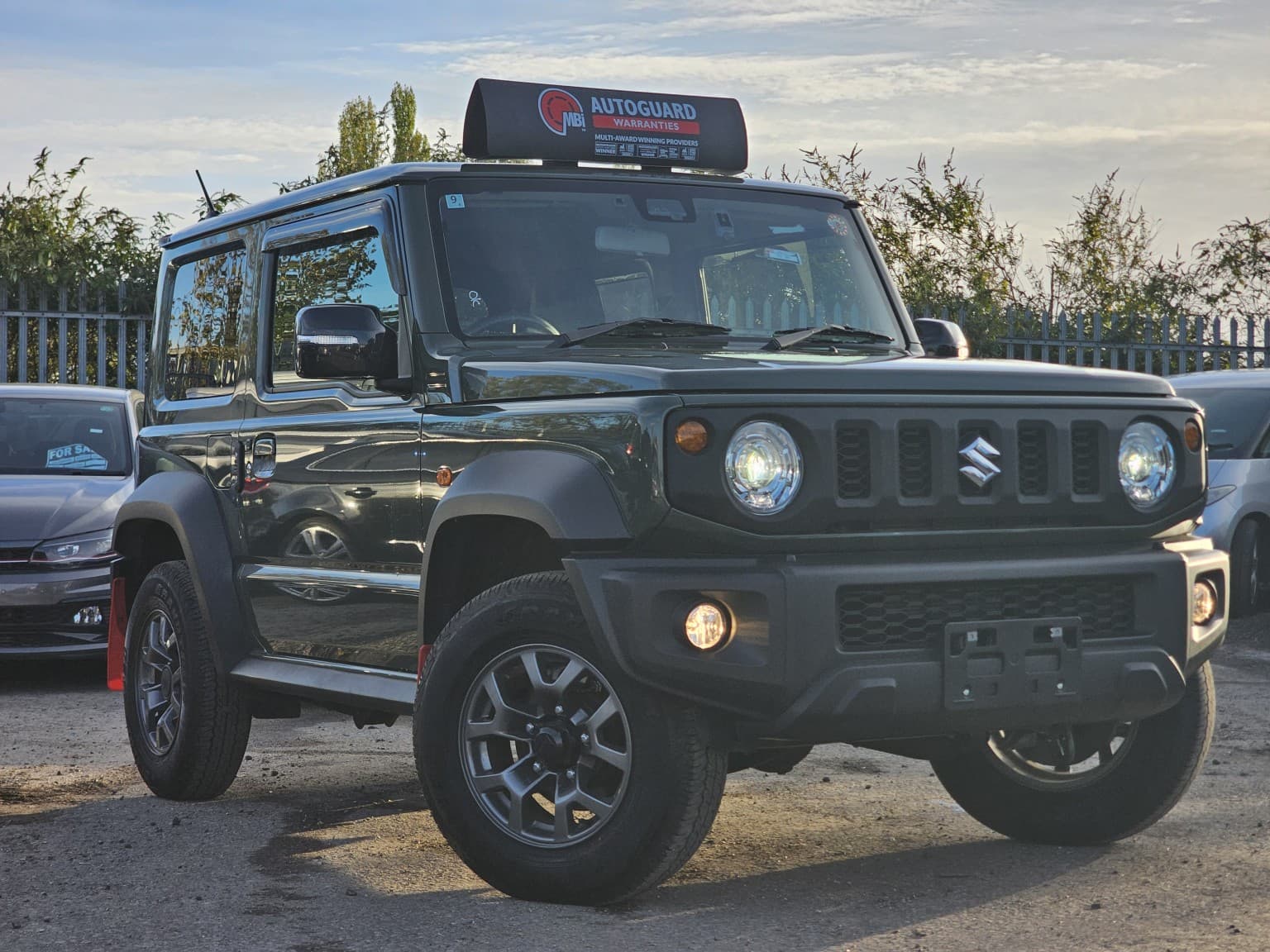
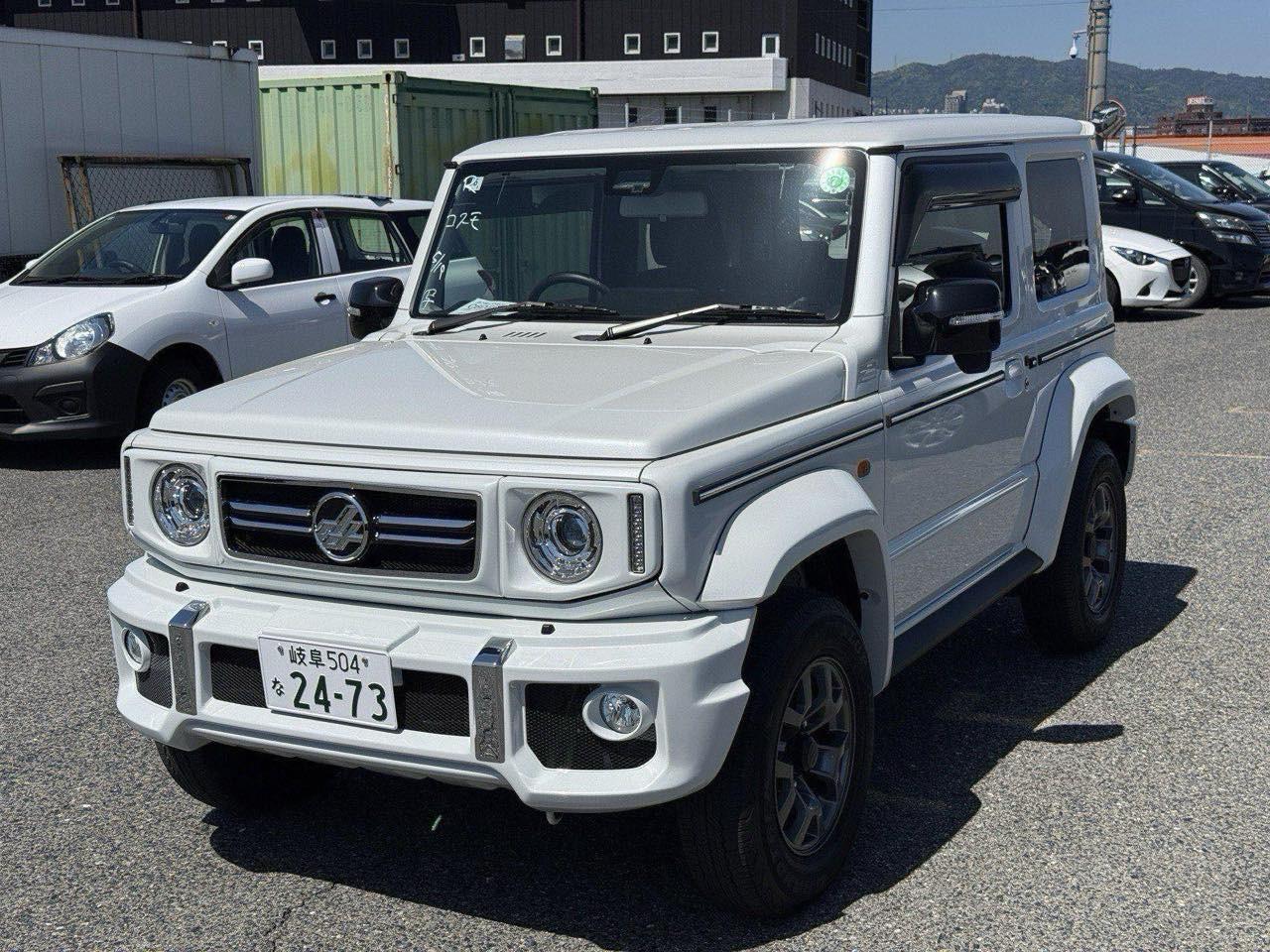
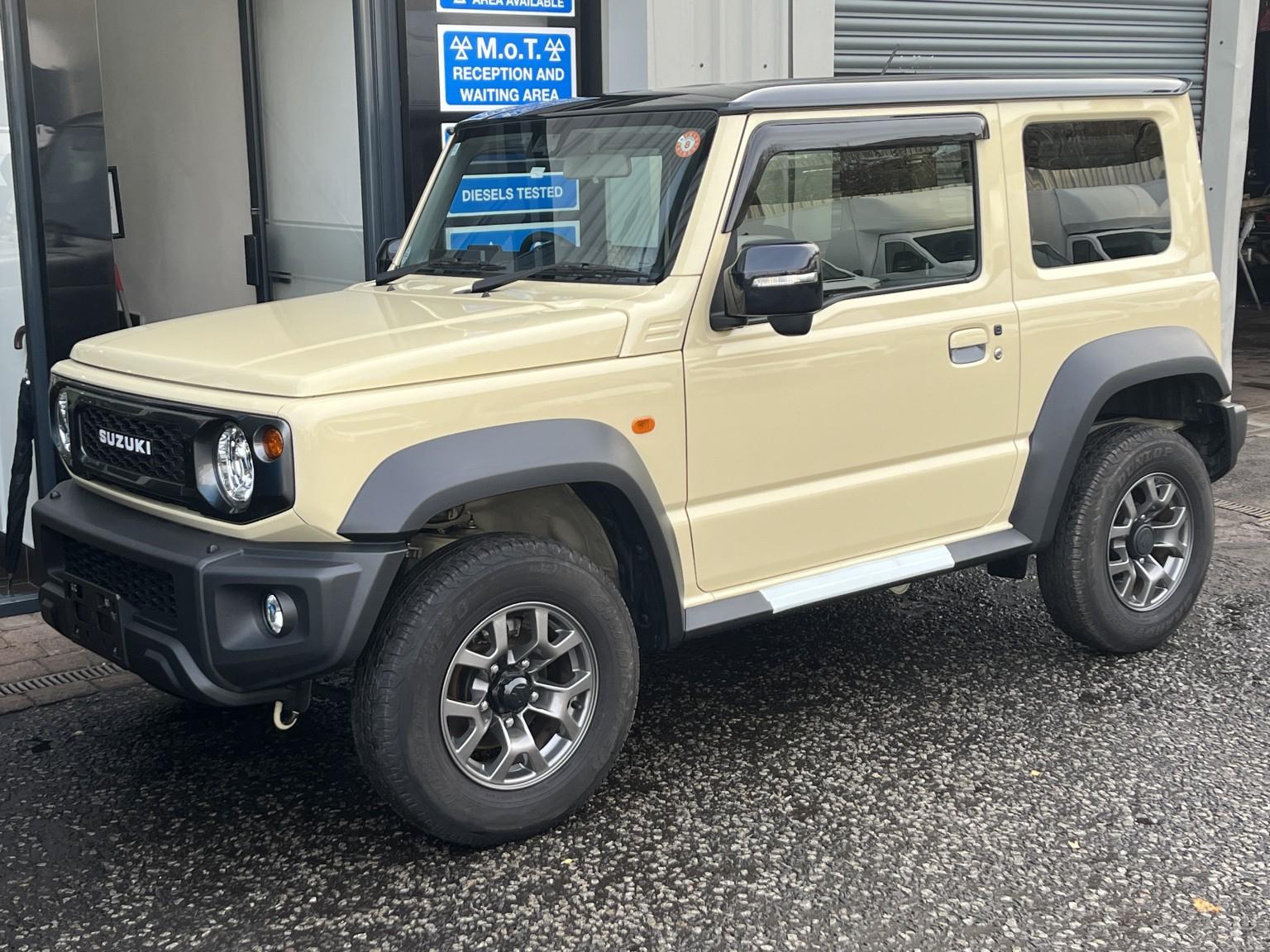
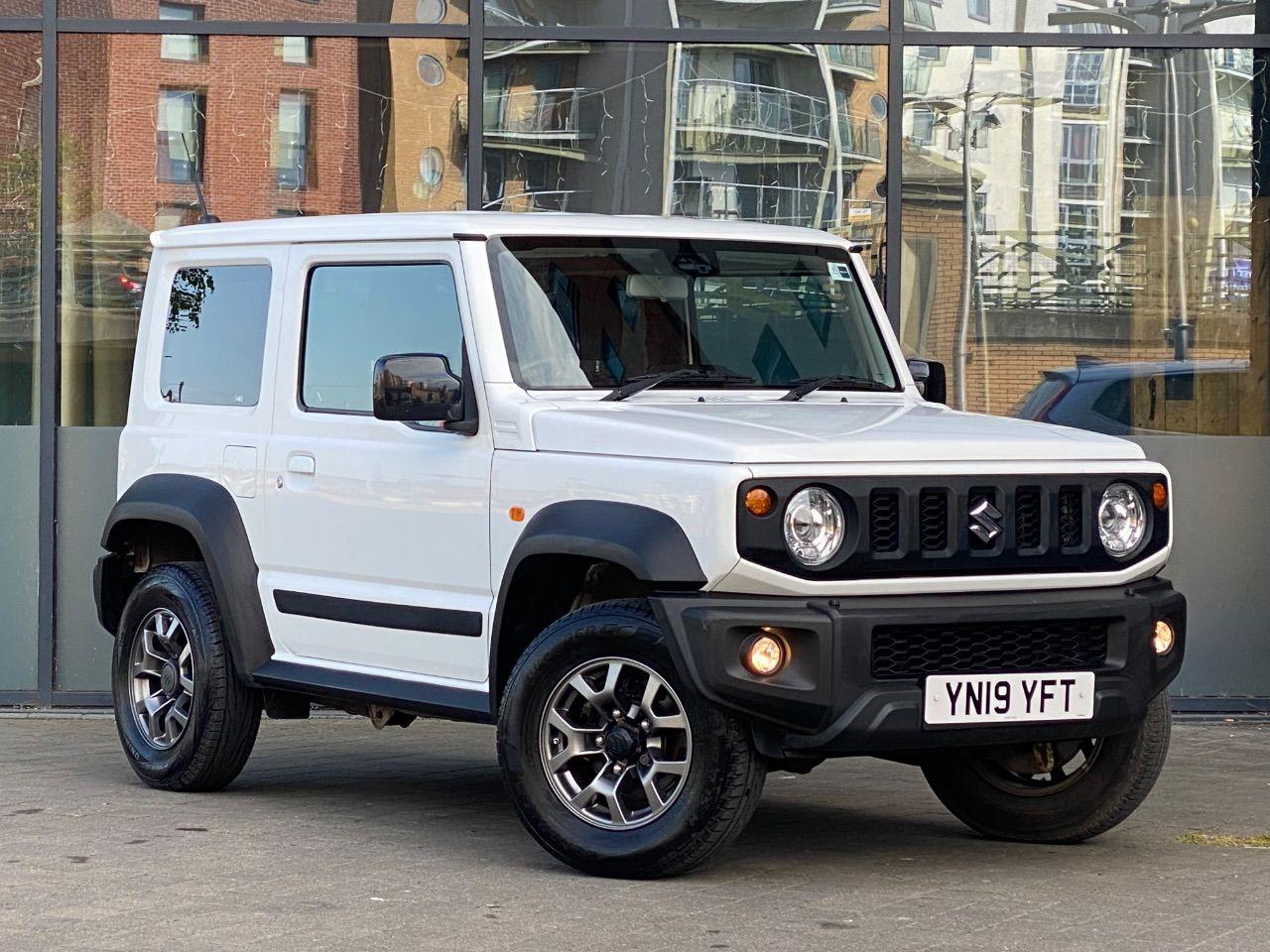
Used Suzuki Jimny adverts on Autoza, each from a dealer you can contact from the advert.

What fails at the MOT: DVSA 2025 results
Across 23,411 Suzuki Jimny MOT tests in 2025 (all versions together), these defects turned up most often. This guide covers the third generation 1998–2018 and fourth generation 2018–on; the figures are for every Suzuki Jimny tested, of any generation.
Where it stands out
The parts groups where Suzuki Jimny tests carried a defect more often than cars of the same age and mileage:
- Seat belts and SRS. 3.0% of tests, against 1.5% for cars of the same age and mileage (2.1 times the rate).
- Body, chassis and structure. 8.7% of tests, against 4.8% for cars of the same age and mileage (1.8 times the rate).
- Noise, emissions and leaks. 6.0% of tests, against 4.2% for cars of the same age and mileage (1.4 times the rate).
- Brakes. 10.0% of tests, against 7.7% for cars of the same age and mileage (1.3 times the rate).
What is found most often
The five defects found most often on Suzuki Jimny tests, each compared with cars of the same age where it stands out:
- Body, chassis and structure: chassis condition or chassis has excessive corrosion, seriously affecting its strength within 30cm of a body mounting. On 3.8% of Suzuki Jimny tests.
- Position lamp: not working. On 3.6% of Suzuki Jimny tests.
- Wipers do not clear the windscreen effectively. On 3.0% of Suzuki Jimny tests, 1.4 times the rate for cars of the same age.
- Coil spring: fractured or broken. On 2.9% of Suzuki Jimny tests.
- Service brake imbalance: across an axle. On 2.5% of Suzuki Jimny tests.
The MOT checks safety and emissions items, not the engine, clutch or gearbox, so this is one measure of how each car holds up rather than a full reliability verdict. These figures describe the model, all its versions together, not this particular car.
From DVSA’s 2025 MOT results. See the full analysis
Who this car suits — and who should look elsewhere
Buyers who want a small, simple 4x4 and will check the underside and the recall paperwork, reading What Car?’s report of very few problems as a record for the 2018-on car.
Anyone buying an older car with no proof of the timing belt change, or a car that has been used off-road without a look underneath.
Alternatives to consider
If the Suzuki Jimny doesn't suit, these comparable models are worth a look in the UK market:
Suzuki Jimny: questions buyers ask
What are the most common faults on a used Suzuki Jimny in the UK?
What Car? says reported problems on the 2018-on Suzuki Jimny are very few and that Suzuki finished fourth of 32 brands in its survey (page updated 12 December 2023). DVSA lists two recalls for it: door harnesses that can affect airbag operation (R/2021/173) and a fuel pump impeller that can swell (R/2021/172, and R/2024/138 for later builds). Older cars need rust and underside checks. DVSA’s 2025 MOT sample is too thin for any single Jimny registration year, so this guide gives no MOT year ratings.
What is the best year to buy a used Suzuki Jimny in the UK?
Best-buy years: no single year stands out. DVSA’s 2025 MOT sample holds about a hundred Jimny tests for each registration year, so no year reaches the 200 tests the MOT table needs and we do not rate one year above another. The recalls below follow build dates, not registration years. MOT results measure roadworthiness at the test, not engine or electronics reliability.
What years of Suzuki Jimny should I avoid in the UK?
No specific year of the third generation 1998–2018 and fourth generation 2018–on Suzuki Jimny is generally avoided. No year is named as one to avoid: with too few MOT tests per registration year we hold no DVSA rating for any Jimny year. Judge a car by its service record, its underside and the recall checks below. That is not clearance: the sources document rust, the earlier timing belt and two recalls, set out below.
How much does a used Suzuki Jimny cost in the UK in 2026?
What sellers were asking on Autoza on 22 November 2026, for Suzuki Jimny cars registered from 2019: £20,995–£27,495, median £25,995 — the range is the middle 80% of asking prices. Those are asking prices, not what buyers paid, and not a UK price index. Prices vary by mileage, region and trim, so compare several adverts of the same year and mileage band before negotiating.
What is the road tax (VED) on a Suzuki Jimny in the UK?
Annual road tax (VED): £200/year standard rate from the second year, hybrids included — the alternative-fuel discount ended on 1 April 2025. A car registered from April 2017 with a list price over £40,000 when new adds the £440/year Expensive Car Supplement in years 2–6 (£640 in all). Cars registered 2001–2017 pay a CO2 band, roughly £20–£790/year (2026/27 rates).
What real-world fuel economy does a Suzuki Jimny achieve on UK roads?
No sourced real-world figure for the Jimny, so none is printed: the official lab figure depends on the engine and on the test cycle the car was approved under, so use the figure for the exact version you are looking at.
How does a Suzuki Jimny compare to its rivals?
Strong alternatives in the UK: Dacia Duster, Suzuki Swift, Nissan Juke, Kia Sportage. Choose based on dealer network in your area, parts availability, and your priorities (running cost vs. cabin quality vs. badge).
Who is the Suzuki Jimny most suitable for?
Buyers who want a small, simple 4x4 and will check the underside and the recall paperwork, reading What Car?’s report of very few problems as a record for the 2018-on car.
Who should NOT buy a Suzuki Jimny?
Anyone buying an older car with no proof of the timing belt change, or a car that has been used off-road without a look underneath.
Are there safety recalls on the Suzuki Jimny?
DVSA lists 5 safety recalls for the Suzuki Jimny that this guide shows or names, the largest first: R/2010/067 (5,425 vehicles in the whole recall): Loss of steering assistance; R/2021/173 (2,321 vehicles, built between 31 May 2018 and 2 December 2020): Improper design of the driver side and the passenger side door harnesses may affect air bag operation; R/2014/061 (1,510 vehicles, built between 9 May 2012 and 24 March 2014): Steering effort may decrease. Whether a particular car is affected depends on its build date and VIN, so check its registration on GOV.UK (gov.uk/check-vehicle-recall) before you buy.
Is the Rust and underside damage on older and off-roaded cars on the Suzuki Jimny a serious problem?
Owner-reported, frequency unknown: Rust and underside damage on older and off-roaded cars is reported by What Car? for the Suzuki Jimny, but how often it happens is not known, so treat it as a question to ask rather than a fault every car has. Symptoms: What Car? says rust is more of a problem on examples that regularly go off road, because mud that has not been cleaned off traps moisture and leads to corrosion (its page is updated 29 January 2019). Auto Express says the key thing to check on the 2019-on car is damage to the underside from off-roading, which some owners do (its page is published 22 June 2022). Years affected: All generations, most of all cars used off-road. What to check before buying: Look under the car at the chassis, axles and sills with it on a ramp or in good light, and ask whether it has been used off-road and how it was cleaned afterwards.
Is the Earlier 1.3 timing belt, coolant leaks and wheel wobble (third generation) on the Suzuki Jimny a serious problem?
Owner-reported, frequency unknown: Earlier 1.3 timing belt, coolant leaks and wheel wobble (third generation) is reported by What Car? for the Suzuki Jimny, but how often it happens is not known, so treat it as a question to ask rather than a fault every car has. Symptoms: What Car? says the earlier version of the 1.3-litre engine uses a timing belt that needs replacing at set intervals, so look for evidence of this in the service history, and to watch for coolant leaks on older examples from perished hoses or the radiator. It adds that worn suspension, wheel bearings, tired CV joints or poor wheel balancing give plenty of steering-wheel wobble above 50mph. Its page is updated 29 January 2019. Auto Express says the 2019-on 1.5-litre engine is chain-driven, so it has no cambelt to replace (page published 22 June 2022). Years affected: Third generation 1998–2018 (belt, hoses, wobble); fourth generation is chain-driven. What to check before buying: On an older 1.3, ask for proof of the timing belt change and check the hoses and radiator for dampness; on any car, hold 50mph on a smooth road and feel for wobble.
Check these next
The guide above is about the Suzuki Jimny as a model. These are about the car in front of you.
- Browse Suzuki Jimny listings on AutozaEvery one listed now.
- Check any car by its registrationFree: its MOT history, tax status and any open recall, from a number plate.
- Work out the road tax for the JimnyVehicle tax (VED) by registration date, CO2 and list price.
- Work out the monthly payment on a £25,995 JimnyThe median asking price on Autoza on 22 November 2026, not what buyers pay: change it to the car you are looking at.
- What is your Jimny worth?A price range from dealers' asking prices for comparable cars.
More checks on a Suzuki Jimny
A fault list tells you what goes wrong; these tell you about the car in front of you.
Looking to buy a Suzuki Jimny in the UK?
Search Autoza listings filtered by year, mileage, and region. Every dealer page shows the business name, address and contact details, so you can check the business before you enquire.