
Mazda 3 Common Faults in the UK
third generation 2014–2019 and fourth generation 2019–on — family hatchback and saloon. Updated 15 November 2026.
This guide covers the third generation 2014–2019 and fourth generation 2019–on only. Older 3 generations have different engines and faults — for one of those, see how to check any car for known faults.
DVSA lists many Mazda 3 recalls, the largest on soot at the intake shutter valve (R/2019/187, cars built 26 January 2012 to 30 June 2018) and on fuel-injector software (R/2018/288), so check each car by registration. What Car? ranked the 3 21st of 30 family cars in its 2025 survey, with diesel owners reporting particulate-filter warnings (page updated 4 December 2025).
Largest DVSA recall for the 3: R/2019/187, 70,435 vehicles in the whole recall — Soot may accumulate around the intake shutter valve on the inlet side of the engine.
79.3% of Mazda 3s pass the MOT first time, 2.2 points worse than the national average for cars of the same age (81.5%). Counted from 6,396 DVSA tests on cars registered 2014–2022; a pass with rectification at the station counts as a pass here, and as a failure in DVSA's own initial-test measure.
Source: DVSA MOT Anonymised Data 2025 (Open Government Licence v3.0), a sample of the 2025 file (about one test in ten, from nine months). Class 4 tests in Great Britain, test type NT (a normal annual test), retests excluded. A pass, or a pass with rectification at the station, counts as a pass here (passed on the day); DVSA's own initial-test measure counts a rectified pass as a failure and so reports a lower figure. Testing in Northern Ireland is run separately by the DVA under its own rules. Compared against cars of the same registration years, because pass rates otherwise mostly measure how old a model's surviving fleet is.
See it by registration year and by mileage ↓The asking-price figures above are the middle 80% and the median of what sellers were asking on Autoza on 22 November 2026 — not what buyers pay — for Mazda 3 cars registered from 2014. They are worked out from the cars on sale when this page is generated, and none is shown when fewer than 10 cars qualify. The road tax line comes from GOV.UK's vehicle tax rate tables (2026/27 rates). The fuel economy tile names the source it rests on or says there is no sourced figure, and the insurance tile gives no figure. We do not publish a UK price index, and no figure here should be quoted as one.
Best and worst years to buy
We name a year as a best or worst buy only where the DVSA MOT table further down does not rate it the other way.
DVSA’s MOT table rates 2020 and 2022 registrations above all cars registered those years (by 3.2 to 4.0 points), 2018, 2019 and 2021 level with them and 2014, 2015, 2016 and 2017 below them (by 3.3 to 5.1 points), so no single year stands out. The recalls below follow build dates, not registration years. MOT results measure roadworthiness at the test, not engine or electronics reliability.
No year is named as one to avoid: DVSA’s MOT table puts 2014, 2015, 2016 and 2017 registrations below all cars registered those years (by 3.3 to 5.1 points, on 841 to 1,249 sampled tests a year), but DVSA and the sources we read give no cause for the gap, so we check harder rather than skip the car. That is not clearance: DVSA lists recalls on engine software, fuel pumps, injectors, wipers and a steering-wheel logo, and What Car? notes diesel particulate-filter warnings, set out below.
Which Mazda 3 years to avoid?
Mazda 3 registrations from 2014, 2015, 2016 and 2017 did worse at MOT in 2025 than the average car registered in the same year. The widest gap was 2017: 22.9% failed, against 17.8% of all cars registered that year.
2020 and 2022 registrations did better than average, failing clearly less often than all cars registered the same year.
Separately, 6 of the 13 DVSA recalls listed for this model cover cars built between 2015 and 2016: that is the build-date stretch with the most recalls, so check any car from it by registration.
This is MOT test data: the MOT is a roadworthiness test, not a full reliability record, and it does not check the engine, clutch or gearbox. “Failed” means failed on the day, with cars fixed during the test counted as passes. A year is marked only where its gap is 3 points or more and beyond the 95% sampling margin for that many tests. See the full MOT results by year and mileage.
| Registered | 3 failed | All cars that year | Tests |
|---|---|---|---|
| 2022did better than average | 4.8% | 8.8% | 289 |
| 2021 | 7.8% | 9.9% | 424 |
| 2020did better than average | 8.1% | 11.3% | 430 |
| 2019 | 10.4% | 13.1% | 443 |
| 2018 | 15.8% | 15.5% | 727 |
| 2017did worse than average | 22.9% | 17.8% | 841 |
| 2016did worse than average | 24.8% | 20.6% | 1,071 |
| 2015did worse than average | 28.4% | 23.3% | 1,249 |
| 2014did worse than average | 29.0% | 25.7% | 911 |
Source: DVSA MOT Anonymised Data 2025 (Open Government Licence v3.0). Contains public sector information licensed under the Open Government Licence v3.0.
Known faults — Mazda 3 third generation 2014–2019 and fourth generation 2019–on
How to read this list. Items marked Safety recall are DVSA safety recalls, shown with DVSA’s own reference. Whether a particular car is affected depends on when it was built: check it by registration through GOV.UK’s vehicle recall check. Everything else in this list is owner-reported: what the UK publication named on each card reports from its owner surveys and tests. Those are worth checking on a viewing, but we hold no count of how many cars have each one, other than any survey share a card itself quotes. Treat an owner-reported item as a question to ask, not a fault this car has.
Soot at the intake shutter valve (2012–2018 builds)
- Symptoms
- DVSA wording: soot may accumulate around the intake shutter valve on the inlet side of the engine. The valve is checked, cleaned or replaced and the software updated.
- Years affected
- Mazda 3 built 26 January 2012 to 30 June 2018
- Indicative repair (UK)
- Free under recall
- What to check before buying
- Check this one by registration through GOV.UK’s vehicle recall check (gov.uk/check-vehicle-recall) before you buy — an outstanding recall is free to put right and a completed one should be on the service record. On a diesel built to 2018, ask for the Mazda dealer record showing the valve was checked and the software updated.
Fuel-injector software, injector nuts and vacuum pump (2012–2016 builds)
- Symptoms
- For R/2018/288, DVSA wording: the software controlling the fuel injectors does not control the electric current correctly, which may cause the injector control circuit to short circuit and the engine to stall, with possible engine stall without warning; the software is re-programmed. DVSA ran two more references on the same builds: injector mounting nuts whose tightening force may be insufficient (R/2018/289) and a vacuum pump that may wear prematurely (R/2018/236).
- Years affected
- Mazda 3 built 26 January 2012 to 21 January 2016
- Indicative repair (UK)
- Free under recall
- What to check before buying
- Check this one by registration through GOV.UK’s vehicle recall check (gov.uk/check-vehicle-recall) before you buy — an outstanding recall is free to put right and a completed one should be on the service record. On a car built before 2016, ask for the dealer record for each of the three references.
DVSA’s counts, recall by recall: R/2018/288 48,875 (every model in the recall); R/2018/236 11,498 (every model in the recall); R/2018/289 11,021 (every model in the recall).
Steering-wheel centre logo that can shatter (2020 builds)
- Symptoms
- DVSA wording: the plastic logo on the steering wheel centre may shatter and project fragments into the vehicle interior during an air bag deployment. The airbag module cover is replaced with an improved part.
- Years affected
- Mazda 3 built 19 May 2020 to 24 November 2020
- Indicative repair (UK)
- Free under recall
- What to check before buying
- On a 2020 car, ask for the dealer record showing the airbag module cover was replaced.
Low-pressure fuel pump impeller (2018–2019 builds)
- Symptoms
- DVSA wording: the impeller in the low-pressure fuel pump may become deformed, causing fuel pump failure. The pump is replaced with an improved part.
- Years affected
- Mazda 3 built 23 April 2018 to 26 January 2019
- Indicative repair (UK)
- Free under recall
- What to check before buying
- On a 2018 or 2019 car, ask for the dealer record showing the fuel pump was replaced.
Engine protection software and windscreen wiper relay (2015–2017 builds)
- Symptoms
- DVSA wording for R/2019/148: the front windscreen wipers may become inoperable due to a defect in the relay, and the front body control module is replaced with an improved wiper relay design. What Car? also lists a problem with the engine protection software on cars constructed between 30 April 2015 and 4 November 2017, which might not stop the engine over-revving and could lead to engine failure, and says improved software fixes it (its page is updated 11 October 2019); DVSA’s reference for that is R/2018/087.
- Years affected
- Mazda 3 built 20 July 2015 to 11 July 2017 (R/2019/148) and 30 April 2015 to 4 November 2017 (R/2018/087)
- Indicative repair (UK)
- Free under recall
- What to check before buying
- On a 2015–2017 car, check the wipers on every speed and ask for the dealer record showing the relay and the engine software were done.
DVSA’s counts, recall by recall: R/2019/148 19,467; R/2018/087 4,858 (every model in the recall).
Engine stalls, unexpected braking and valve adjusters (2018–2019 builds)
- Symptoms
- DVSA lists vehicles that may unexpectedly stop due to inadvertent activation of the Smart Brake Support system (R/2020/009, software reprogrammed) and an engine that may stall or fail to restart in some driving situations (R/2020/010, software reprogrammed). What Car? also lists an air and fuel ratio software error on cars built 14 June to 1 October 2019 (R/2019/358), the hydraulic valve clearance adjuster that may operate incorrectly (R/2019/218) and wheel nuts that may loosen (R/2019/219) on cars built 7 November 2018 to 13 May 2019 (pages updated 11 October 2019 and 4 December 2025).
- Years affected
- Mazda 3 built 6 November 2018 to 19 October 2019 (R/2020/009), 7 November 2018 to 5 September 2019 (R/2020/010), 14 June 2019 to 1 October 2019 (R/2019/358) and 7 November 2018 to 13 May 2019 (R/2019/218 and R/2019/219)
- Indicative repair (UK)
- Free under recall
- What to check before buying
- On a late-2018 or 2019 car, ask which of these references applied to its registration and for the dealer record, and check the wheel nuts are tight.
DVSA’s counts, recall by recall: R/2020/009 7,604 (every model in the recall); R/2020/010 3,047; R/2019/218 2,252 (every model in the recall); R/2019/219 1,379; R/2019/358 453.
Diesel particulate filter and emissions warnings (diesels)
- Symptoms
- What Car? says that in its 2025 Reliability Survey some Mazda 3 diesel models were less reliable, with warning lights for the diesel particulate filter and problems with the emissions system, and that a few owners felt dealers were slow to acknowledge known issues on diesels. Its page is updated 4 December 2025.
- Years affected
- Mazda 3 diesels, as covered by its survey
- What to check before buying
- On a diesel, ask what journeys it did, check no warning light stays on after start-up, and ask whether the filter was ever cleaned or replaced.
Infotainment and sensor faults, and out-of-warranty repair waits
- Symptoms
- What Car? says a few petrol owners reported occasional electrical faults, such as malfunctioning infotainment screens and sensor warnings, typically minor and easily resolved, while others reported long waits for repairs and high costs for fixes outside warranty. It advises checking that a Mazda dealer has applied the latest infotainment software update on a 2019-on car. Its page is updated 4 December 2025.
- Years affected
- Fourth generation, 2019–on
- What to check before buying
- Pair a phone, use the navigation, check every sensor warning clears, and ask whether the infotainment update was done at a Mazda dealer.
Rear parking sensors not on every car, and thick rear pillars (2014–2019 cars)
- Symptoms
- What Car? says rear parking sensors were not standard across the range, so the car may not have them, and the thick rear pillars can make it hard to park, so the previous owner may have struggled: it advises checking the extremes of the car for damage. Its page is updated 11 October 2019.
- Years affected
- Third generation, 2014–2019
- What to check before buying
- Walk round the bumpers and wheels for scrapes and ask whether the car has parking sensors.
Cars like this for sale now
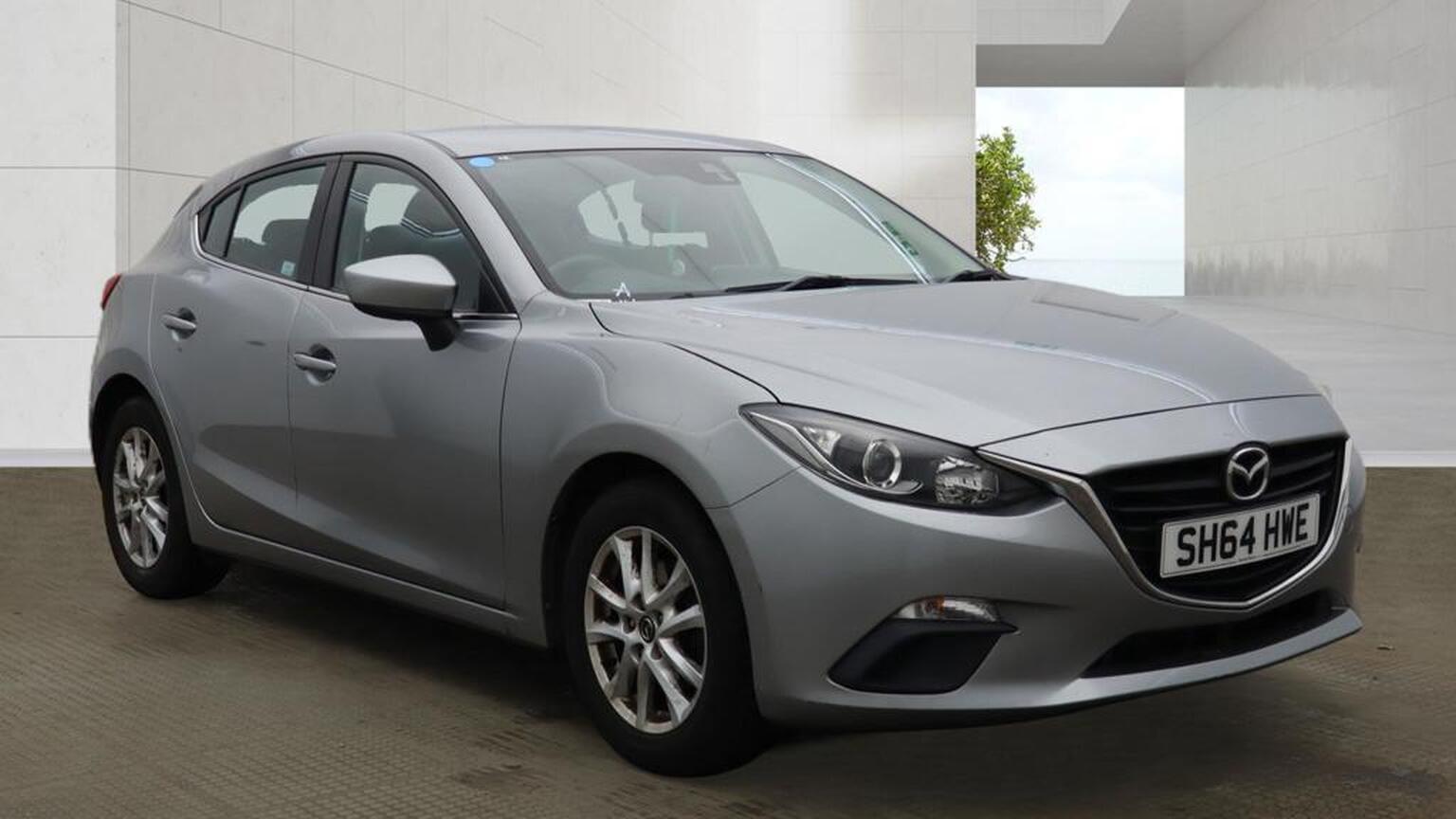
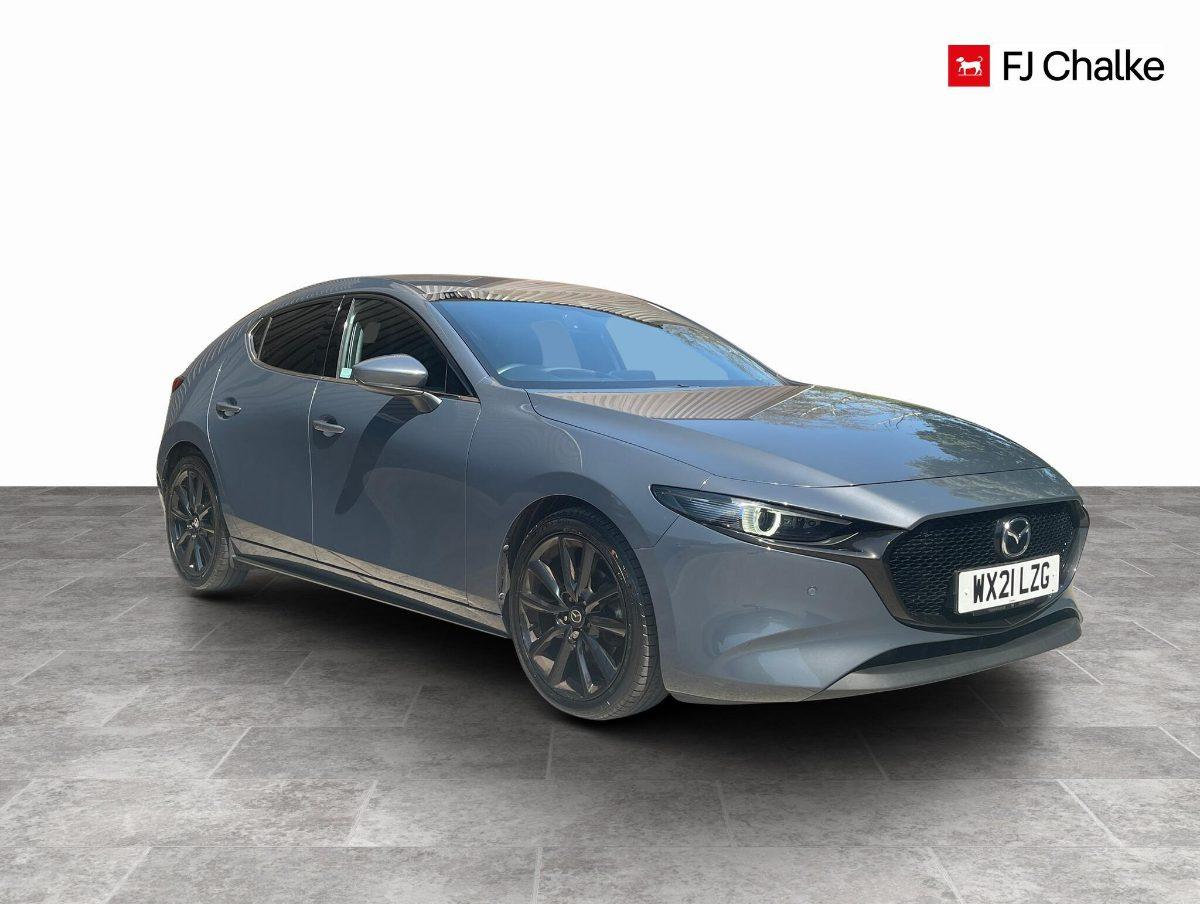
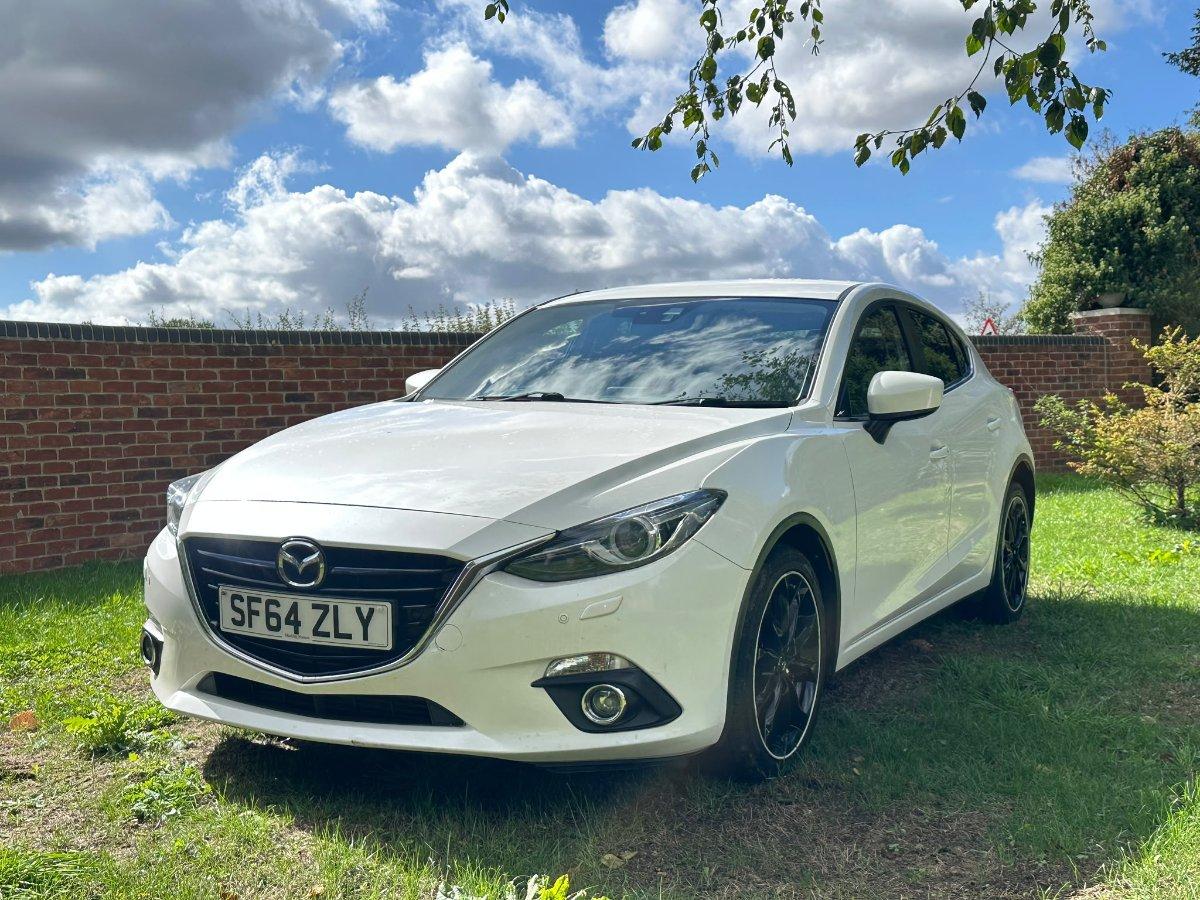
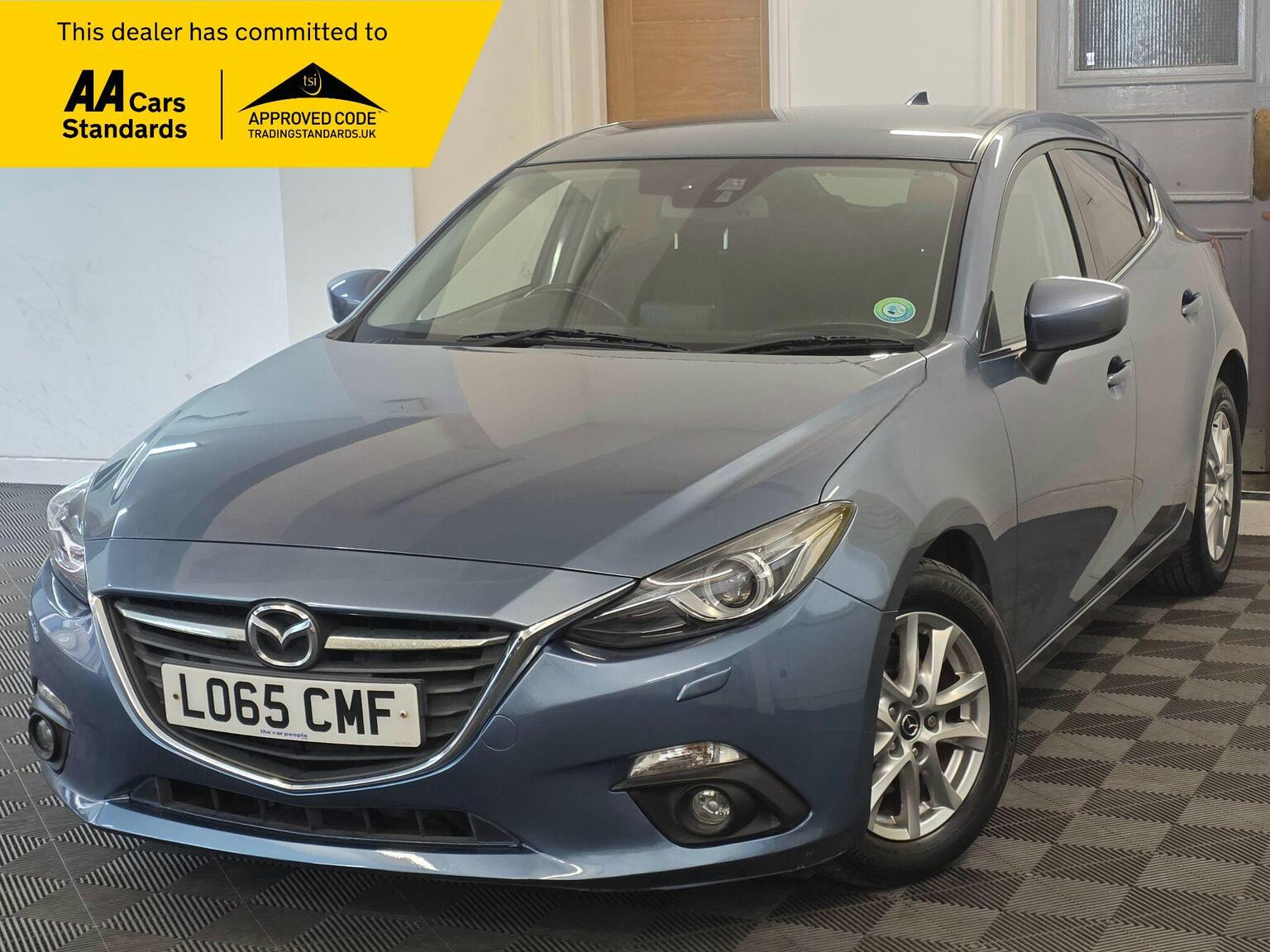
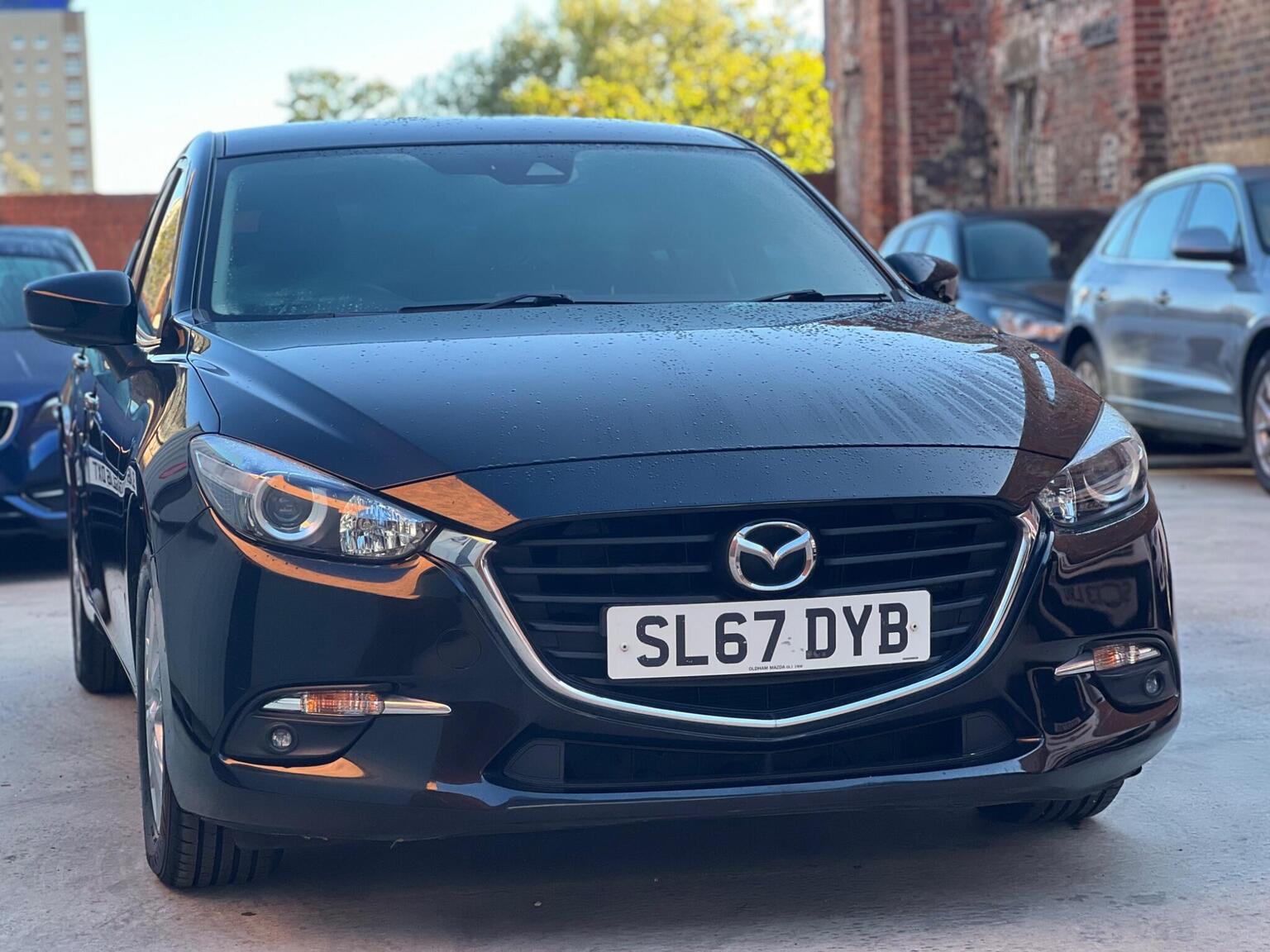
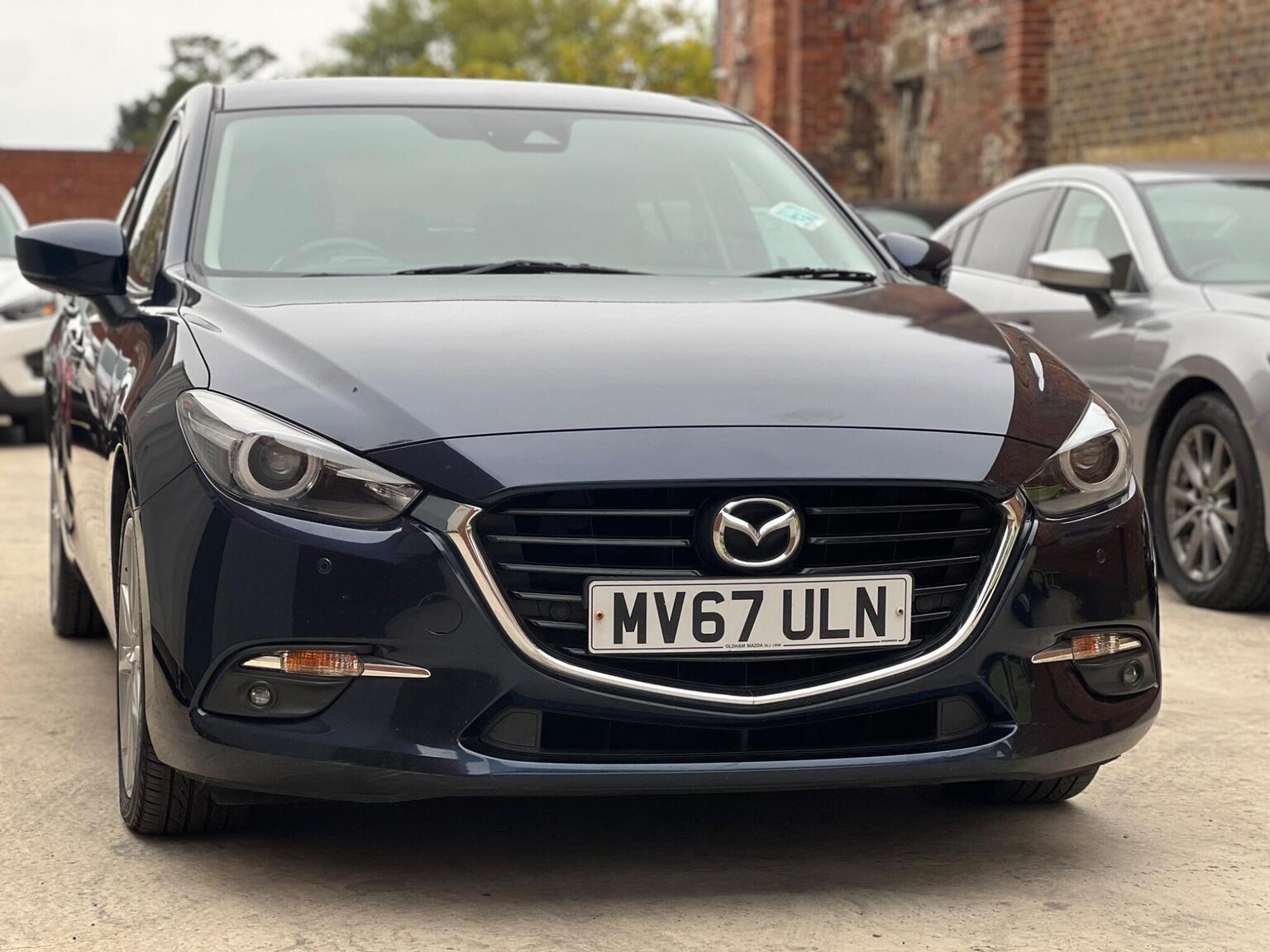
Used Mazda 3 adverts on Autoza, each from a dealer you can contact from the advert.
Mazda 3 MOT results by year and mileage
Measured from DVSA’s own MOT test records for tests carried out in 2025, not from owner reports.
By registration year
Against all cars registered in the same year, the MOT pass rate for the 3 was higher in 2, lower in 4 and level in 3 of the 9 registration years from 2014 to 2022 with enough tests to measure. The widest gap below is 2017 registrations: 77.1% against 82.2% for all cars registered that year. The widest gap above is 2022 registrations: 95.2% against 91.2%.
Pass rate here: passed on the day, cars fixed during the test included. Rows: every Mazda 3 DVSA tested in 2025, by registration year (2014–2022), all engines and fuels together.
| Registered | 3 | All cars that year | Difference |
|---|---|---|---|
| 2022289 tests | 95.2% | 91.2% | +4.0 higher |
| 2021424 tests | 92.2% | 90.1% | +2.1 level |
| 2020430 tests | 91.9% | 88.7% | +3.2 higher |
| 2019443 tests | 89.6% | 86.9% | +2.7 level |
| 2018727 tests | 84.2% | 84.5% | −0.3 level |
| 2017841 tests | 77.1% | 82.2% | −5.1 lower |
| 20161,071 tests | 75.2% | 79.4% | −4.2 lower |
| 20151,249 tests | 71.6% | 76.7% | −5.1 lower |
| 2014911 tests | 71.0% | 74.3% | −3.3 lower |
Only a major or dangerous defect fails an MOT. A minor defect is recorded on the certificate and the car still passes, and an advisory is not a failure at all.
We don’t give a recall count for the Mazda 3: whether a recall applies depends on the individual car. Check the one you are looking at by entering its registration on GOV.UK’s vehicle recall checker, and see how to check a car for known faults for the other free checks.
Source: DVSA MOT Anonymised Data 2025 (Open Government Licence v3.0), a sample of the 2025 file (about one test in ten, from nine months) (3,459,000 tests). Class 4 tests in Great Britain, test type NT (a normal annual test), retests excluded. A pass, or a pass with rectification at the station, counts as a pass here (passed on the day); DVSA's own initial-test measure counts a rectified pass as a failure and so reports a lower figure. Testing in Northern Ireland is run separately by the DVA under its own rules. Registration years shown are cars 3 to 12 years old when tested; the smallest rests on 289 tests. A gap is called level when it is under one percentage point or inside the 95% sampling margin for that number of tests. Contains public sector information licensed under the Open Government Licence v3.0.
What fails at the MOT: DVSA 2025 results
Across 104,870 Mazda 3 MOT tests in 2025 (all versions together), these defects turned up most often. This guide covers the third generation 2014–2019 and fourth generation 2019–on; the figures are for every Mazda 3 tested, of any generation.
Where it stands out
The parts groups where Mazda 3 tests carried a defect more often than cars of the same age and mileage:
- Suspension. 14.4% of tests, against 10.1% for cars of the same age and mileage (1.4 times the rate).
What is found most often
The five defects found most often on Mazda 3 tests, each compared with cars of the same age where it stands out:
- Coil spring: fractured or broken. On 4.6% of Mazda 3 tests, 1.8 times the rate for cars of the same age.
- Position lamp: not working. On 4.0% of Mazda 3 tests, 1.5 times the rate for cars of the same age.
- Ball joint excessively worn. On 4.0% of Mazda 3 tests, 2.5 times the rate for cars of the same age.
- Brake pads worn below 1.5mm. On 3.1% of Mazda 3 tests, 1.7 times the rate for cars of the same age.
- Tyre tread below the 1.6mm legal minimum. On 2.4% of Mazda 3 tests.
Less common, but well above the rate for cars of the same age:
- Linkage ball joints: ball joint excessively worn. On 1.6% of Mazda 3 tests, 2.2 times the rate for cars of the same age.
- Engine warning light on or not working. On 2.2% of Mazda 3 tests, 2.1 times the rate for cars of the same age.
The MOT checks safety and emissions items, not the engine, clutch or gearbox, so this is one measure of how each car holds up rather than a full reliability verdict. These figures describe the model, all its versions together, not this particular car.
From DVSA’s 2025 MOT results. See the full analysis
Who this car suits — and who should look elsewhere
Buyers who want a well-equipped family hatchback and will check the recall record, and the particulate-filter history on a diesel.
Anyone buying a diesel Mazda 3 with warning lights on or no dealer record for the recalls that cover its build date.
Alternatives to consider
If the Mazda 3 doesn't suit, these comparable models are worth a look in the UK market:
Mazda 3: questions buyers ask
What are the most common faults on a used Mazda 3 in the UK?
DVSA lists many Mazda 3 recalls, the largest on soot at the intake shutter valve (R/2019/187, cars built 26 January 2012 to 30 June 2018) and on fuel-injector software (R/2018/288), so check each car by registration. What Car? ranked the 3 21st of 30 family cars in its 2025 survey, with diesel owners reporting particulate-filter warnings (page updated 4 December 2025).
What is the best year to buy a used Mazda 3 in the UK?
Best-buy years: no single year stands out. DVSA’s MOT table rates 2020 and 2022 registrations above all cars registered those years (by 3.2 to 4.0 points), 2018, 2019 and 2021 level with them and 2014, 2015, 2016 and 2017 below them (by 3.3 to 5.1 points), so no single year stands out. The recalls below follow build dates, not registration years. MOT results measure roadworthiness at the test, not engine or electronics reliability.
What years of Mazda 3 should I avoid in the UK?
No specific year of the third generation 2014–2019 and fourth generation 2019–on Mazda 3 is generally avoided. No year is named as one to avoid: DVSA’s MOT table puts 2014, 2015, 2016 and 2017 registrations below all cars registered those years (by 3.3 to 5.1 points, on 841 to 1,249 sampled tests a year), but DVSA and the sources we read give no cause for the gap, so we check harder rather than skip the car. That is not clearance: DVSA lists recalls on engine software, fuel pumps, injectors, wipers and a steering-wheel logo, and What Car? notes diesel particulate-filter warnings, set out below.
How much does a used Mazda 3 cost in the UK in 2026?
What sellers were asking on Autoza on 22 November 2026, for Mazda 3 cars registered from 2014: £5,975–£10,995, median £7,295 — the range is the middle 80% of asking prices. Those are asking prices, not what buyers paid, and not a UK price index. Prices vary by mileage, region and trim, so compare several adverts of the same year and mileage band before negotiating.
What is the road tax (VED) on a Mazda 3 in the UK?
Annual road tax (VED): £200/year standard rate from the second year, hybrids included — the alternative-fuel discount ended on 1 April 2025. A car registered from April 2017 with a list price over £40,000 when new adds the £440/year Expensive Car Supplement in years 2–6 (£640 in all). Cars registered 2001–2017 pay a CO2 band, roughly £20–£790/year (2026/27 rates).
What real-world fuel economy does a Mazda 3 achieve on UK roads?
No sourced real-world figure for the 3, so none is printed: the official lab figure depends on the engine and on the test cycle the car was approved under, so use the figure for the exact version you are looking at.
How does a Mazda 3 compare to its rivals?
Strong alternatives in the UK: Volkswagen Golf, Ford Focus, Toyota Corolla, Kia Ceed. Choose based on dealer network in your area, parts availability, and your priorities (running cost vs. cabin quality vs. badge).
Who is the Mazda 3 most suitable for?
Buyers who want a well-equipped family hatchback and will check the recall record, and the particulate-filter history on a diesel.
Who should NOT buy a Mazda 3?
Anyone buying a diesel Mazda 3 with warning lights on or no dealer record for the recalls that cover its build date.
Are there safety recalls on the Mazda 3?
DVSA lists 13 safety recalls for the Mazda 3 that this guide shows or names, the largest first: R/2019/187 (70,435 vehicles in the whole recall, built between 26 January 2012 and 30 June 2018): Soot may accumulate around the intake shutter valve on the inlet side of the engine; R/2018/288 (48,875 vehicles in the whole recall, built between 26 January 2012 and 21 January 2016): Fuel injector software does not control the electric current correctly; R/2021/273 (36,741 vehicles, built between 19 May 2020 and 24 November 2020): The plastic logo on the steering wheel centre may shatter and project fragments into the vehicle interior during an air bag deployment. Whether a particular car is affected depends on its build date and VIN, so check its registration on GOV.UK (gov.uk/check-vehicle-recall) before you buy.
Is the Soot at the intake shutter valve (2012–2018 builds) on the Mazda 3 a serious problem?
Soot at the intake shutter valve (2012–2018 builds) on the Mazda 3 is covered by DVSA safety recall R/2019/187. Symptoms: DVSA wording: soot may accumulate around the intake shutter valve on the inlet side of the engine. The valve is checked, cleaned or replaced and the software updated. Years affected: Mazda 3 built 26 January 2012 to 30 June 2018. Indicative repair cost in the UK: Free under recall. What to check before buying: Check this one by registration through GOV.UK’s vehicle recall check (gov.uk/check-vehicle-recall) before you buy — an outstanding recall is free to put right and a completed one should be on the service record. On a diesel built to 2018, ask for the Mazda dealer record showing the valve was checked and the software updated.
Is the Fuel-injector software, injector nuts and vacuum pump (2012–2016 builds) on the Mazda 3 a serious problem?
Fuel-injector software, injector nuts and vacuum pump (2012–2016 builds) on the Mazda 3 is covered by DVSA safety recall R/2018/288. Symptoms: For R/2018/288, DVSA wording: the software controlling the fuel injectors does not control the electric current correctly, which may cause the injector control circuit to short circuit and the engine to stall, with possible engine stall without warning; the software is re-programmed. DVSA ran two more references on the same builds: injector mounting nuts whose tightening force may be insufficient (R/2018/289) and a vacuum pump that may wear prematurely (R/2018/236). Years affected: Mazda 3 built 26 January 2012 to 21 January 2016. Indicative repair cost in the UK: Free under recall. What to check before buying: Check this one by registration through GOV.UK’s vehicle recall check (gov.uk/check-vehicle-recall) before you buy — an outstanding recall is free to put right and a completed one should be on the service record. On a car built before 2016, ask for the dealer record for each of the three references.
Is the Steering-wheel centre logo that can shatter (2020 builds) on the Mazda 3 a serious problem?
Steering-wheel centre logo that can shatter (2020 builds) on the Mazda 3 is covered by DVSA safety recall R/2021/273. Symptoms: DVSA wording: the plastic logo on the steering wheel centre may shatter and project fragments into the vehicle interior during an air bag deployment. The airbag module cover is replaced with an improved part. Years affected: Mazda 3 built 19 May 2020 to 24 November 2020. Indicative repair cost in the UK: Free under recall. What to check before buying: On a 2020 car, ask for the dealer record showing the airbag module cover was replaced.
Check these next
The guide above is about the Mazda 3 as a model. These are about the car in front of you.
- Browse Mazda 3 listings on AutozaEvery one listed now.
- Check any car by its registrationFree: its MOT history, tax status and any open recall, from a number plate.
- Work out the road tax for the 3Vehicle tax (VED) by registration date, CO2 and list price.
- Work out the monthly payment on a £7,295 3The median asking price on Autoza on 22 November 2026, not what buyers pay: change it to the car you are looking at.
- What is your 3 worth?A price range from dealers' asking prices for comparable cars.
More checks on a Mazda 3
A fault list tells you what goes wrong; these tell you about the car in front of you.
Looking to buy a Mazda 3 in the UK?
Search Autoza listings filtered by year, mileage, and region. Every dealer page shows the business name, address and contact details, so you can check the business before you enquire.