
BMW 4 Series Common Faults in the UK
first generation 2013–2020 and second generation 2020–on — premium coupe, convertible and Gran Coupe. Updated 26 November 2026.
This guide covers the first generation 2013–2020 and second generation 2020–on. For any other version of the 4 Series, see how to check any car for known faults.
What Car? ranks the second-generation BMW 4 Series Coupé second of 12 coupés, convertibles and sports cars at 98.5% (page updated 17 October 2025). DVSA lists large recalls for EGR cooler leaks on 2014 to 2017 builds (R/2018/258) and airbag inflators (R/2023/016) on 2013 to 2017 builds, so check each car by registration. 4 Series registered 2014–2022 pass the MOT above all cars registered those years in 4 of 9 years, level in 4 and below in 1 (2022).
Largest DVSA recall for the 4 Series: R/2022/255, 322,745 vehicles in the whole recall — Undetected EGR System leaks may cause thermal activity in the intake manifold. See the 11 DVSA recalls listed for this model.
85.2% of BMW 4 Series cars pass the MOT first time, 3.3 points better than the national average for cars of the same age (81.9%). Counted from 11,792 DVSA tests on cars registered 2014–2022; a pass with rectification at the station counts as a pass here, and as a failure in DVSA's own initial-test measure.
Source: DVSA MOT Anonymised Data 2025 (Open Government Licence v3.0), a sample of the 2025 file (about one test in ten, from nine months). Class 4 tests in Great Britain, test type NT (a normal annual test), retests excluded. A pass, or a pass with rectification at the station, counts as a pass here (passed on the day); DVSA's own initial-test measure counts a rectified pass as a failure and so reports a lower figure. Testing in Northern Ireland is run separately by the DVA under its own rules. Compared against cars of the same registration years, because pass rates otherwise mostly measure how old a model's surviving fleet is.
See it by registration year and by mileage ↓What a BMW 4 Series costs on Autoza now
Median asking price of the BMW 4 Series on autoza.co.uk on 27 November 2026, by the year the car was first registered:
- Registered 2013–2014: £10,495
- Registered 2015–2017: £10,390
- Registered 2018–2020: £15,750
Asking prices on autoza.co.uk on 27 November 2026, not what buyers pay, worked out from the cars on sale when this page is generated. A year band is shown only when at least 10 cars qualify. Only cars first registered from 2013, the years this guide covers, are counted.
The asking-price figures above are the middle 80% and the median of what sellers were asking on Autoza on 27 November 2026 — not what buyers pay — for BMW 4 Series cars registered from 2013. They are worked out from the cars on sale when this page is generated, and none is shown when fewer than 10 cars qualify. The road tax line comes from GOV.UK's vehicle tax rate tables (2026/27 rates). The fuel economy tile names the source it rests on or says there is no sourced figure, and the insurance tile gives no figure. We do not publish a UK price index, and no figure here should be quoted as one.
Best and worst years to buy
We name a year as a best or worst buy only where the DVSA MOT table further down does not rate it the other way.
DVSA’s MOT table rates 2014 to 2017 registrations above all cars registered those years (by 5.2 to 7.5 points) and 2018 to 2021 level with them, so no single year stands out. Those four years are also the ones the EGR cooler and airbag recalls cover, so the table does not clear a car of its recalls. What Car? ranks the 2021-on Coupé second of 12 at 98.5% (its page, updated 17 October 2025). MOT results measure roadworthiness at the test, not engine or electronics reliability.
No year is named as one to avoid, but that is not clearance: DVSA’s MOT table rates 2022 registrations 3.3 points below all cars registered that year (from 680 sampled tests), the only 4 Series year it rates below. The sources we read give no cause for the gap, so treat a 2022 car as one to check harder, not as a named fault, and read the EGR, airbag and diesel notes below for what the sources do document.
Which BMW 4 Series years to avoid?
BMW 4 Series registrations from 2022 did worse at MOT in 2025 than the average car registered in the same year. The widest gap was 2022: 12.1% failed, against 8.8% of all cars registered that year.
2014, 2015, 2016 and 2017 registrations did better than average, failing clearly less often than all cars registered the same year.
Separately, 8 of the 11 DVSA recalls listed for this model cover cars built in 2017: that is the build-date stretch with the most recalls, so check any car from it by registration.
This is MOT test data: the MOT is a roadworthiness test, not a full reliability record, and it does not check the engine, clutch or gearbox. “Failed” means failed on the day, with cars fixed during the test counted as passes. A year is marked only where its gap is 3 points or more and beyond the 95% sampling margin for that many tests. See the full MOT results by year and mileage.
| Registered | 4 Series failed | All cars that year | Tests |
|---|---|---|---|
| 2022did worse than average | 12.1% | 8.8% | 680 |
| 2021 | 11.2% | 9.9% | 734 |
| 2020 | 11.4% | 11.3% | 455 |
| 2019 | 15.2% | 13.1% | 1,066 |
| 2018 | 14.0% | 15.5% | 1,644 |
| 2017did better than average | 12.3% | 17.8% | 1,827 |
| 2016did better than average | 14.9% | 20.6% | 1,999 |
| 2015did better than average | 18.1% | 23.3% | 1,904 |
| 2014did better than average | 18.2% | 25.7% | 1,293 |
Source: DVSA MOT Anonymised Data 2025 (Open Government Licence v3.0). Contains public sector information licensed under the Open Government Licence v3.0.
Known faults — BMW 4 Series first generation 2013–2020 and second generation 2020–on
How to read this list. Items marked Safety recall are DVSA safety recalls, shown with DVSA’s own reference. Whether a particular car is affected depends on when it was built: check it by registration through GOV.UK’s vehicle recall check. Everything else in this list is owner-reported: what the UK publication named on each card reports from its owner surveys and tests. Those are worth checking on a viewing, but we hold no count of how many cars have each one, other than any survey share a card itself quotes. Treat an owner-reported item as a question to ask, not a fault this car has.
EGR cooler that can leak — fire risk (2014–2017 builds)
- Symptoms
- DVSA wording: the EGR cooler may leak, presenting a fire risk, and it is replaced with an improved version. DVSA ran four more references for the same fault on other build groups and cars (R/2018/341, R/2021/037, R/2022/206 and R/2022/255, the last for undetected EGR leaks that may cause thermal activity in the intake manifold). What Car? says the EGR cooler recalls for this model range cover those built 10 November 2014 to 18 July 2017 (its page is updated 7 January 2022).
- Years affected
- Cars built 10 November 2014 to 18 July 2017 (R/2018/258)
- Indicative repair (UK)
- Free under recall
- What to check before buying
- Check this one by registration through GOV.UK’s vehicle recall check (gov.uk/check-vehicle-recall) before you buy — an outstanding recall is free to put right and a completed one should be on the service record. On a 2014–2017 diesel, ask for the BMW dealer record showing the EGR cooler was inspected or replaced.
DVSA’s counts, recall by recall: R/2022/255 322,745 (every model in the recall); R/2022/206 319,399 (every model in the recall); R/2018/341 225,449 (every model in the recall); R/2018/258 153,602 (every model in the recall); R/2021/037 63,888 (every model in the recall).
Driver airbag inflator that can rupture (2013–2017 builds)
- Symptoms
- DVSA wording: a possible degradation of the airbag propellant tablets could lead to an over-aggressive combustion if the airbag is activated, which may cause the inflator body to rupture. The driver’s airbag module is replaced. DVSA also lists R/2024/403, which asks owners of some cars to check whether the driver’s airbag was converted using a previously recalled Takata variant.
- Years affected
- Cars built 7 May 2013 to 29 June 2017
- Indicative repair (UK)
- Free under recall
- What to check before buying
- Check this one by registration through GOV.UK’s vehicle recall check (gov.uk/check-vehicle-recall) before you buy — an outstanding recall is free to put right and a completed one should be on the service record. On a 2013–2017 car, ask for the dealer record showing the driver’s airbag module was replaced or checked.
DVSA’s counts, recall by recall: R/2023/016 56,725; R/2024/403 13,144.
Starter motor water ingress — short-circuit risk (2020–2025 builds)
- Symptoms
- DVSA wording: the recall relates to the engine starter motor, where increased abrasion of the magnetic contact can cause deposits that increase the relay contact resistance, giving false starts or even short circuits and possibly a thermal incident. The starter motor is replaced with a different design. Until it is done DVSA says it is recommended not to leave the vehicle running unattended after starting the engine.
- Years affected
- Cars built 18 August 2020 to 5 May 2025
- Indicative repair (UK)
- Free under recall
- What to check before buying
- Check this one by registration through GOV.UK’s vehicle recall check (gov.uk/check-vehicle-recall) before you buy — an outstanding recall is free to put right and a completed one should be on the service record. On a 2020 or later car, ask whether the starter motor has been replaced under the recall.
Crankshaft sensor software fault — reduced-power mode (2018 builds)
- Symptoms
- DVSA wording: the affected vehicles may be equipped with a crankshaft sensor with a software fault, because the sensor cannot process the signal values from the crankshaft transmitter due to an improper firmware level; the sensor is replaced with a new version. What Car? says it could send the engine into an emergency reduced-power mode (its page is updated 7 January 2022).
- Years affected
- Cars built 18 May 2018 to 7 June 2018 (R/2018/211) and 15 May 2018 to 29 May 2018 (R/2018/260)
- Indicative repair (UK)
- Free under recall
- What to check before buying
- Check this one by registration through GOV.UK’s vehicle recall check (gov.uk/check-vehicle-recall) before you buy — an outstanding recall is free to put right and a completed one should be on the service record. On a May or June 2018 car, take a proper test drive to check the engine runs smoothly and ask for the dealer record.
DVSA’s counts, recall by recall: R/2018/211 4,025 (every model in the recall); R/2018/260 1,642 (every model in the recall).
Faults reported by owners in What Car?’s survey
- Symptoms
- What Car? says owners of the 2021-on Coupé appreciate its robust mechanical performance but some raised concerns about electrical issues, particularly with the sensors and dashboard displays, which often needed the dealer (its page is updated 17 October 2025). For the 2013–2020 Coupé, which was absent from its survey, it points to the mechanically similar 3 Series: of its owners, 13% reported a fault, most often in the electrics, engine and infotainment (page updated 7 January 2022).
- Years affected
- First and second generation
- What to check before buying
- Test every sensor and dashboard display, check no warning light stays on after start-up, and ask whether any electrical fault was fixed under warranty.
Low-mileage diesels and the particulate filter
- Symptoms
- Auto Express says owners rate the 2013–2020 car for connectivity and low running costs but are less satisfied with its reliability and exterior finish, that a low-mileage diesel may have particulate filter problems later, and that petrol is the better choice for mostly short trips (its page is dated 31 March 2022).
- Years affected
- First generation 2013–2020, diesels
- What to check before buying
- On a diesel, ask how the car has been driven, whether it has done regular longer runs, and for the full service record.
Kerbed wheels on larger-wheeled cars
- Symptoms
- What Car? says the larger wheels on M Sport cars are prime candidates for kerbing, and scrapes or cracks can mean the suspension has taken a hammering (its page is updated 7 January 2022).
- Years affected
- All generations, most of all M Sport cars
- What to check before buying
- Inspect every wheel for scrapes and cracks, check the tyres for uneven wear, and see whether the car pulls to one side on the test drive.
Cars like this for sale now
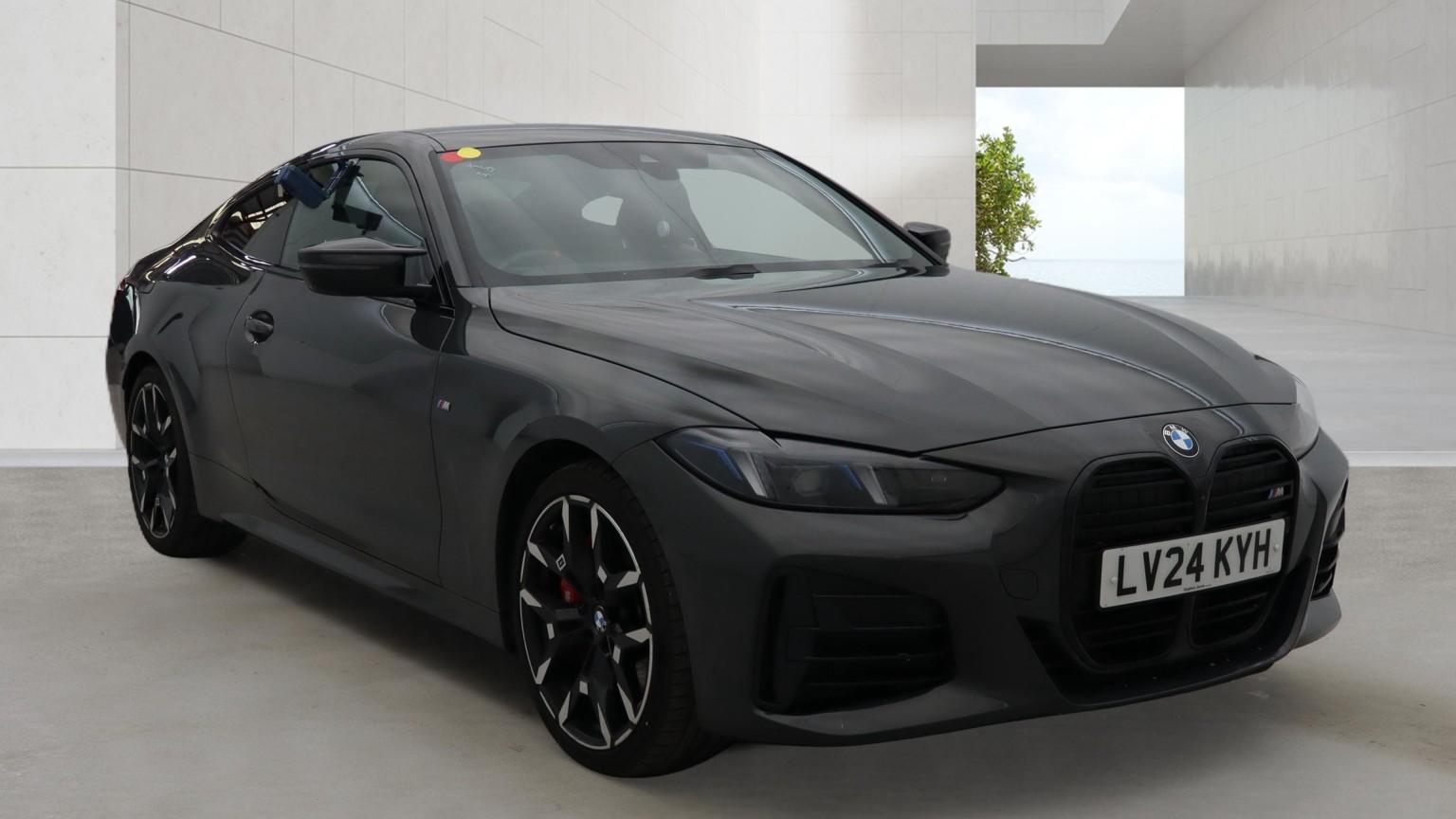
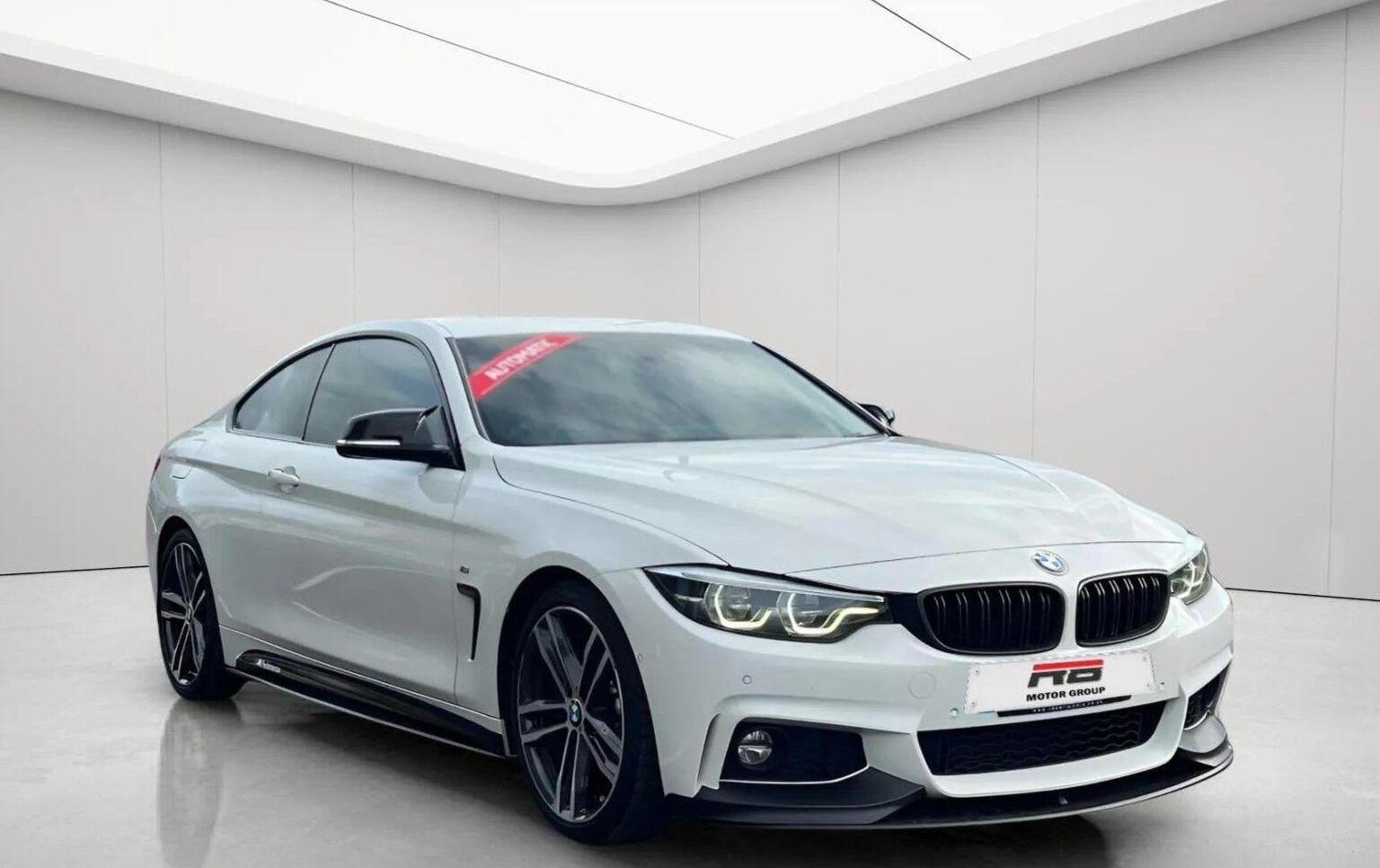
Used BMW 4 Series adverts on Autoza, each from a dealer you can contact from the advert.
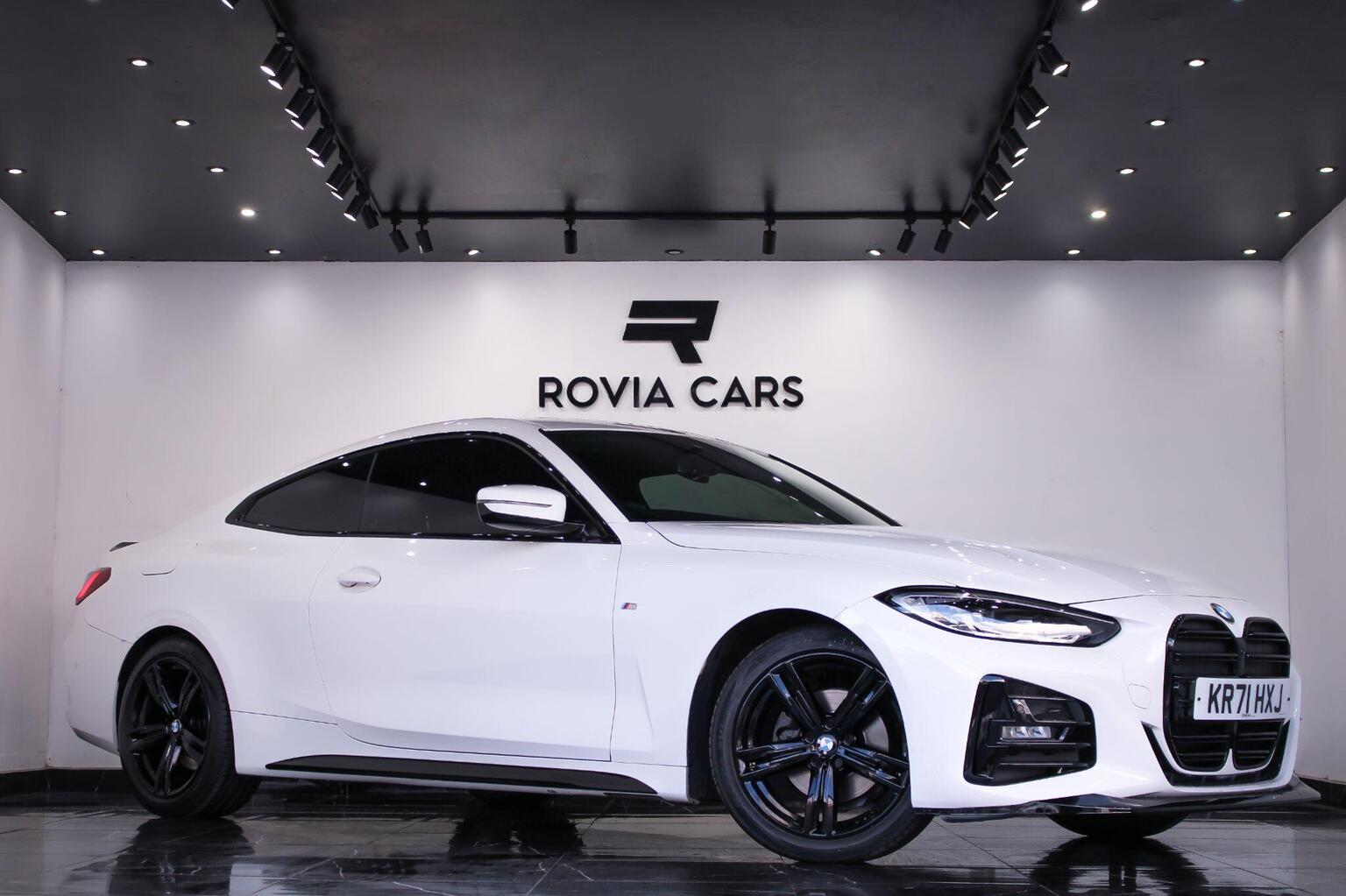
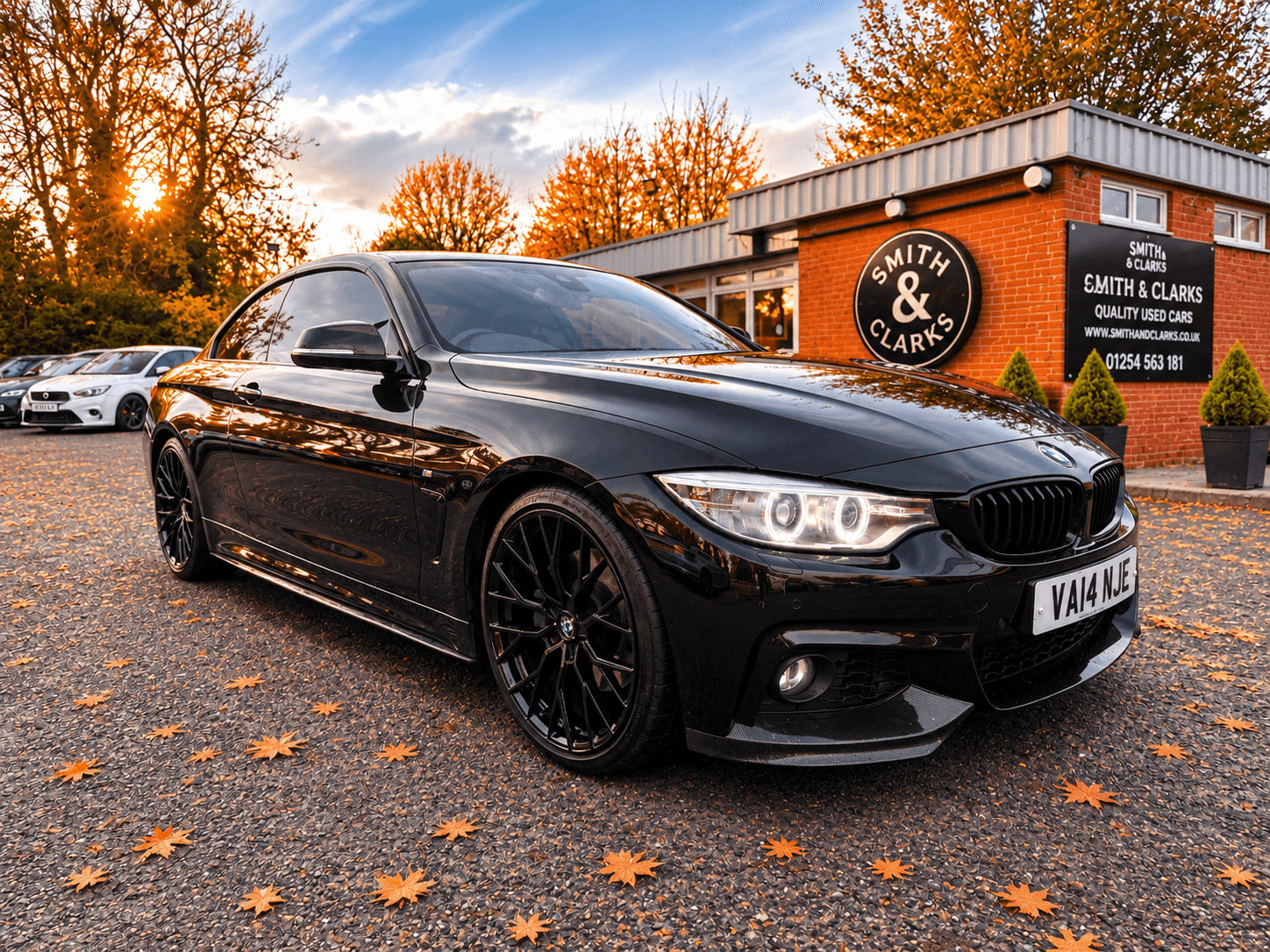
More DVSA safety recalls for the BMW 4 Series, largest first
These are the recalls DVSA lists for this model and its build years that the cards above do not already describe: every one of 10,000 or more vehicles, largest first, with DVSA’s own reference and figures. A recall covers only cars built in its dates and within its VIN range — check a particular car by registration through GOV.UK’s vehicle recall check. “Critical” here means DVSA’s own notice tells owners not to drive the car until it is fixed. It is never a size: “Large” means DVSA lists 10,000 or more vehicles in the recall.
- Safety recall · R/2021/213Large recall — 18,330 vehicles
The exhaust gas recirculation module could leak over time
The Exhaust Gas Recirculation (EGR) Module could leak over time�and cause thermal incident.
18,330 vehicles in the whole recall (DVSA’s figure for every model it covers) · built between 20 March 2017 and 28 September 2018 · recall launched 14 June 2021
Source: DVSA vehicle recalls file (every recall since 1992), published under the Open Government Licence. Where DVSA gives one figure for a recall that covers several models, it is shown as the whole recall’s total.
BMW 4 Series MOT results by year and mileage
Measured from DVSA’s own MOT test records for tests carried out in 2025, not from owner reports.
By registration year
Against all cars registered in the same year, the MOT pass rate for the 4 Series was higher in 4, lower in 1 and level in 4 of the 9 registration years from 2014 to 2022 with enough tests to measure. The widest gap below is 2022 registrations: 87.9% against 91.2% for all cars registered that year. The widest gap above is 2014 registrations: 81.8% against 74.3%.
Pass rate here: passed on the day, cars fixed during the test included. Rows: every BMW 4 Series DVSA tested in 2025, by registration year (2014–2022), all engines and fuels together.
| Registered | 4 Series | All cars that year | Difference |
|---|---|---|---|
| 2022680 tests | 87.9% | 91.2% | −3.3 lower |
| 2021734 tests | 88.8% | 90.1% | −1.3 level |
| 2020455 tests | 88.6% | 88.7% | −0.1 level |
| 20191,066 tests | 84.8% | 86.9% | −2.1 level |
| 20181,644 tests | 86.0% | 84.5% | +1.5 level |
| 20171,827 tests | 87.7% | 82.2% | +5.5 higher |
| 20161,999 tests | 85.1% | 79.4% | +5.7 higher |
| 20151,904 tests | 81.9% | 76.7% | +5.2 higher |
| 20141,293 tests | 81.8% | 74.3% | +7.5 higher |
By mileage at the test
Against cars of the same age on the same mileage, the pass rate for the 4 Series was higher in 3 and level in 1 of the 4 mileage bands with enough tests. How other models compare at the same mileage.
Show the table by mileage (4 bands)
| Mileage | 4 Series | Same age and mileage | Difference |
|---|---|---|---|
| 20k–40k2,016 tests | 88.9% | 89.1% | −0.2 level |
| 40k–60k2,666 tests | 87.2% | 83.5% | +3.6 higher |
| 60k–80k2,747 tests | 83.9% | 79.1% | +4.8 higher |
| 80k–100k2,012 tests | 84.2% | 75.6% | +8.6 higher |
Only a major or dangerous defect fails an MOT. A minor defect is recorded on the certificate and the car still passes, and an advisory is not a failure at all.
We don’t give a recall count for the BMW 4 Series: whether a recall applies depends on the individual car. Check the one you are looking at by entering its registration on GOV.UK’s vehicle recall checker, and see how to check a car for known faults for the other free checks.
Source: DVSA MOT Anonymised Data 2025 (Open Government Licence v3.0), a sample of the 2025 file (about one test in ten, from nine months) (3,459,000 tests). Class 4 tests in Great Britain, test type NT (a normal annual test), retests excluded. A pass, or a pass with rectification at the station, counts as a pass here (passed on the day); DVSA's own initial-test measure counts a rectified pass as a failure and so reports a lower figure. Odometer readings below 100 or above 400,000 miles are discarded as misreadings, and cars under three years old are excluded because no MOT is yet due. Sampled from nine months of 2025 (January, February, April, May, July, August, September, October and November). Testing in Northern Ireland is run separately by the DVA under its own rules. Registration years shown are cars 3 to 12 years old when tested; the smallest rests on 455 tests. A gap is called level when it is under one percentage point or inside the 95% sampling margin for that number of tests. Contains public sector information licensed under the Open Government Licence v3.0.
What fails at the MOT: DVSA 2025 results
Across 108,658 BMW 4 Series MOT tests in 2025 (all versions together), these defects turned up most often. This guide covers the first generation 2013–2020 and second generation 2020–on; the figures are for every BMW 4 Series tested, of any generation.
Where it stands out
The parts groups where BMW 4 Series tests carried a defect more often than cars of the same age and mileage:
- Road wheels. 0.9% of tests, against 0.4% for cars of the same age and mileage (2.6 times the rate).
What is found most often
The five defects found most often on BMW 4 Series tests, each compared with cars of the same age where it stands out:
- Tyre cords exposed. On 2.3% of BMW 4 Series tests, 2.0 times the rate for cars of the same age.
- Tyre cut deep enough to reach the cords. On 2.0% of BMW 4 Series tests, 1.4 times the rate for cars of the same age.
- Tyre tread below the 1.6mm legal minimum. On 1.9% of BMW 4 Series tests.
- Tyre sidewall bulge. On 1.6% of BMW 4 Series tests, 3.6 times the rate for cars of the same age.
- Shock absorber with a serious fluid leak. On 1.4% of BMW 4 Series tests, 2.2 times the rate for cars of the same age.
The MOT checks safety and emissions items, not the engine, clutch or gearbox, so this is one measure of how each car holds up rather than a full reliability verdict. These figures describe the model, all its versions together, not this particular car.
From DVSA’s 2025 MOT results. See the full analysis
Who this car suits — and who should look elsewhere
Buyers who want a premium coupe, convertible or Gran Coupe and will keep the dealer record for the EGR and airbag work. For the saloon and estate sharing its engines, see the BMW 3 Series guide.
Anyone buying a 2014–2017 diesel with no record of the EGR cooler check.
Alternatives to consider
If the BMW 4 Series doesn't suit, these comparable models are worth a look in the UK market:
BMW 4 Series: questions buyers ask
What are the most common faults on a used BMW 4 Series in the UK?
What Car? ranks the second-generation BMW 4 Series Coupé second of 12 coupés, convertibles and sports cars at 98.5% (page updated 17 October 2025). DVSA lists large recalls for EGR cooler leaks on 2014 to 2017 builds (R/2018/258) and airbag inflators (R/2023/016) on 2013 to 2017 builds, so check each car by registration. 4 Series registered 2014–2022 pass the MOT above all cars registered those years in 4 of 9 years, level in 4 and below in 1 (2022).
What is the best year to buy a used BMW 4 Series in the UK?
Best-buy years: no single year stands out. DVSA’s MOT table rates 2014 to 2017 registrations above all cars registered those years (by 5.2 to 7.5 points) and 2018 to 2021 level with them, so no single year stands out. Those four years are also the ones the EGR cooler and airbag recalls cover, so the table does not clear a car of its recalls. What Car? ranks the 2021-on Coupé second of 12 at 98.5% (its page, updated 17 October 2025). MOT results measure roadworthiness at the test, not engine or electronics reliability.
What years of BMW 4 Series should I avoid in the UK?
No specific year of the first generation 2013–2020 and second generation 2020–on BMW 4 Series is generally avoided. No year is named as one to avoid, but that is not clearance: DVSA’s MOT table rates 2022 registrations 3.3 points below all cars registered that year (from 680 sampled tests), the only 4 Series year it rates below. The sources we read give no cause for the gap, so treat a 2022 car as one to check harder, not as a named fault, and read the EGR, airbag and diesel notes below for what the sources do document.
How much does a used BMW 4 Series cost in the UK in 2026?
What sellers were asking on Autoza on 27 November 2026, for BMW 4 Series cars registered from 2013: £8,495–£23,499, median £12,995 — the range is the middle 80% of asking prices. Those are asking prices, not what buyers paid, and not a UK price index. Prices vary by mileage, region and trim, so compare several adverts of the same year and mileage band before negotiating.
What is the road tax (VED) on a BMW 4 Series in the UK?
Annual road tax (VED): £200/year standard rate from the second year, hybrids included — the alternative-fuel discount ended on 1 April 2025. A car registered from April 2017 with a list price over £40,000 when new adds the £440/year Expensive Car Supplement in years 2–6 (£640 in all). Cars registered 2001–2017 pay a CO2 band, roughly £20–£790/year (2026/27 rates).
What real-world fuel economy does a BMW 4 Series achieve on UK roads?
No sourced real-world figure for the 4 Series, so none is printed: the official lab figure depends on the engine and on the test cycle the car was approved under, so use the figure for the exact version you are looking at.
How does a BMW 4 Series compare to its rivals?
Strong alternatives in the UK: BMW 3 Series, Audi A4, Mercedes-Benz C-Class, BMW 5 Series. Choose based on dealer network in your area, parts availability, and your priorities (running cost vs. cabin quality vs. badge).
Who is the BMW 4 Series most suitable for?
Buyers who want a premium coupe, convertible or Gran Coupe and will keep the dealer record for the EGR and airbag work. For the saloon and estate sharing its engines, see the BMW 3 Series guide.
Who should NOT buy a BMW 4 Series?
Anyone buying a 2014–2017 diesel with no record of the EGR cooler check.
Are there safety recalls on the BMW 4 Series?
DVSA lists 11 safety recalls for the BMW 4 Series that this guide shows or names, the largest first: R/2022/255 (322,745 vehicles in the whole recall, built between 11 November 2014 and 1 October 2021): Undetected EGR System leaks may cause thermal activity in the intake manifold; R/2022/206 (319,399 vehicles in the whole recall, built between 7 May 2013 and 23 September 2020): The exhaust gas recirculation cooler may leak over time and cause thermal incident; R/2018/341 (225,449 vehicles in the whole recall, built between 8 May 2013 and 12 April 2017): Exhaust gas recirculation module cooler could leak. Whether a particular car is affected depends on its build date and VIN, so check its registration on GOV.UK (gov.uk/check-vehicle-recall) before you buy.
Is the EGR cooler that can leak — fire risk (2014–2017 builds) on the BMW 4 Series a serious problem?
EGR cooler that can leak — fire risk (2014–2017 builds) on the BMW 4 Series is covered by DVSA safety recall R/2022/255. Symptoms: DVSA wording: the EGR cooler may leak, presenting a fire risk, and it is replaced with an improved version. DVSA ran four more references for the same fault on other build groups and cars (R/2018/341, R/2021/037, R/2022/206 and R/2022/255, the last for undetected EGR leaks that may cause thermal activity in the intake manifold). What Car? says the EGR cooler recalls for this model range cover those built 10 November 2014 to 18 July 2017 (its page is updated 7 January 2022). Years affected: Cars built 10 November 2014 to 18 July 2017 (R/2018/258). Indicative repair cost in the UK: Free under recall. What to check before buying: Check this one by registration through GOV.UK’s vehicle recall check (gov.uk/check-vehicle-recall) before you buy — an outstanding recall is free to put right and a completed one should be on the service record. On a 2014–2017 diesel, ask for the BMW dealer record showing the EGR cooler was inspected or replaced.
Is the Driver airbag inflator that can rupture (2013–2017 builds) on the BMW 4 Series a serious problem?
Driver airbag inflator that can rupture (2013–2017 builds) on the BMW 4 Series is covered by DVSA safety recall R/2023/016. Symptoms: DVSA wording: a possible degradation of the airbag propellant tablets could lead to an over-aggressive combustion if the airbag is activated, which may cause the inflator body to rupture. The driver’s airbag module is replaced. DVSA also lists R/2024/403, which asks owners of some cars to check whether the driver’s airbag was converted using a previously recalled Takata variant. Years affected: Cars built 7 May 2013 to 29 June 2017. Indicative repair cost in the UK: Free under recall. What to check before buying: Check this one by registration through GOV.UK’s vehicle recall check (gov.uk/check-vehicle-recall) before you buy — an outstanding recall is free to put right and a completed one should be on the service record. On a 2013–2017 car, ask for the dealer record showing the driver’s airbag module was replaced or checked.
Is the Starter motor water ingress — short-circuit risk (2020–2025 builds) on the BMW 4 Series a serious problem?
Starter motor water ingress — short-circuit risk (2020–2025 builds) on the BMW 4 Series is covered by DVSA safety recall R/2026/054. Symptoms: DVSA wording: the recall relates to the engine starter motor, where increased abrasion of the magnetic contact can cause deposits that increase the relay contact resistance, giving false starts or even short circuits and possibly a thermal incident. The starter motor is replaced with a different design. Until it is done DVSA says it is recommended not to leave the vehicle running unattended after starting the engine. Years affected: Cars built 18 August 2020 to 5 May 2025. Indicative repair cost in the UK: Free under recall. What to check before buying: Check this one by registration through GOV.UK’s vehicle recall check (gov.uk/check-vehicle-recall) before you buy — an outstanding recall is free to put right and a completed one should be on the service record. On a 2020 or later car, ask whether the starter motor has been replaced under the recall.
Check these next
The guide above is about the BMW 4 Series as a model. These are about the car in front of you.
- Browse BMW 4 Series listings on AutozaEvery one listed now.
- Check any car by its registrationFree: its MOT history, tax status and any open recall, from a number plate.
- Work out the road tax for the 4 SeriesVehicle tax (VED) by registration date, CO2 and list price.
- Work out the monthly payment on a £12,995 4 SeriesThe median asking price on Autoza on 27 November 2026, not what buyers pay: change it to the car you are looking at.
- What is your 4 Series worth?A price range from dealers' asking prices for comparable cars.
More checks on a BMW 4 Series
A fault list tells you what goes wrong; these tell you about the car in front of you.
- Check the MOT history of a BMW 4 SeriesIts past MOT results, advisories and mileage readings, from the number plate.
- Is this a good price?Judge one advert’s asking price against similar cars for sale on Autoza.
- Every DVSA recall for the BMW 4 SeriesThe model’s recalls in a table, newest first, with DVSA’s own references and build dates.
Looking to buy a BMW 4 Series in the UK?
Search Autoza listings filtered by year, mileage, and region. Every dealer page shows the business name, address and contact details, so you can check the business before you enquire.