
Audi TT Common Faults in the UK
second generation 2006–2014 and third generation 2014–2023 — sports coupe and roadster. Updated 27 November 2026.
This guide covers the second generation 2006–2014 and third generation 2014–2023 only. Older TT generations have different engines and faults — for one of those, see how to check any car for known faults.
What Car? ranks the third-generation Audi TT sixth of 12 coupés, convertibles and sports cars at 96.1%, with only 7% of cars reported on having any issue, all with the air conditioning (page updated 31 July 2026). DVSA lists large recalls for the Takata driver airbag (R/2026/089) and a fuel tank that could be damaged in a crash (R/2020/087), so check each car by registration. TTs registered 2013–2022 pass the MOT above all cars registered those years in 8 of 10 years and level in 2.
Largest DVSA recall for the TT: R/2026/089, 20,502 vehicles — Replacing Takata driver airbag.
82.9% of Audi TTs pass the MOT first time, 8.4 points better than the national average for cars of the same age (74.5%). Counted from 9,694 DVSA tests on cars registered 2006–2022; a pass with rectification at the station counts as a pass here, and as a failure in DVSA's own initial-test measure.
Source: DVSA MOT Anonymised Data 2025 (Open Government Licence v3.0), a sample of the 2025 file (about one test in ten, from nine months). Class 4 tests in Great Britain, test type NT (a normal annual test), retests excluded. A pass, or a pass with rectification at the station, counts as a pass here (passed on the day); DVSA's own initial-test measure counts a rectified pass as a failure and so reports a lower figure. Testing in Northern Ireland is run separately by the DVA under its own rules. Compared against cars of the same registration years, because pass rates otherwise mostly measure how old a model's surviving fleet is.
See it by registration year and by mileage ↓What a Audi TT costs on Autoza now
Median asking price of the Audi TT on autoza.co.uk on 27 November 2026, by the year the car was first registered:
- Registered 2015–2017: £10,195
Asking prices on autoza.co.uk on 27 November 2026, not what buyers pay, worked out from the cars on sale when this page is generated. A year band is shown only when at least 10 cars qualify. Only cars first registered from 2006, the years this guide covers, are counted.
The asking-price figures above are the middle 80% and the median of what sellers were asking on Autoza on 27 November 2026 — not what buyers pay — for Audi TT cars registered from 2006. They are worked out from the cars on sale when this page is generated, and none is shown when fewer than 10 cars qualify. The road tax line comes from GOV.UK's vehicle tax rate tables (2026/27 rates). The fuel economy tile names the source it rests on or says there is no sourced figure, and the insurance tile gives no figure. We do not publish a UK price index, and no figure here should be quoted as one.
Best and worst years to buy
We name a year as a best or worst buy only where the DVSA MOT table further down does not rate it the other way.
DVSA’s MOT table rates 2013 to 2020 registrations above all cars registered those years (by 4.5 to 13.8 points) and 2021 and 2022 level with them, so no single year stands out. The recalls follow build dates, not registration years. What Car? ranks the 2014–2024 TT sixth of 12 at 96.1% (its page, updated 31 July 2026). MOT results measure roadworthiness at the test, not engine or electronics reliability.
No year is named as one to avoid: DVSA’s MOT table rates no TT registration year from 2013 to 2022 below the average for its year. Judge a car by its registration, its service record and the recall checks below. That is not clearance: DVSA lists the Takata airbag and fuel tank recalls, and the sources note seat, headlamp and window faults, set out below.
Which Audi TT years to avoid?
No Audi TT registration year stood out as worse than average at MOT in 2025. Across the 10 registration years from 2013 to 2022 with enough tests to measure, none failed clearly more often than all cars registered in the same year (clearly: 3 or more percentage points and beyond the sampling margin).
2013, 2014, 2015, 2016, 2017, 2018, 2019 and 2020 registrations did better than average, failing clearly less often than all cars registered the same year.
Separately, 4 of the 6 DVSA recalls listed for this model cover cars built in 2015: that is the build-date stretch with the most recalls, so check any car from it by registration.
This is MOT test data: the MOT is a roadworthiness test, not a full reliability record, and it does not check the engine, clutch or gearbox. “Failed” means failed on the day, with cars fixed during the test counted as passes. A year is marked only where its gap is 3 points or more and beyond the 95% sampling margin for that many tests. See the full MOT results by year and mileage.
| Registered | TT failed | All cars that year | Tests |
|---|---|---|---|
| 2022 | 9.6% | 8.8% | 251 |
| 2021 | 8.5% | 9.9% | 246 |
| 2020did better than average | 5.8% | 11.3% | 293 |
| 2019did better than average | 6.6% | 13.1% | 467 |
| 2018did better than average | 11.0% | 15.5% | 401 |
| 2017did better than average | 9.6% | 17.8% | 773 |
| 2016did better than average | 9.7% | 20.6% | 975 |
| 2015did better than average | 13.4% | 23.3% | 897 |
| 2014did better than average | 18.7% | 25.7% | 395 |
| 2013did better than average | 14.3% | 28.1% | 673 |
Source: DVSA MOT Anonymised Data 2025 (Open Government Licence v3.0). Contains public sector information licensed under the Open Government Licence v3.0.
Known faults — Audi TT second generation 2006–2014 and third generation 2014–2023
How to read this list. Items marked Safety recall are DVSA safety recalls, shown with DVSA’s own reference. Whether a particular car is affected depends on when it was built: check it by registration through GOV.UK’s vehicle recall check. Everything else in this list is owner-reported: what the UK publication named on each card reports from its owner surveys and tests. Those are worth checking on a viewing, but we hold no count of how many cars have each one, other than any survey share a card itself quotes. Treat an owner-reported item as a question to ask, not a fault this car has.
Takata driver airbag replacement (2014–2017 builds)
- Symptoms
- DVSA wording: the gas generator housing for the front airbag may in extremely rare cases be overloaded and even burst when the airbag is triggered, so as a precaution the airbag unit is replaced, free of charge, in about two hours. DVSA also lists a smaller stop-drive notice, R/2025/387, for one TT, and R/2023/054 for 20 cars.
- Years affected
- TT built 17 September 2014 to 23 January 2017
- Indicative repair (UK)
- Free under recall
- What to check before buying
- Check this one by registration through GOV.UK’s vehicle recall check (gov.uk/check-vehicle-recall) before you buy — an outstanding recall is free to put right and a completed one should be on the service record. On a 2014–2017 car, ask for the Audi dealer record showing the airbag was replaced.
DVSA’s counts, recall by recall: R/2026/089 20,502; R/2023/054 20; R/2025/387 1.
Fuel tank that could be damaged in a crash (2014–2019 builds)
- Symptoms
- DVSA wording: the fuel tank could be damaged and leak in the event of an accident, and a component protector is fitted to a bracket on the body. What Car? lists the fuel tank recall for cars made 29 April 2014 to 24 May 2019 on its page updated 31 July 2026.
- Years affected
- TT built 29 April 2014 to 24 May 2019
- Indicative repair (UK)
- Free under recall
- What to check before buying
- Check this one by registration through GOV.UK’s vehicle recall check (gov.uk/check-vehicle-recall) before you buy — an outstanding recall is free to put right and a completed one should be on the service record. On a 2014–2019 car, ask for the dealer record showing the protector was fitted.
Design trim on the power unit that can detach (2020–2022 builds)
- Symptoms
- DVSA wording: the design trim on the power unit can become detached from its retainers, and it is removed on the affected vehicles. What Car? lists it on its page updated 31 July 2026.
- Years affected
- TT built 23 November 2020 to 10 March 2022
- Indicative repair (UK)
- Free under recall
- What to check before buying
- Check this one by registration through GOV.UK’s vehicle recall check (gov.uk/check-vehicle-recall) before you buy — an outstanding recall is free to put right and a completed one should be on the service record. On a late-2020 to 2022 car, ask whether the trim has been removed.
S tronic clutch that can open unexpectedly — loss of drive (2008–2009 builds)
- Symptoms
- DVSA wording: in rare cases an incorrect interpretation of the clutch temperature can occur, which results in the clutch opening unexpectedly with loss of drive; the gearbox control unit is updated. Auto Express says the manual gearboxes tend to be more reliable than the S tronic twin-clutch automatics (its page is published 15 November 2016).
- Years affected
- TT S tronic built 1 September 2008 to 31 August 2009
- Indicative repair (UK)
- Free under recall
- What to check before buying
- Check this one by registration through GOV.UK’s vehicle recall check (gov.uk/check-vehicle-recall) before you buy — an outstanding recall is free to put right and a completed one should be on the service record. On a 2008–2009 S tronic car, ask for the record of the gearbox update and check it pulls away smoothly.
Seat bolsters, squeaking brakes and air conditioning
- Symptoms
- What Car? says the TT looks great, is fun to drive and above all is dependable: only 7% of cars reported on had any issue, all relating to the air conditioning and all resolved at no cost to owners. It adds that earlier cars had reported wear to the side bolsters of the leather seats and squeaking front brake pads, so look out for both. Its page is updated 31 July 2026.
- Years affected
- Second and third generation (bolsters and brakes on earlier cars)
- What to check before buying
- Inspect the driver’s seat bolster, listen for squeal under light braking and run the air conditioning cold on the test drive.
Seat bases, misting headlamps and window regulators (second generation)
- Symptoms
- Auto Express says front seat bases can sag, especially on leather trim, with Audi replacing some under warranty; the headlamps are prone to misting, especially xenon units after washing; and the window regulator can break, especially on early models, sometimes after a telltale creak. Its page is published 15 November 2016.
- Years affected
- Second generation 2006–2014
- What to check before buying
- Sit in the driver’s seat and check the base is level, run both windows up and down several times, and inspect the headlamps for misting.
Cambelt on 2.0-litre petrols and diesels (second generation)
- Symptoms
- Auto Express says the 1.8 TFSI and 3.2 V6 are chain-driven, but the 2.0 petrol and diesel units have a cambelt that needs replacing periodically (its page is published 15 November 2016). We print no interval or price because they are not given by a current Audi source: ask an Audi dealer for the current interval for the car’s engine.
- Years affected
- Second generation 2.0-litre petrol and diesel cars
- What to check before buying
- On a 2.0-litre second-generation car, ask for the invoice showing the cambelt change and its date and mileage.
Cars like this for sale now
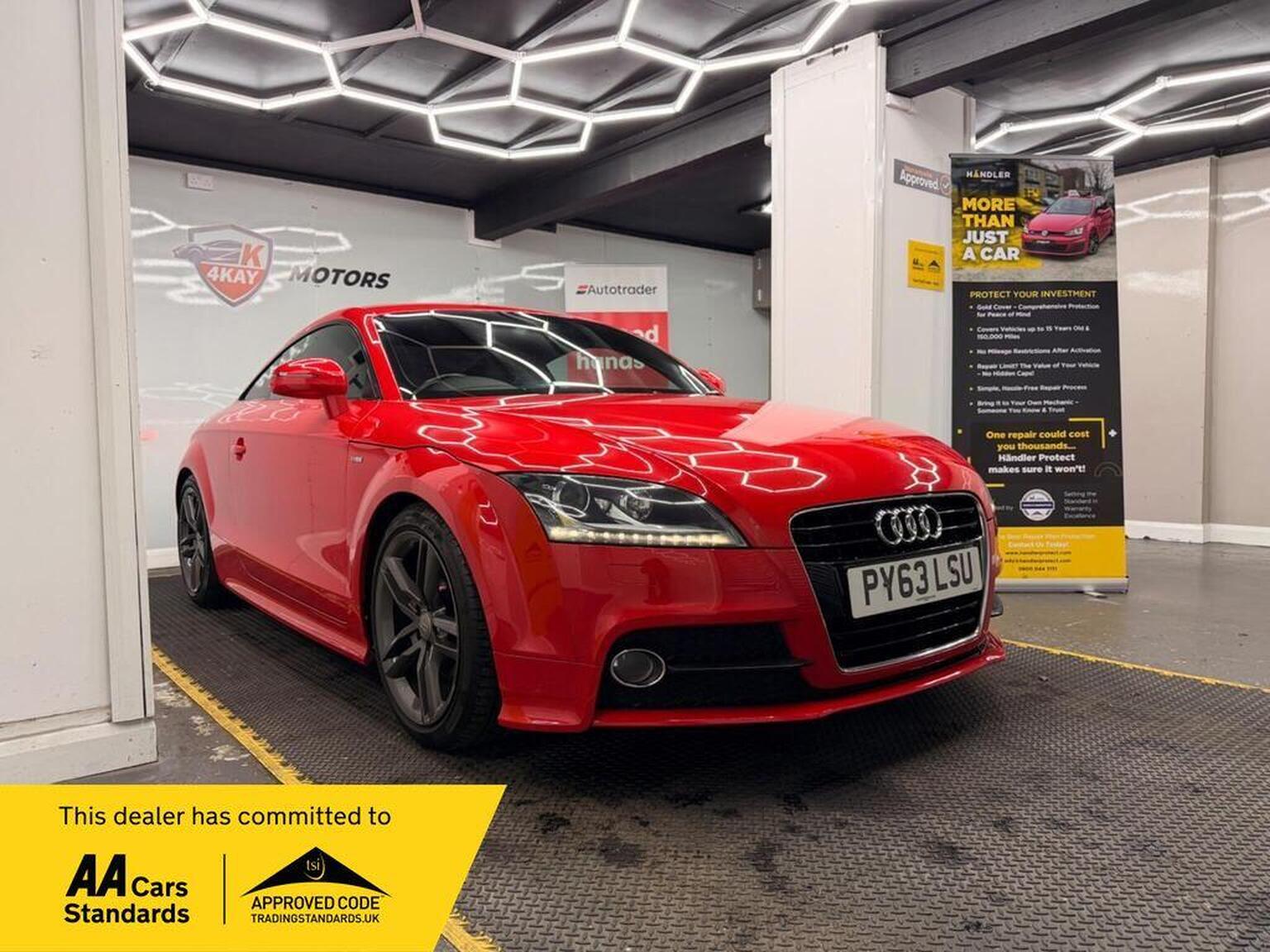
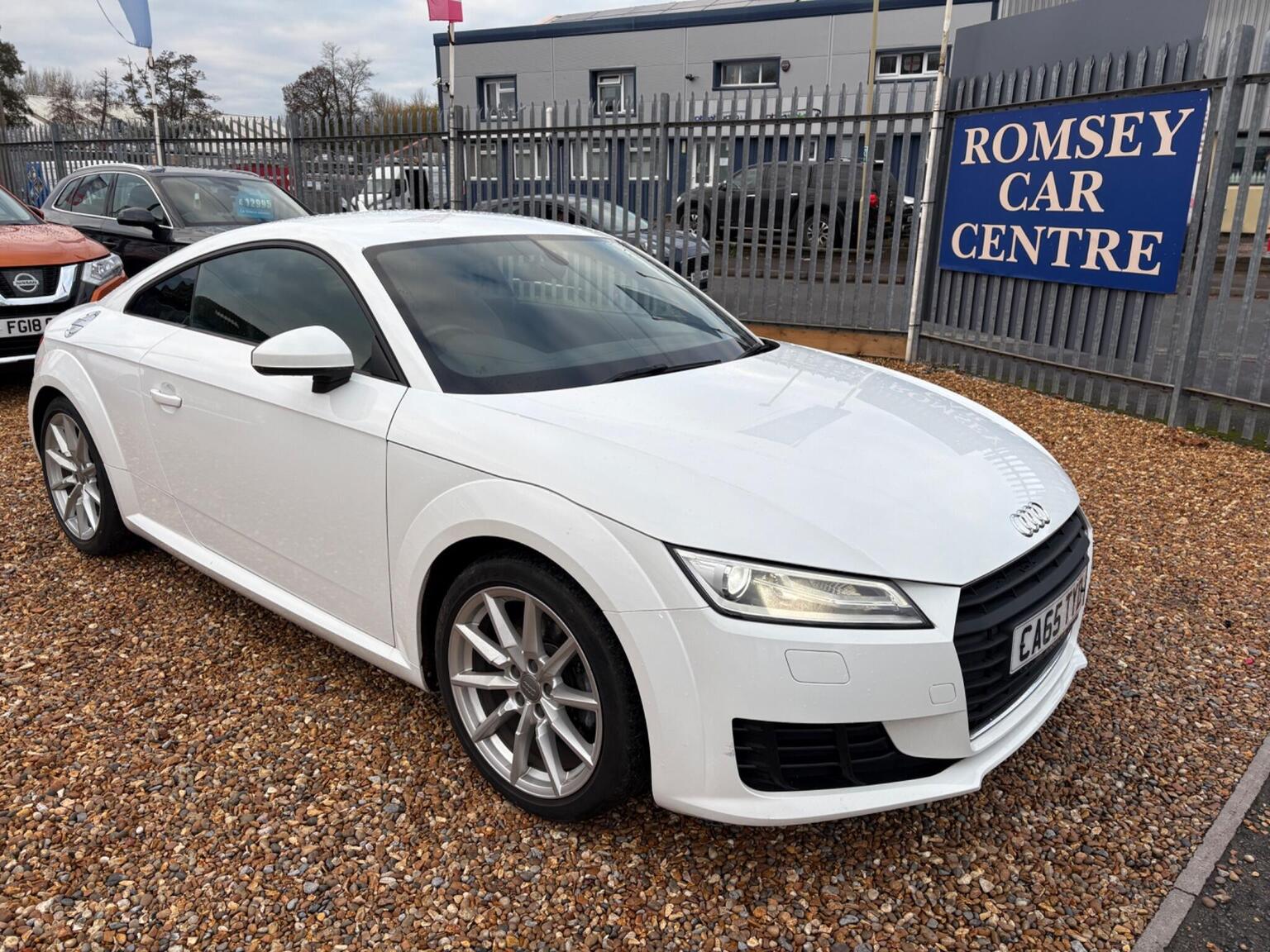
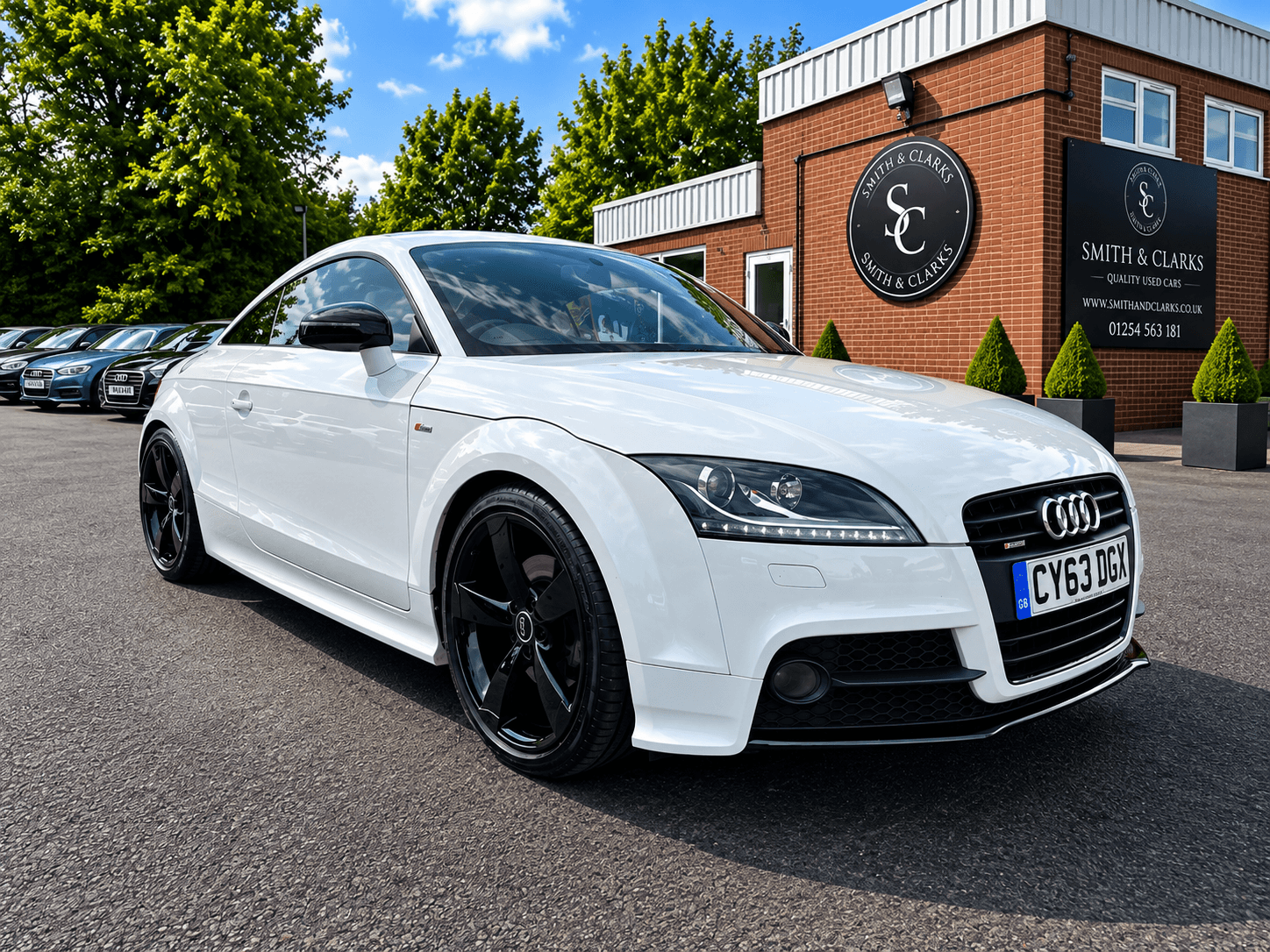
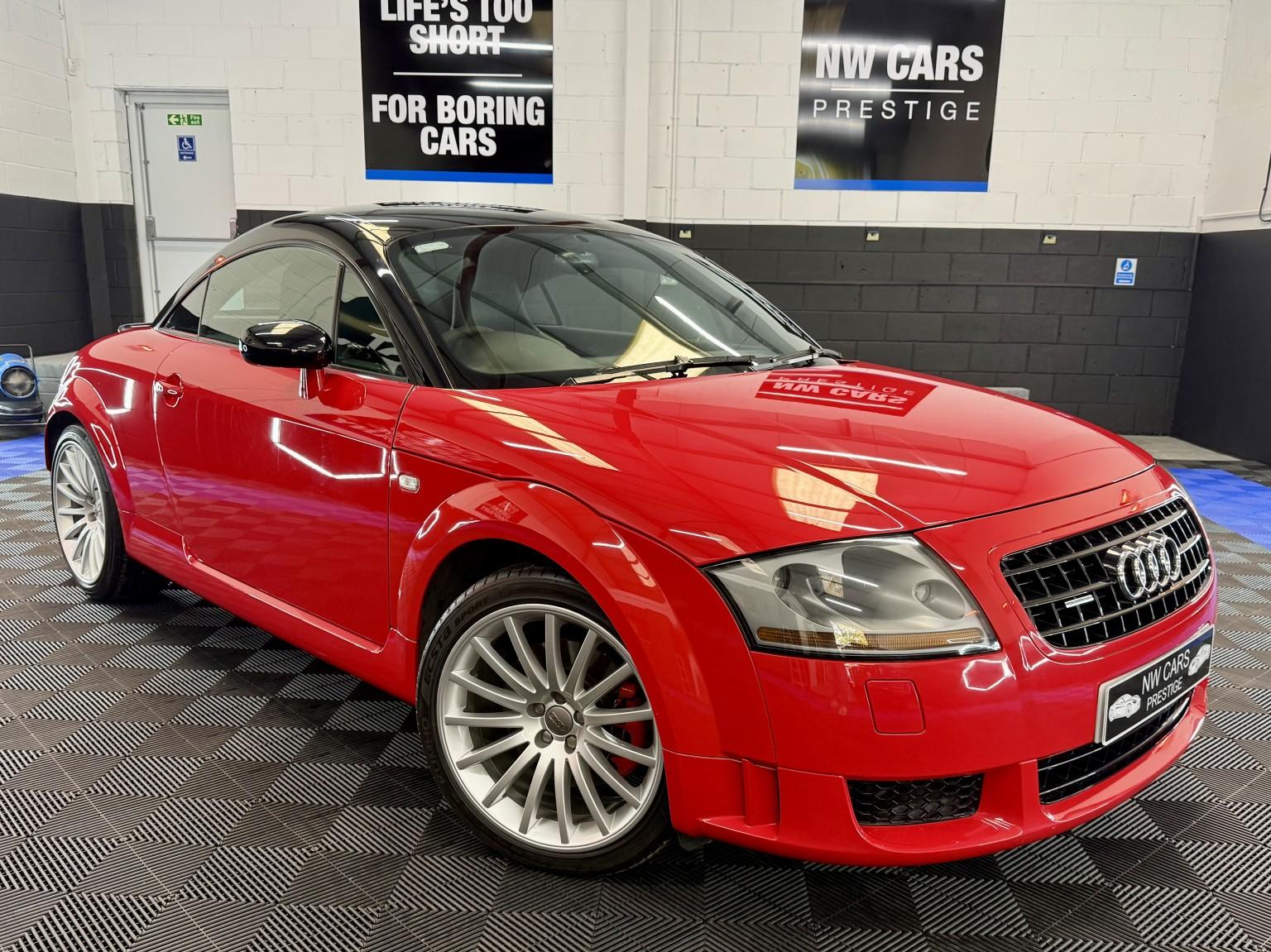
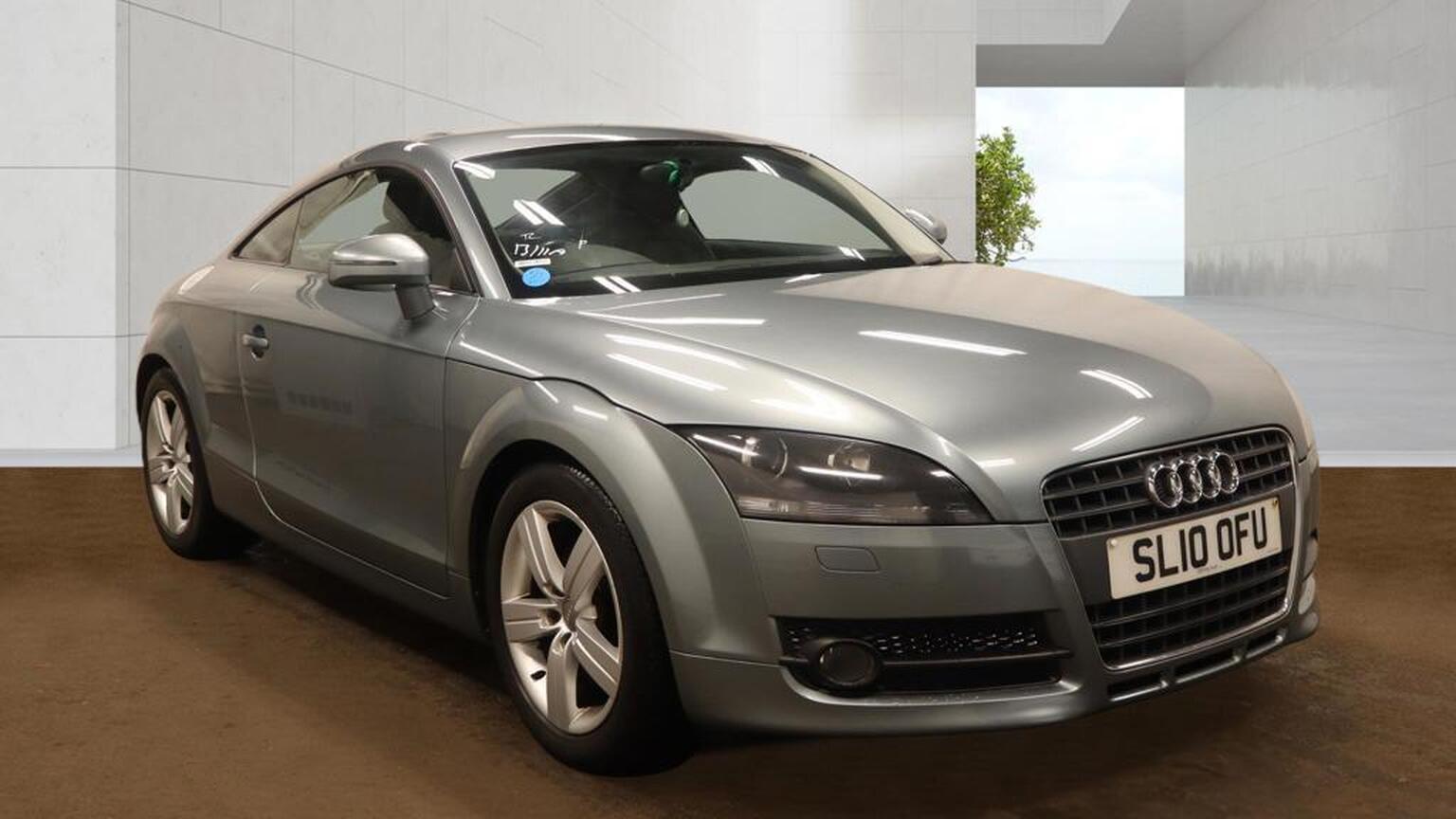
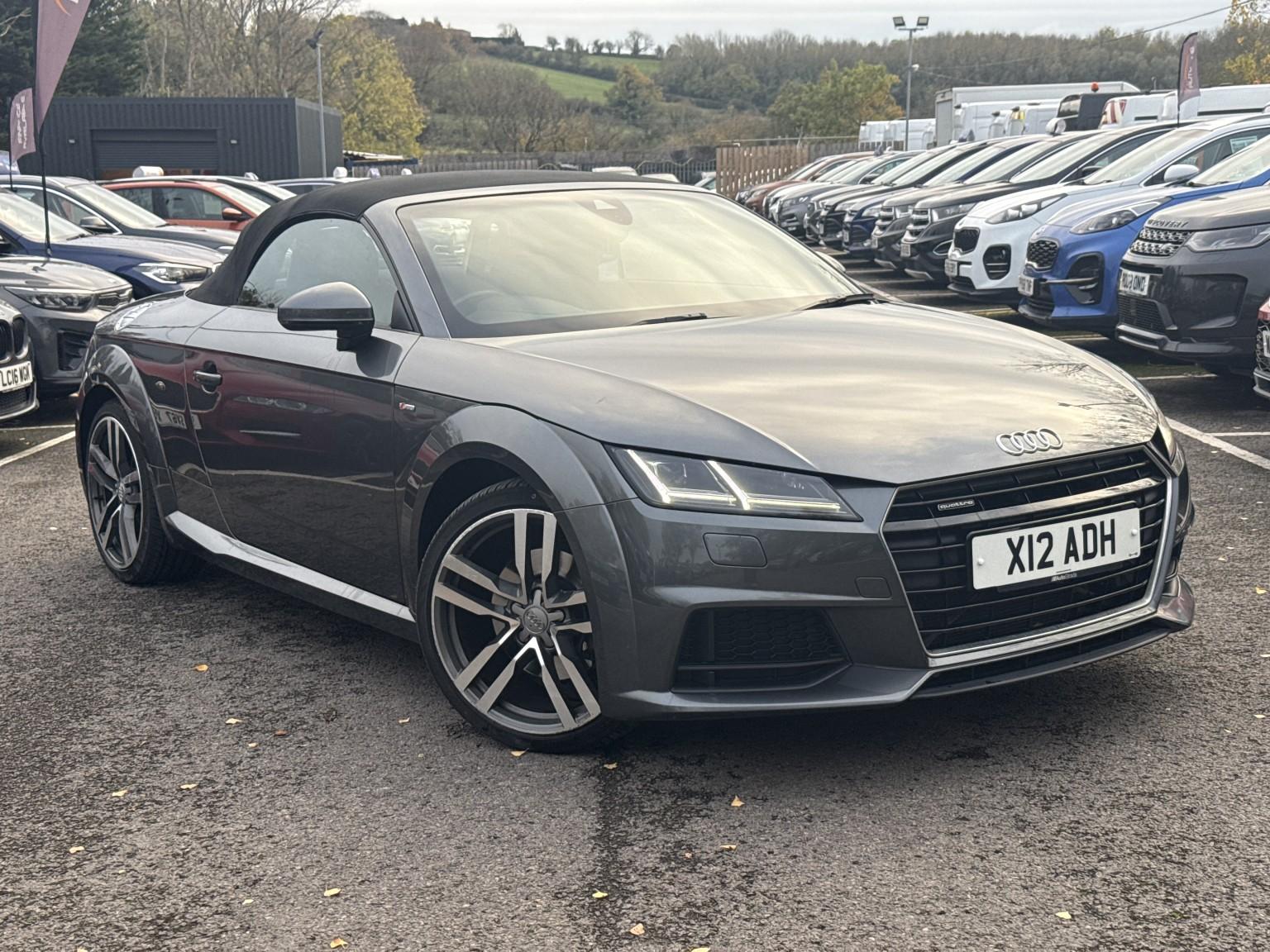
Used Audi TT adverts on Autoza, each from a dealer you can contact from the advert.
Audi TT MOT results by year and mileage
Measured from DVSA’s own MOT test records for tests carried out in 2025, not from owner reports.
By registration year
Against all cars registered in the same year, the MOT pass rate for the TT was higher in 8 and level in 2 of the 10 registration years from 2013 to 2022 with enough tests to measure. The widest gap above is 2013 registrations: 85.7% against 71.9%.
Pass rate here: passed on the day, cars fixed during the test included. Rows: every Audi TT DVSA tested in 2025, by registration year (2013–2022), all engines and fuels together.
| Registered | TT | All cars that year | Difference |
|---|---|---|---|
| 2022251 tests | 90.4% | 91.2% | −0.8 level |
| 2021246 tests | 91.5% | 90.1% | +1.4 level |
| 2020293 tests | 94.2% | 88.7% | +5.5 higher |
| 2019467 tests | 93.4% | 86.9% | +6.5 higher |
| 2018401 tests | 89.0% | 84.5% | +4.5 higher |
| 2017773 tests | 90.4% | 82.2% | +8.2 higher |
| 2016975 tests | 90.3% | 79.4% | +10.9 higher |
| 2015897 tests | 86.6% | 76.7% | +9.9 higher |
| 2014395 tests | 81.3% | 74.3% | +7.0 higher |
| 2013673 tests | 85.7% | 71.9% | +13.8 higher |
By mileage at the test
Against cars of the same age on the same mileage, the pass rate for the TT was higher in the one mileage band with enough tests. How other models compare at the same mileage.
Show the table by mileage (1 band)
| Mileage | TT | Same age and mileage | Difference |
|---|---|---|---|
| 60k–80k2,012 tests | 84.0% | 73.9% | +10.1 higher |
Only a major or dangerous defect fails an MOT. A minor defect is recorded on the certificate and the car still passes, and an advisory is not a failure at all.
We don’t give a recall count for the Audi TT: whether a recall applies depends on the individual car. Check the one you are looking at by entering its registration on GOV.UK’s vehicle recall checker, and see how to check a car for known faults for the other free checks.
Source: DVSA MOT Anonymised Data 2025 (Open Government Licence v3.0), a sample of the 2025 file (about one test in ten, from nine months) (3,459,000 tests). Class 4 tests in Great Britain, test type NT (a normal annual test), retests excluded. A pass, or a pass with rectification at the station, counts as a pass here (passed on the day); DVSA's own initial-test measure counts a rectified pass as a failure and so reports a lower figure. Odometer readings below 100 or above 400,000 miles are discarded as misreadings, and cars under three years old are excluded because no MOT is yet due. Sampled from nine months of 2025 (January, February, April, May, July, August, September, October and November). Testing in Northern Ireland is run separately by the DVA under its own rules. Registration years shown are cars 3 to 12 years old when tested; the smallest rests on 246 tests. A gap is called level when it is under one percentage point or inside the 95% sampling margin for that number of tests. Contains public sector information licensed under the Open Government Licence v3.0.
What fails at the MOT: DVSA 2025 results
Across 111,840 Audi TT MOT tests in 2025 (all versions together), these defects turned up most often. This guide covers the second generation 2006–2014 and third generation 2014–2023; the figures are for every Audi TT tested, of any generation.
What is found most often
The five defects found most often on Audi TT tests, each compared with cars of the same age where it stands out:
- Tyre tread below the 1.6mm legal minimum. On 2.6% of Audi TT tests.
- Position lamp: not working. On 2.4% of Audi TT tests.
- Coil spring: fractured or broken. On 2.3% of Audi TT tests.
- Engine warning light on or not working. On 1.9% of Audi TT tests, 1.6 times the rate for cars of the same age.
- Constant velocity (CV) boot split or insecure. On 1.7% of Audi TT tests.
The MOT checks safety and emissions items, not the engine, clutch or gearbox, so this is one measure of how each car holds up rather than a full reliability verdict. These figures describe the model, all its versions together, not this particular car.
From DVSA’s 2025 MOT results. See the full analysis
Who this car suits — and who should look elsewhere
Buyers who want a small sports coupe and will keep the recall paperwork and, on an older 2.0-litre car, the proof of the cambelt change.
Anyone buying a 2014–2017 car with no record of the airbag replacement, or a second-generation 2.0-litre with no cambelt invoice.
Alternatives to consider
If the Audi TT doesn't suit, these comparable models are worth a look in the UK market:
Audi TT: questions buyers ask
What are the most common faults on a used Audi TT in the UK?
What Car? ranks the third-generation Audi TT sixth of 12 coupés, convertibles and sports cars at 96.1%, with only 7% of cars reported on having any issue, all with the air conditioning (page updated 31 July 2026). DVSA lists large recalls for the Takata driver airbag (R/2026/089) and a fuel tank that could be damaged in a crash (R/2020/087), so check each car by registration. TTs registered 2013–2022 pass the MOT above all cars registered those years in 8 of 10 years and level in 2.
What is the best year to buy a used Audi TT in the UK?
Best-buy years: no single year stands out. DVSA’s MOT table rates 2013 to 2020 registrations above all cars registered those years (by 4.5 to 13.8 points) and 2021 and 2022 level with them, so no single year stands out. The recalls follow build dates, not registration years. What Car? ranks the 2014–2024 TT sixth of 12 at 96.1% (its page, updated 31 July 2026). MOT results measure roadworthiness at the test, not engine or electronics reliability.
What years of Audi TT should I avoid in the UK?
No specific year of the second generation 2006–2014 and third generation 2014–2023 Audi TT is generally avoided. No year is named as one to avoid: DVSA’s MOT table rates no TT registration year from 2013 to 2022 below the average for its year. Judge a car by its registration, its service record and the recall checks below. That is not clearance: DVSA lists the Takata airbag and fuel tank recalls, and the sources note seat, headlamp and window faults, set out below.
How much does a used Audi TT cost in the UK in 2026?
What sellers were asking on Autoza on 27 November 2026, for Audi TT cars registered from 2006: £3,995–£15,480, median £8,995 — the range is the middle 80% of asking prices. Those are asking prices, not what buyers paid, and not a UK price index. Prices vary by mileage, region and trim, so compare several adverts of the same year and mileage band before negotiating.
What is the road tax (VED) on a Audi TT in the UK?
Annual road tax (VED): £200/year standard rate from the second year, hybrids included — the alternative-fuel discount ended on 1 April 2025. A car registered from April 2017 with a list price over £40,000 when new adds the £440/year Expensive Car Supplement in years 2–6 (£640 in all). Cars registered 2001–2017 pay a CO2 band, roughly £20–£790/year (2026/27 rates).
What real-world fuel economy does a Audi TT achieve on UK roads?
No sourced real-world figure for the TT, so none is printed: the official lab figure depends on the engine and on the test cycle the car was approved under, so use the figure for the exact version you are looking at.
How does a Audi TT compare to its rivals?
Strong alternatives in the UK: Audi A3, BMW 1 Series, MINI Cooper, Mercedes-Benz A-Class. Choose based on dealer network in your area, parts availability, and your priorities (running cost vs. cabin quality vs. badge).
Who is the Audi TT most suitable for?
Buyers who want a small sports coupe and will keep the recall paperwork and, on an older 2.0-litre car, the proof of the cambelt change.
Who should NOT buy a Audi TT?
Anyone buying a 2014–2017 car with no record of the airbag replacement, or a second-generation 2.0-litre with no cambelt invoice.
Are there safety recalls on the Audi TT?
DVSA lists 6 safety recalls for the Audi TT that this guide shows or names, the largest first: R/2026/089 (20,502 vehicles, built between 17 September 2014 and 23 January 2017): Replacing Takata driver airbag; R/2020/087 (11,950 vehicles, built between 29 April 2014 and 24 May 2019): In the event of an accident the fuel tank could be damaged and leak; R/2022/073 (1,762 vehicles in the whole recall, built between 23 November 2020 and 10 March 2022): The design trim on the power unit can become detached from its retainers. Whether a particular car is affected depends on its build date and VIN, so check its registration on GOV.UK (gov.uk/check-vehicle-recall) before you buy.
Is the Takata driver airbag replacement (2014–2017 builds) on the Audi TT a serious problem?
Takata driver airbag replacement (2014–2017 builds) on the Audi TT is covered by DVSA safety recall R/2026/089. Symptoms: DVSA wording: the gas generator housing for the front airbag may in extremely rare cases be overloaded and even burst when the airbag is triggered, so as a precaution the airbag unit is replaced, free of charge, in about two hours. DVSA also lists a smaller stop-drive notice, R/2025/387, for one TT, and R/2023/054 for 20 cars. Years affected: TT built 17 September 2014 to 23 January 2017. Indicative repair cost in the UK: Free under recall. What to check before buying: Check this one by registration through GOV.UK’s vehicle recall check (gov.uk/check-vehicle-recall) before you buy — an outstanding recall is free to put right and a completed one should be on the service record. On a 2014–2017 car, ask for the Audi dealer record showing the airbag was replaced.
Is the Fuel tank that could be damaged in a crash (2014–2019 builds) on the Audi TT a serious problem?
Fuel tank that could be damaged in a crash (2014–2019 builds) on the Audi TT is covered by DVSA safety recall R/2020/087. Symptoms: DVSA wording: the fuel tank could be damaged and leak in the event of an accident, and a component protector is fitted to a bracket on the body. What Car? lists the fuel tank recall for cars made 29 April 2014 to 24 May 2019 on its page updated 31 July 2026. Years affected: TT built 29 April 2014 to 24 May 2019. Indicative repair cost in the UK: Free under recall. What to check before buying: Check this one by registration through GOV.UK’s vehicle recall check (gov.uk/check-vehicle-recall) before you buy — an outstanding recall is free to put right and a completed one should be on the service record. On a 2014–2019 car, ask for the dealer record showing the protector was fitted.
Is the Cambelt on 2.0-litre petrols and diesels (second generation) on the Audi TT a serious problem?
Owner-reported, frequency unknown: Cambelt on 2.0-litre petrols and diesels (second generation) comes up in owner forums and workshop reports for the Audi TT, but how often it happens is not known, so treat it as a question to ask rather than a fault every car has. Symptoms: Auto Express says the 1.8 TFSI and 3.2 V6 are chain-driven, but the 2.0 petrol and diesel units have a cambelt that needs replacing periodically (its page is published 15 November 2016). We print no interval or price because they are not given by a current Audi source: ask an Audi dealer for the current interval for the car’s engine. Years affected: Second generation 2.0-litre petrol and diesel cars. What to check before buying: On a 2.0-litre second-generation car, ask for the invoice showing the cambelt change and its date and mileage.
Check these next
The guide above is about the Audi TT as a model. These are about the car in front of you.
- Browse Audi TT listings on AutozaEvery one listed now.
- Check any car by its registrationFree: its MOT history, tax status and any open recall, from a number plate.
- Work out the road tax for the TTVehicle tax (VED) by registration date, CO2 and list price.
- Work out the monthly payment on a £8,995 TTThe median asking price on Autoza on 27 November 2026, not what buyers pay: change it to the car you are looking at.
- What is your TT worth?A price range from dealers' asking prices for comparable cars.
More checks on a Audi TT
A fault list tells you what goes wrong; these tell you about the car in front of you.
Looking to buy a Audi TT in the UK?
Search Autoza listings filtered by year, mileage, and region. Every dealer page shows the business name, address and contact details, so you can check the business before you enquire.