
Ford Kuga vs Honda CR-V: which is the better used buy?
On DVSA MOT records the Honda CR-V does better at its MOT: measured against cars of the same age, it comes out 4.3 percentage points ahead of the Ford Kuga on first-time MOT passes. Its raw pass rate is the lower of the two (80.7% against 83.4%) because Honda CR-Vs on the road are older on average: cars of their age pass 74.1% of the time, against 81.2% for cars the age of the Ford Kuga fleet. That comparison covers 52,885 real tests across every generation on the road, not a survey. A pass with rectification at the station counts as a pass here, and as a failure in DVSA's own initial-test measure. The MOT checks safety and emissions items, not the engine, clutch or gearbox, so this is one measure of how each car holds up rather than a full reliability verdict; the common faults below cover the rest.
MOT first-time pass rate
Counted from DVSA’s anonymised MOT test records. “vs age-matched” compares each model against what the national fleet scores at the same age — the only fair better-or-worse number, because an older fleet fails more whatever its build quality.
| Model | Pass rate | Age-matched national | Difference | Tests |
|---|---|---|---|---|
| Ford Kuga | 83.4% | 81.2% | +2.2 | 32,869 |
| Honda CR-V | 80.7% | 74.1% | +6.5 | 20,016 |
These figures count every generation still on the road, not only the one described below: mostly Ford Kugas registered 2008–2022 and Honda CR-Vs registered 2002–2022.
Source: DVSA MOT Anonymised Data 2025 (Open Government Licence v3.0). National first-time pass rate 77.3%. Class 4 tests in Great Britain, test type NT (a normal annual test), retests excluded. A pass, or a pass with rectification at the station, counts as a first-time pass; DVSA's own initial-test measure counts a rectified pass as a failure and so reports a lower figure. Testing in Northern Ireland is run separately by the DVA under its own rules. The difference is worked out before rounding, so it can be 0.1 away from the two rounded figures beside it.
Ford Kuga
Mk3, 2019+ · compact family PHEV/hybrid SUV
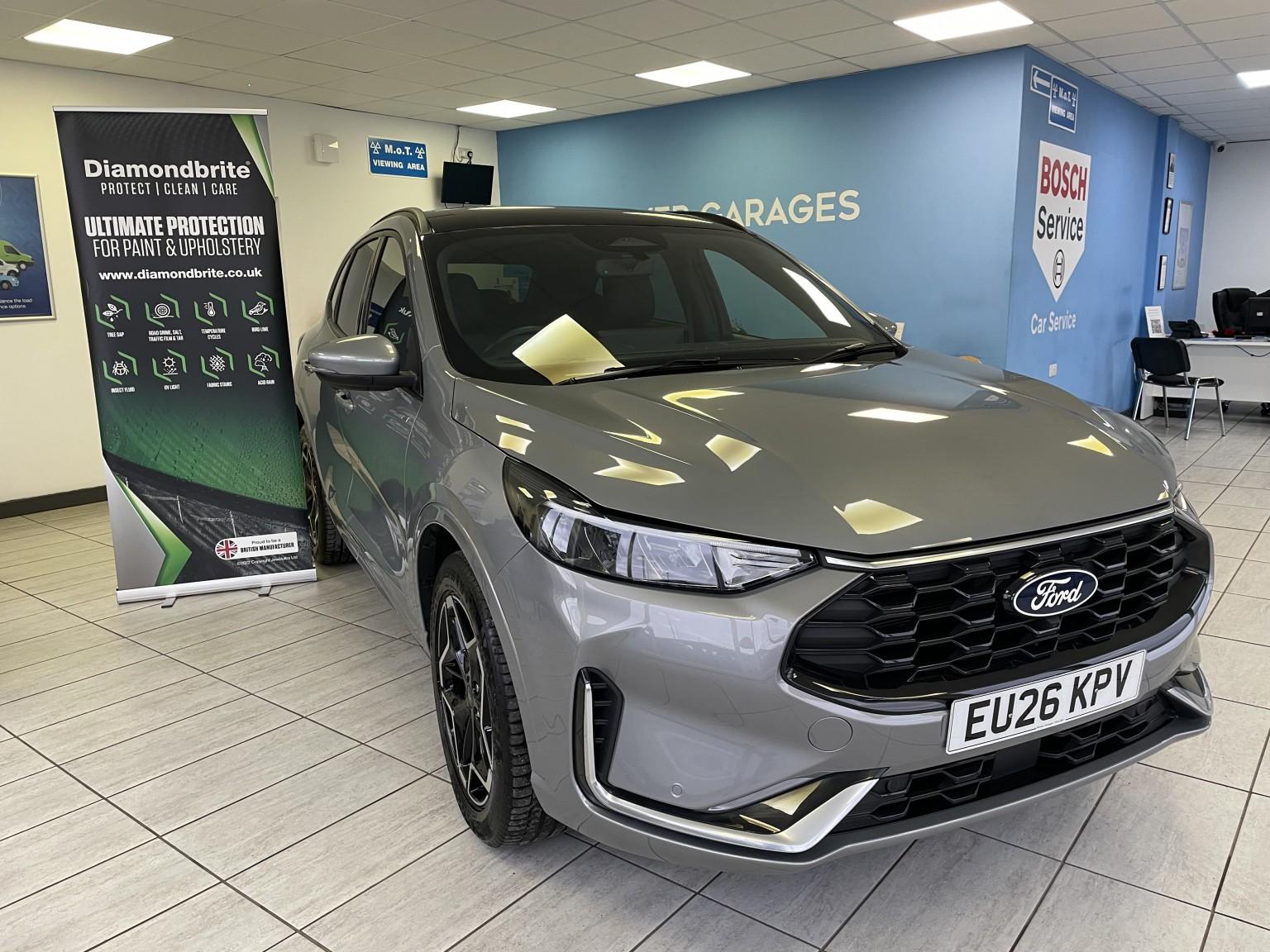
The Mk3 Ford Kuga (2019+) is widely chosen as a plug-in hybrid for company-car tax. PHEVs built July 2019 to September 2020 are covered by DVSA high-voltage battery recalls, a 2.5 hybrid engine recall reaches 2022 builds, and a 2025 recall (R/2025/527, 49,466 vehicles built August 2019 to February 2026) is titled "Do not charge high voltage battery to levels above 80%" until a software update is done, so check any hybrid by registration. Owners also report 1.5 EcoBoost coolant loss. Best buy: 2021+. Worst: 2020.
What goes wrong
Safety recall R/2025/527recall
Kuga - Do not charge high voltage battery to levels above 80%49,466 vehicles of this model (DVSA’s figures added up) · built between 7 August 2019 and 27 February 2026Large recall — 49,466 vehicles. Check a car by registration on GOV.UK.Safety recall R/2026/355recall
Kuga – EDS Wiring touch33,487 vehicles of this model (DVSA’s figures added up) · built between 20 December 2024 and 24 July 2026Large recall — 33,487 vehicles. Check a car by registration on GOV.UK.1.5 EcoBoost coolant loss — cylinder head (2019–2021)major
Low coolant warning lamp; white smoke from exhaust on startup; creamy emulsion on the oil filler cap2019–2021 (1.5 EcoBoost petrol; the PHEV uses a 2.5 engine) · £800–£2,200 cylinder head gasket or EGR cooler repairCheck: Inspect the oil filler cap for creamy residue (head gasket symptom). Check coolant level and colour, and ask whether a Ford dealer has carried out any repair for coolant loss.SYNC 3 infotainment freezingmoderate
Touchscreen unresponsive or slow to wake; Apple CarPlay or Android Auto drops out; system reboots mid-journey2019–2021 cars, which have SYNC 3. Ford says the updated Kuga it announced in January 2024 has SYNC 4 · £0 — dealer or OTA software update resolves most casesCheck: During test drive, cycle through multiple menus, connect a phone via CarPlay, and check the system wakes quickly after startup. A free software update from a Ford dealer resolves most SYNC freezes. If the system crashes during your test, request the update before completing purchase.
- Typical asking price:
- £8,990–£16,995, median £11,999 (middle 80% and median, cars on Autoza on 27 November 2026)
- Fuel economy:
- PHEV: 35–42 miles of official electric range depending on model year and wheel size; real UK use gives less than that, and less again in winter. Once the battery is flat it drives as an ordinary hybrid at roughly 39–49 mpg, so the economy you get depends almost entirely on whether you can charge at home. FHEV (non-plug-in): 40–47 mpg real-world UK mixed
- Vehicle tax:
- £200/year standard rate from the second year, hybrids included — the alternative-fuel discount ended on 1 April 2025 (2026/27 rates). A car registered from April 2017 that listed at over £40,000 new (options included) also pays the £440/year Expensive Car Supplement in years 2–6 — it is the price when new that counts, not what you pay for it used.
- Best years:
- 2021, 2022, 2023, 2024
- Years to avoid:
- 2020
Honda CR-V
Mk5, 2018–2023 (Hybrid) · mid-size family SUV
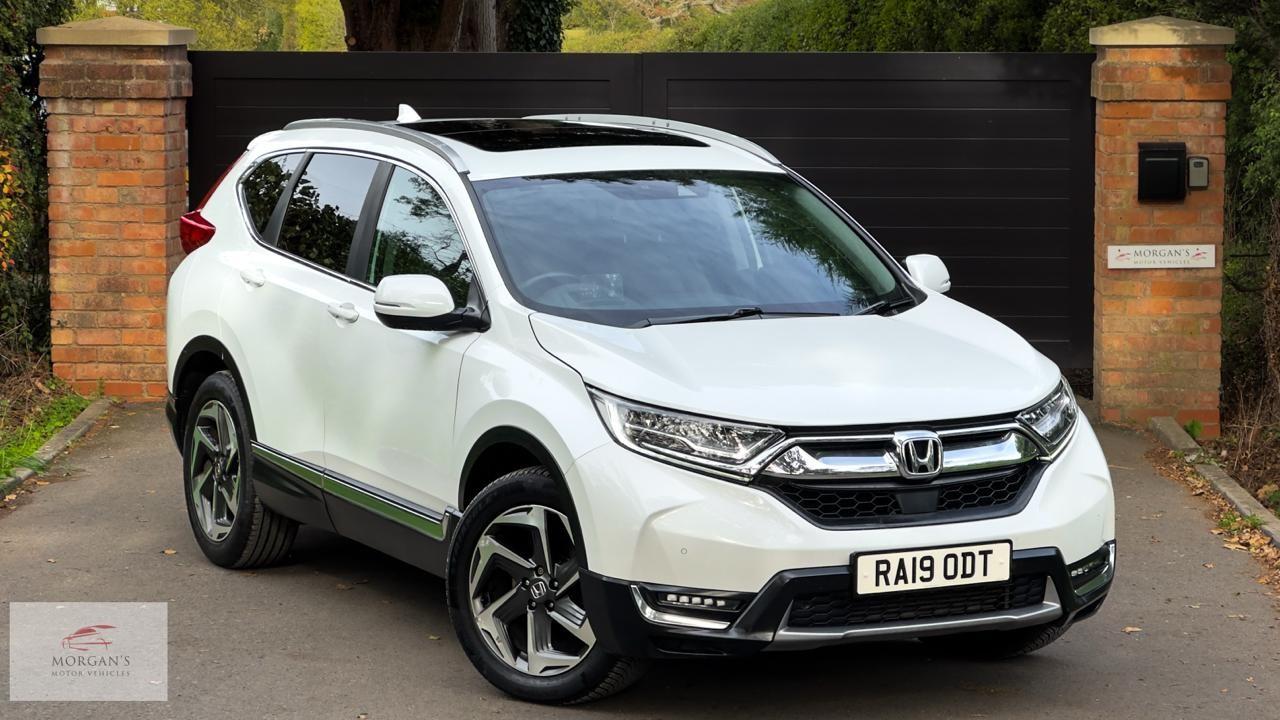
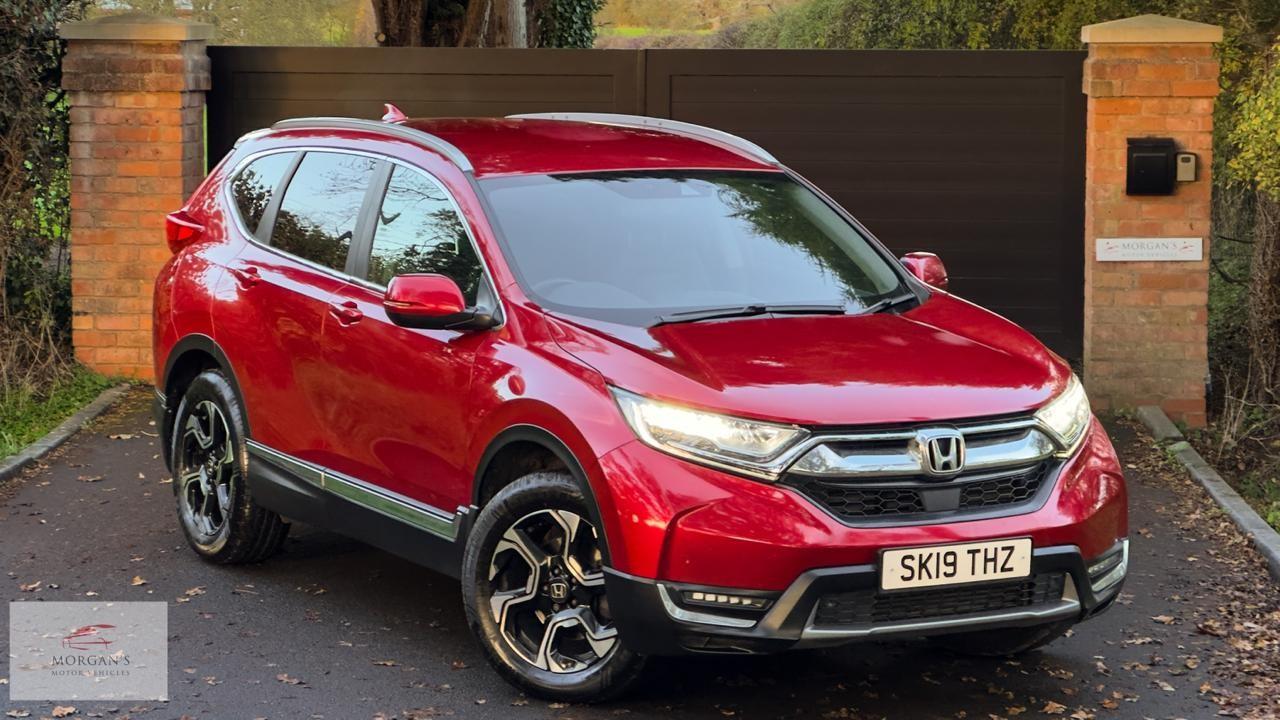
The Mk5 Honda CR-V (2018–2023) is among the most reliable mid-size SUVs in the UK. The dominant owner-reported issue is oil dilution with fuel on the early 1.5 VTEC Turbo petrol, mostly on short cold trips. We found no UK recall or Honda campaign for it in DVSA's recall file, so ask whether any Honda software update or oil-dilution repair was done. The hybrid has a recall to check (R/2023/357 below). Best-buy years: 2020–2023. Worst: no single year stands out on DVSA MOT results.
What goes wrong
Safety recall R/2020/061recall
The absorption of moisture into the driver's air bag propellant could lead to slow deployment or inflator rupture42,435 vehicles in the whole recall (DVSA’s figure for every model it covers)Large recall — 42,435 vehicles. Check a car by registration on GOV.UK.Safety recall R/2023/357recall
Battery Cable Contact Short Circuit Problem18,733 vehicles of this model (DVSA’s figures added up) · built between 22 October 2018 and 1 July 2022Large recall — 18,733 vehicles. Check a car by registration on GOV.UK.1.5 VTEC Turbo fuel-in-oil dilutionmajor
Engine oil level rising above max on dipstick; oil smells of petrol; reduced oil viscosity2018–early 2019 (1.5T petrol) · Warranty cover varies by car, so ask a Honda dealer about the exact one; post-warranty oil damage: £800–£2,500 depending on severityCheck: Dipstick at viewing — oil level should not be above max. Ask the seller whether any Honda software update or oil-dilution repair was carried out, and for the paperwork. Service history should show Honda-stamp servicing with evidence of oil changes at correct intervals. Be wary of cars that sat in short-trip urban use.Hybrid inverter (hybrid models)moderate
"System Error" warning; reduced power; rare fail-to-start2018–2021 hybrid · Out of warranty £1,800–£3,200; ask a Honda dealer what cover the car still hasCheck: Scan for hybrid system codes. EV-mode should engage cleanly at low speeds — if it never enters EV mode, inverter or battery may have faulted.
- Typical asking price:
- not given as a fixed figure — the model guide shows the median and middle 80% of asking prices for the cars advertised on Autoza that day, when at least 10 qualify
- Fuel economy:
- 1.5T petrol: 31–38 mpg real-world. e:HEV hybrid: 42–49 mpg — significantly better on UK city/suburban use
- Vehicle tax:
- £200/year standard rate from the second year, hybrids included — the alternative-fuel discount ended on 1 April 2025 (2026/27 rates). A car registered from April 2017 that listed at over £40,000 new (options included) also pays the £440/year Expensive Car Supplement in years 2–6 — it is the price when new that counts, not what you pay for it used.
- Best years:
- 2020, 2021, 2022, 2023
Cars like this for sale now
Ford Kuga


Honda CR-V

Which one suits you
Ford Kuga
Good for: Company car drivers benefiting from low BIK on PHEV (CO₂ under 50g/km). Families wanting a practical 5-seat SUV with home-charging for daily commutes. Buyers who charge at home and want meaningful EV range for short town journeys.
Less good for: 2019–2020 PHEV until confirmed recall is complete. Buyers who want to avoid plugging in should consider the FHEV (full hybrid) or Toyota RAV4 Hybrid. Diesel buyers who mostly do short journeys: check Ford’s guidance on diesel use and DPF regeneration, ask about the car’s use, service record and any DPF warnings, and get an independent inspection if its history is unclear.
Honda CR-V
Good for: Families wanting reliable Japanese quality in an SUV package. e:HEV hybrid is the pick for urban and suburban commuting — no plug needed, excellent real-world economy. Buyers with good service history documentation.
Less good for: Buyers tempted by early 1.5T examples with no oil-change history; short-trip-only drivers on the 1.5T petrol; hybrid buyers needing 7 seats (seven seats were offered only on the 1.5 VTEC Turbo petrol; the hybrid is five-seat).
Frequently Asked Questions
Which is more reliable, the Ford Kuga or the Honda CR-V?
How do the MOT pass rates of the Ford Kuga and the Honda CR-V compare?
Which years of the Ford Kuga and Honda CR-V should I avoid?
Is the Ford Kuga or the Honda CR-V cheaper to run?
MOT figures are counted from DVSA records and are the only measured statistic here. Prices, economy and tax bands are indicative and vary by specification, condition and where the car has lived. Last reviewed: 2026-11-12 / 2026-11-12.