
Dacia Duster vs Ford Kuga: which is the better used buy?
On DVSA MOT records the Ford Kuga does better at its MOT: measured against cars of the same age, it comes out 6.9 percentage points ahead of the Dacia Duster on first-time MOT passes. That comparison covers 41,219 real tests across every generation on the road, not a survey. A pass with rectification at the station counts as a pass here, and as a failure in DVSA's own initial-test measure. The MOT checks safety and emissions items, not the engine, clutch or gearbox, so this is one measure of how each car holds up rather than a full reliability verdict; the common faults below cover the rest.
MOT first-time pass rate
Counted from DVSA’s anonymised MOT test records. “vs age-matched” compares each model against what the national fleet scores at the same age — the only fair better-or-worse number, because an older fleet fails more whatever its build quality.
| Model | Pass rate | Age-matched national | Difference | Tests |
|---|---|---|---|---|
| Dacia Duster | 79.2% | 83.8% | -4.7 | 8,350 |
| Ford Kuga | 83.4% | 81.2% | +2.2 | 32,869 |
These figures count every generation still on the road, not only the one described below: mostly Dacia Dusters registered 2013–2022 and Ford Kugas registered 2008–2022.
Source: DVSA MOT Anonymised Data 2025 (Open Government Licence v3.0). National first-time pass rate 77.3%. Class 4 tests in Great Britain, test type NT (a normal annual test), retests excluded. A pass, or a pass with rectification at the station, counts as a first-time pass; DVSA's own initial-test measure counts a rectified pass as a failure and so reports a lower figure. Testing in Northern Ireland is run separately by the DVA under its own rules. The difference is worked out before rounding, so it can be 0.1 away from the two rounded figures beside it.
Dacia Duster
Mk1 2013–2018 (on sale in the UK from January 2013), Mk2 2018+ · compact budget SUV
The Dacia Duster is the most affordable SUV in the UK — and genuinely reliable for its price. The Mk1 (sold in the UK 2013–2018) has known timing belt neglect and wheel-arch rust in older UK examples; the Mk2 (2018+) is a newer platform. Key risks: EDC automatic gearbox reliability, thin paint prone to stone chips, and 4WD transfer case wear on high-mileage AWD variants. Best buy: 2021 Mk2 1.0 TCe manual or 1.3 TCe. Worst: Mk1 2013–2014, or any Mk2 EDC auto without a clean service record.
What goes wrong
Timing belt — 1.5 dCi diesel (Mk1)critical
No warning symptoms — belt fails suddenly; catastrophic engine damage resultsMk1 2013–2018 (1.5 dCi diesel) · Dacia UK: change the belt if the car is more than 5 years old or has done over 70,000 miles · £450–£750 preventative kit; £2,500–£4,500 engine rebuild if belt snapsCheck: Verify the timing belt change with a receipt. Dacia UK’s own rule is to change the belt if the car is more than 5 years old or has done over 70,000 miles, so any Mk1 with no record is overdue on age alone: budget for immediate replacement before buying. The Renault 1.5 dCi is an interference engine — a snapped belt bends valves and destroys the cylinder head.Wheel-arch and sill rust (Mk1)major
Bubbling paint on rear wheel arches; visible rust on sills; surface corrosion on front subframe boltsMk1 2013–2015, especially coastal-area exposure (e.g. the west coast, Scotland, the South West) · £600–£2,500 depending on extent — panel replacement, filler work, and rust treatmentCheck: Run your hand along all four wheel arch lips and press on inner sill edges. Shine a torch underneath at the subframe mounting points. Salt-road use accelerates Mk1 corrosion significantly — coastal-county cars are highest risk.EDC automatic gearbox judder (Mk2)major
Hesitation and judder from a standstill; reluctance in slow-moving traffic; harsh 1–2 gear change when coldMk2 with the EDC dual-clutch auto (Dacia says the update on sale from September 2021 added it) · £300–£900 mechatronic re-learn or gearbox fluid change; £1,800–£3,200 unit replacement in severe casesCheck: Test extensively in slow city-speed traffic from cold. The Duster EDC is shared across the Renault-Dacia group and is known to judder. The 6-speed manual is significantly more reliable — only choose EDC if the price reflects the gearbox risk.4WD transfer case wear (AWD variants)moderate
Vibration or clunking when 4WD engaged; AWD warning lampAll AWD variants, typically above 60,000 miles · 60,000+ miles · £400–£800 fluid flush and bearing check; £1,200–£2,000 transfer case replacementCheck: Engage 4WD on a quiet road during the test drive. Any vibration or warning lamp is a concern. Verify transfer case fluid changes are in the service history — this is frequently omitted.
- Typical asking price:
- £3,595–£12,999, median £8,190 (middle 80% and median, cars on Autoza on 27 November 2026)
- Fuel economy:
- 44–51 mpg (1.0 TCe petrol, real-world UK mixed); 50–59 mpg (1.5 dCi diesel)
- Vehicle tax:
- £200/year standard rate from the second year, hybrids included — the alternative-fuel discount ended on 1 April 2025. A car registered from April 2017 with a list price over £40,000 when new adds the £440/year Expensive Car Supplement in years 2–6 (£640 in all). Cars registered 2001–2017 pay a CO2 band, roughly £20–£790/year (2026/27 rates).
- Best years:
- 2021, 2022, 2023
- Years to avoid:
- 2013, 2014
Also compare:
Ford Kuga
Mk3, 2019+ · compact family PHEV/hybrid SUV
The Mk3 Ford Kuga (2019+) is widely chosen as a plug-in hybrid for company-car tax. PHEVs built July 2019 to September 2020 are covered by DVSA high-voltage battery recalls, a 2.5 hybrid engine recall reaches 2022 builds, and a 2025 recall (R/2025/527, 49,466 vehicles built August 2019 to February 2026) is titled "Do not charge high voltage battery to levels above 80%" until a software update is done, so check any hybrid by registration. Owners also report 1.5 EcoBoost coolant loss. Best buy: 2021+. Worst: 2020.
What goes wrong
Safety recall R/2025/527recall
Kuga - Do not charge high voltage battery to levels above 80%49,466 vehicles of this model (DVSA’s figures added up) · built between 7 August 2019 and 27 February 2026Large recall — 49,466 vehicles. Check a car by registration on GOV.UK.Safety recall R/2026/355recall
Kuga – EDS Wiring touch33,487 vehicles of this model (DVSA’s figures added up) · built between 20 December 2024 and 24 July 2026Large recall — 33,487 vehicles. Check a car by registration on GOV.UK.1.5 EcoBoost coolant loss — cylinder head (2019–2021)major
Low coolant warning lamp; white smoke from exhaust on startup; creamy emulsion on the oil filler cap2019–2021 (1.5 EcoBoost petrol; the PHEV uses a 2.5 engine) · £800–£2,200 cylinder head gasket or EGR cooler repairCheck: Inspect the oil filler cap for creamy residue (head gasket symptom). Check coolant level and colour, and ask whether a Ford dealer has carried out any repair for coolant loss.SYNC 3 infotainment freezingmoderate
Touchscreen unresponsive or slow to wake; Apple CarPlay or Android Auto drops out; system reboots mid-journey2019–2021 cars, which have SYNC 3. Ford says the updated Kuga it announced in January 2024 has SYNC 4 · £0 — dealer or OTA software update resolves most casesCheck: During test drive, cycle through multiple menus, connect a phone via CarPlay, and check the system wakes quickly after startup. A free software update from a Ford dealer resolves most SYNC freezes. If the system crashes during your test, request the update before completing purchase.
- Typical asking price:
- £8,990–£16,995, median £11,999 (middle 80% and median, cars on Autoza on 27 November 2026)
- Fuel economy:
- PHEV: 35–42 miles of official electric range depending on model year and wheel size; real UK use gives less than that, and less again in winter. Once the battery is flat it drives as an ordinary hybrid at roughly 39–49 mpg, so the economy you get depends almost entirely on whether you can charge at home. FHEV (non-plug-in): 40–47 mpg real-world UK mixed
- Vehicle tax:
- £200/year standard rate from the second year, hybrids included — the alternative-fuel discount ended on 1 April 2025 (2026/27 rates). A car registered from April 2017 that listed at over £40,000 new (options included) also pays the £440/year Expensive Car Supplement in years 2–6 — it is the price when new that counts, not what you pay for it used.
- Best years:
- 2021, 2022, 2023, 2024
- Years to avoid:
- 2020
Cars like this for sale now
Dacia Duster

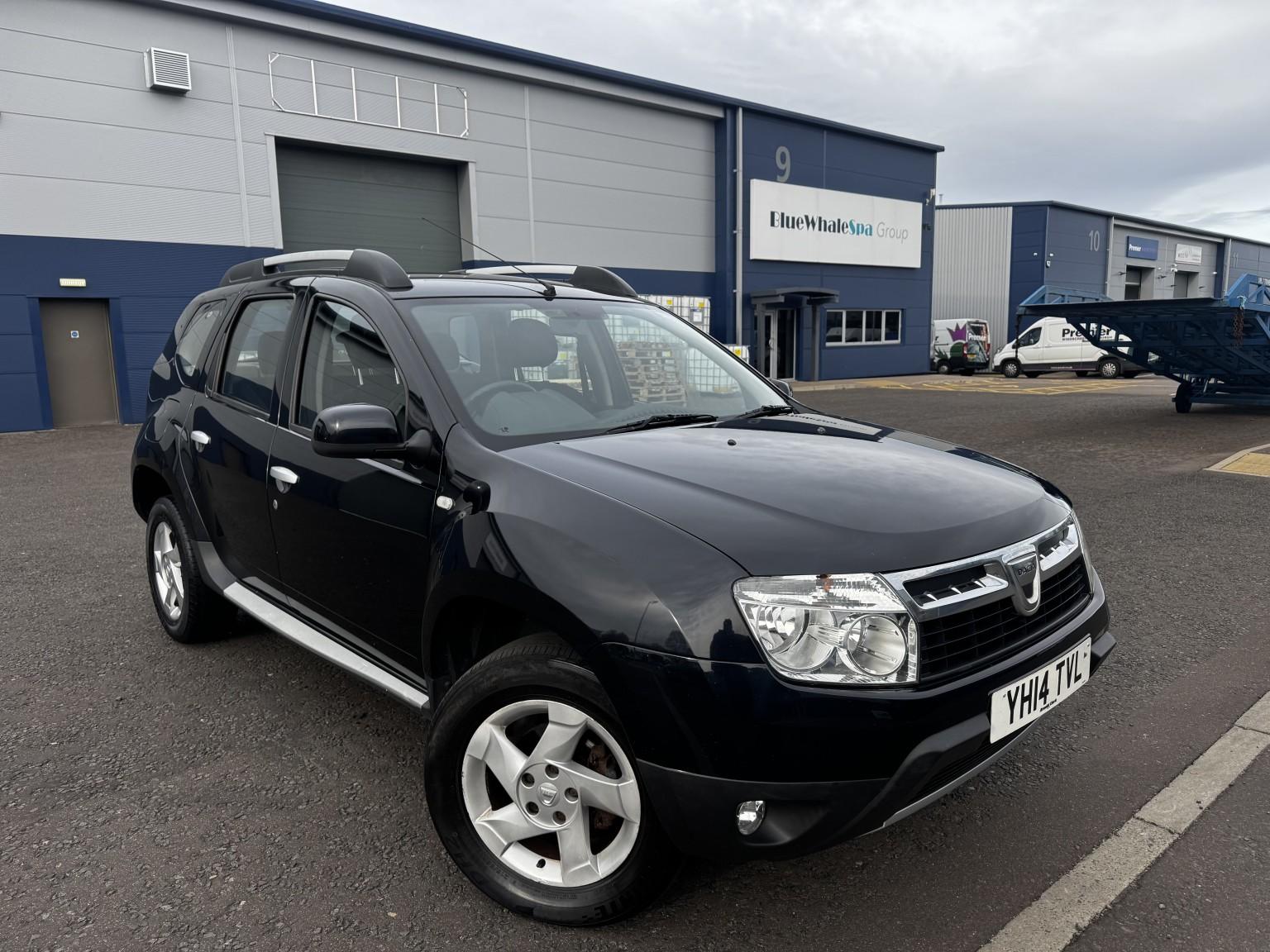
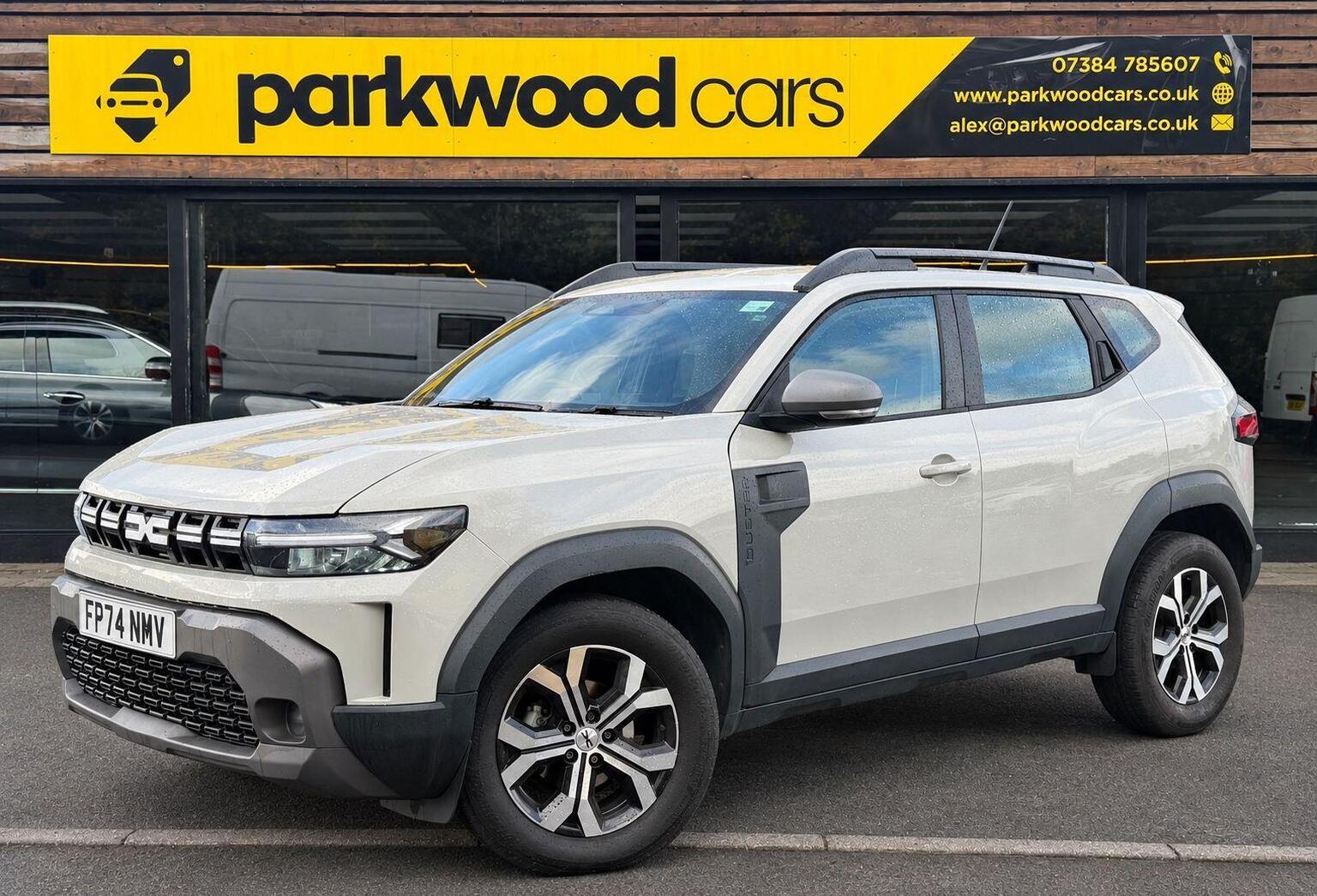
Ford Kuga



Which one suits you
Dacia Duster
Good for: Budget-conscious buyers needing SUV ground clearance for rural driving or farm use. First-time SUV buyers. Buyers wanting a newer, cheap SUV with a full service record (Mk2 2021+).
Less good for: Motorway commuters expecting premium refinement. Anyone who needs a smooth automatic gearbox — choose the manual. Buyers who dismiss wind noise; the Duster is notably airy at motorway speeds.
Ford Kuga
Good for: Company car drivers benefiting from low BIK on PHEV (CO₂ under 50g/km). Families wanting a practical 5-seat SUV with home-charging for daily commutes. Buyers who charge at home and want meaningful EV range for short town journeys.
Less good for: 2019–2020 PHEV until confirmed recall is complete. Buyers who want to avoid plugging in should consider the FHEV (full hybrid) or Toyota RAV4 Hybrid. Diesel buyers who mostly do short journeys: check Ford’s guidance on diesel use and DPF regeneration, ask about the car’s use, service record and any DPF warnings, and get an independent inspection if its history is unclear.
Frequently Asked Questions
Which is more reliable, the Dacia Duster or the Ford Kuga?
How do the MOT pass rates of the Dacia Duster and the Ford Kuga compare?
Which years of the Dacia Duster and Ford Kuga should I avoid?
Is the Dacia Duster or the Ford Kuga cheaper to run?
MOT figures are counted from DVSA records and are the only measured statistic here. Prices, economy and tax bands are indicative and vary by specification, condition and where the car has lived. Last reviewed: 2026-11-12 / 2026-11-12.